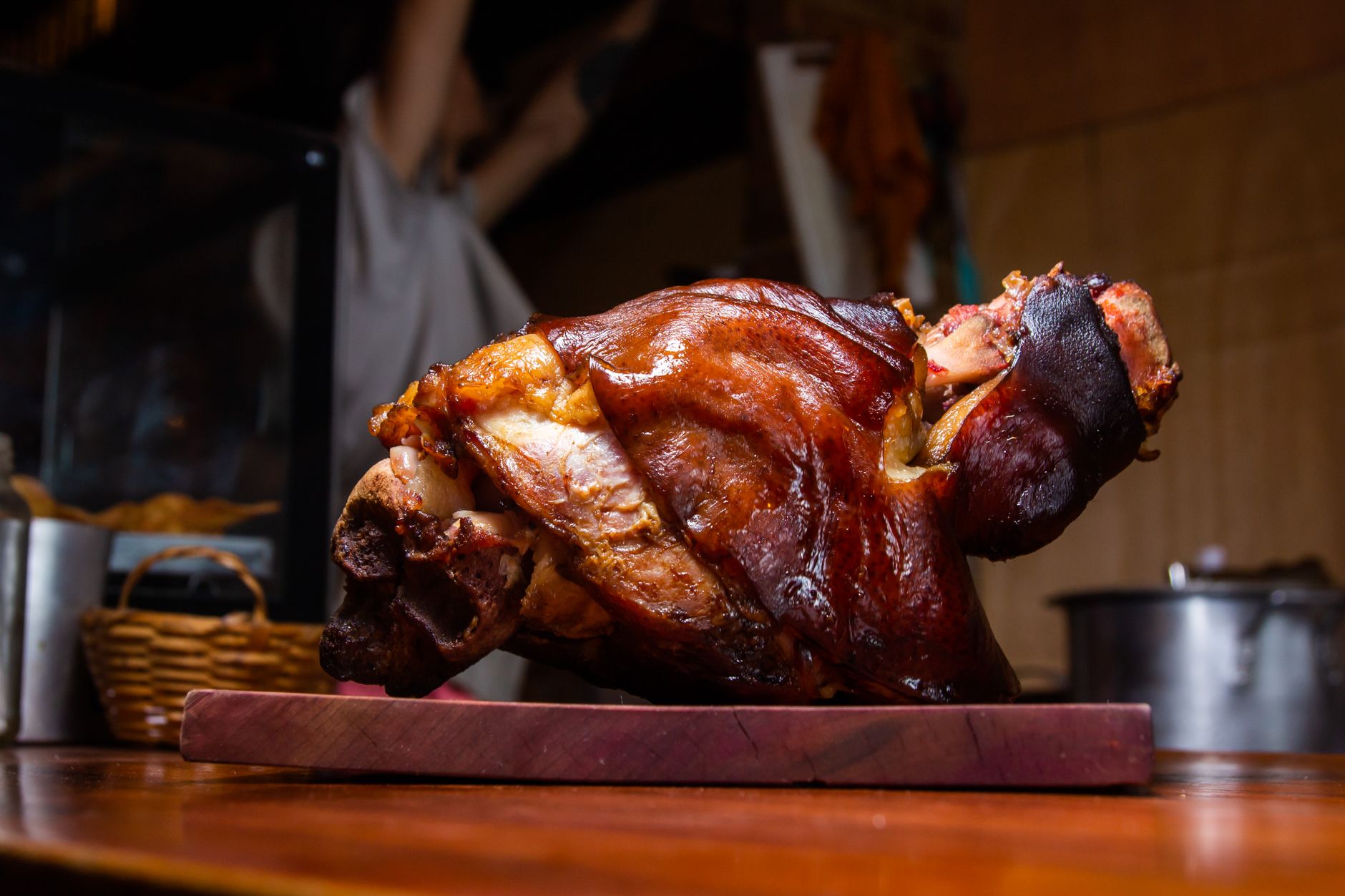
Two Hams for Grandma’s Wake
I had never once put both leaves in. That afternoon we put in both.
Owen’s job was the napkins. He sat at the kitchen table and folded every one into a neat square, the way he’d seen at a restaurant once, and counted them out loud as he went. It took him most of an hour.
“Fifty-eight,” he said. “Fifty-nine. Sixty.” He looked up at me with his hair sticking up in the back. “Dad, is sixty a lot of people?”
“It’s a lot of people,” I said. “It’s a lot of family.”
He thought about that. “Is it our family? Or Mom’s family?”
I was at the sink peeling potatoes, and I had to set the peeler down for a second. “It’s your family, buddy,” I said. “All sixty of them. Every single one.”
I peeled twenty pounds of potatoes that night, sliced them thin, and built two big pans of scalloped potatoes in layers with onions and butter and cream, the way my mother had told me on the phone. They went into the refrigerator covered in foil, ready to bake.
The morning of the twenty-sixth came up clear and cold, three below.
I had the first ham in the oven by eight and the second in Jeff’s roaster, and Jeff said he would baste them both at eleven while we were at church.
Owen wore the gray knit sweater his mother had bought him for Christmas pictures, and dark gray pants, and his good shoes.
He put the birch cribbage board in a grocery bag to bring to church. When I asked him why, he said he wanted Grandma Ida to see that he still had it.
St. Paul’s was full. Owen and I sat in the back pew, on the end, so I could slip out early.
I saw Amber up front with Glen and Pam and the aunts, and she turned once and found us.
Glen gave the eulogy in his dark suit, his big hands shaking on the paper. He talked about Ida’s pies at the county fair and her running the coffee for forty years of funerals.
Then he said, “She lived her whole life in the house on Mill Street until her legs gave out. That was her home. It will always be her home.”
And I felt a few people in the pews in front of me turn and look back at where I was sitting.
I didn’t look at anybody. I looked at Owen, who was holding the grocery bag with the cribbage board in his lap, and I put my hand on his back.
Glen wasn’t wrong. It would always be her home. It was just also mine now, and I didn’t need him to say it.
The cemetery out on County Road C doesn’t open the ground in winter. Ida would rest in the vault until April, when they would bury her beside Walt.
Owen and I slipped out during the last hymn. I drove home fast on the plowed streets, and when we came in the kitchen door the whole house smelled like brown sugar and ham.
Jeff was standing at the stove with a baster in his hand like a man at his post.
“They’re good,” he said. “You’ve got about an hour. I’ll get the chairs set up.”
He had already brought the thirty folding chairs in from his truck and stacked them in the front hall, and he set them up around the living room in rows like a church basement.