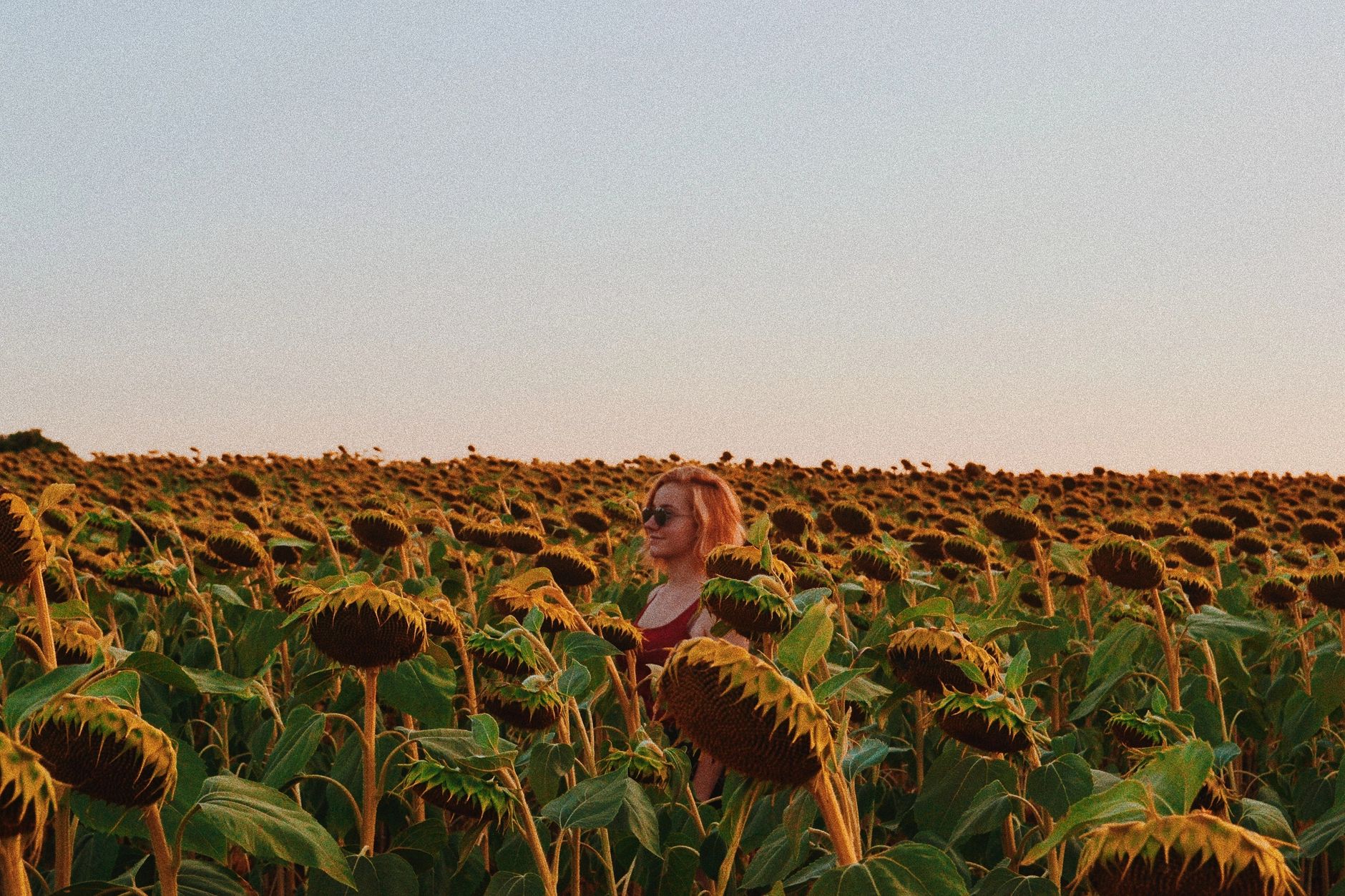
The Sunflowers on Grandpa’s Twenty Acres
“Didn’t anybody tell you?” my sister-in-law said, loud enough for the whole table to hear. “The Anders charge their own kin for grass now. A hundred and fifty a month. I’d pass the ham, but I’m not sure what they’d bill me for it.”
Nobody laughed. Nobody said anything at all. My mother-in-law set down the bowl of deviled eggs she was holding and looked at her plate.
It was Easter Sunday, the last Sunday in March, at Ben’s mother’s house outside of Tipton. There were fourteen of us around two tables pushed together, with a paper tablecloth over the seam and a jar of yellow daffodils in the middle.
My husband Ben was sitting across from his sister. I watched his ears go red, the way they do. He put his fork down, very carefully, beside his plate.
“Tiff,” he said quietly. “Not here.”
“Why not here?” Tiffany said. “It’s family. Everybody ought to know what family costs these days.”
Her daughter Addie was sitting beside her. Addie was nine, all knees and freckles, and she had been telling my four-year-old Sam about her horse all through the blessing. Now she was staring at her lap.
That was the part I could not stand. Not what Tiffany said about us. The way that little girl folded up into herself while her mother said it.
I did not say a word at that table. I passed Sam a roll and buttered it for him, and I helped my mother-in-law clear, and I washed every dish in that kitchen while the men watched the ball game.
But on the drive home, on the blacktop, with Sam asleep in his car seat and the sun going down red behind the cedar trees, I said to Ben, “I think I know what to do with Grandpa’s land.”
The Twenty Acres
My grandpa, Walter Ames, gave Ben and me twenty acres for our wedding. He was eighty-one then. He walked me down the aisle at the little Methodist church in town, and at the reception in the fellowship hall, he handed us an envelope with the deed in it.
“It’s not much,” he said. “It’s good ground, though. Your grandma always liked that piece. She said it got the best light in the county.”
It sat along a blacktop road, Route K, about two miles from the farm where he had milked Holsteins for fifty-one years. It was fenced on all four sides with a pipe gate at the road and a little spring-fed pond in the back corner.
Grandpa had kept it in hay for years. After he sold the cows, he rented it to a neighbor for pasture. When he gave it to us, we said we would build a house on it someday, up by the road, where Grandma used to say the light was best.
We were not there yet. Ben ran the scale at the co-op elevator in town, weighing trucks of wheat in June and corn and beans every fall. I taught second grade. We lived in a rented house in town and saved.
Every Sunday after church, we drove out and walked the twenty acres. Sam learned to walk out there, holding Ben’s finger, in the tall grass by the pond. I used to think it was the most peaceful place on earth.
Then, two years before that Easter, Tiffany called.