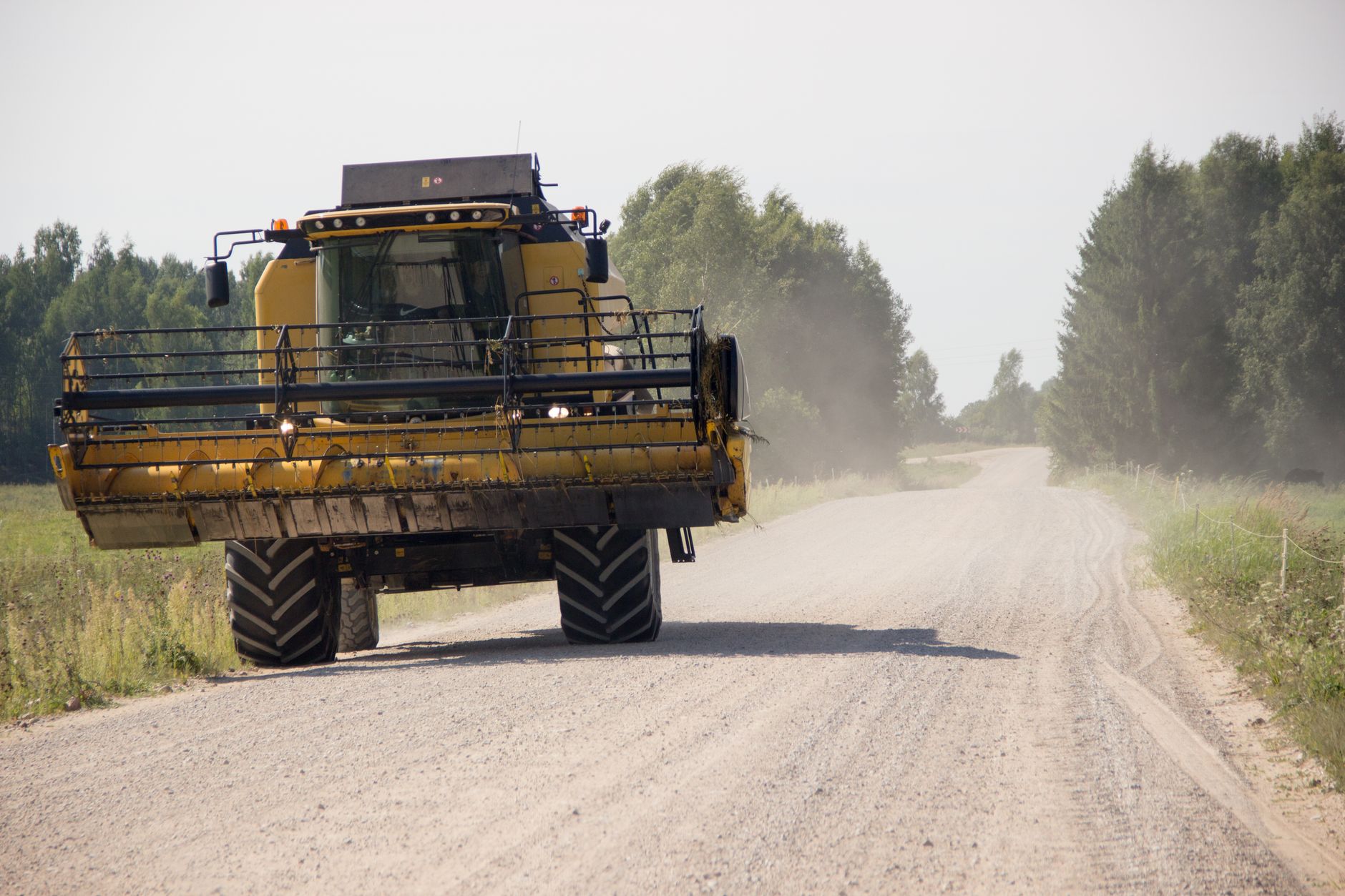
The Combine I Drove for Dad
What Elmer Put in My Hands
I did not have anything written. I had thought I would never get the chance, so I had not let myself write a word of it.
I walked up through the farmers to the tent, and Rennick put the microphone in my hand, and I turned around and looked out at all of them, at my brothers, at Denise and my kids, at Denny Fox and the Schroeders and the Vincents and old Elmer Troyer leaning on his cane at the edge of the crowd, and at Paulette in the front-row chair, looking up at me with her hands folded in her lap.
And I will tell you the first thing I did. I looked at Paulette and I thanked her. I meant it. I said, “Paulette loved my dad and she made his last years good ones, and this church and this service are her doing, and we are all grateful.” Because it was true, and because a man does not use his own father’s grave to settle a score, and my mother and my dad both raised me better than that.
Then I talked about Harold Mentzer for a while. I am not going to put all of it here. Some of it belongs to that crowd and that cold morning and nobody else. I told them about the calf in the sleet storm and the eggs after. I told them about carrying my mother up the stairs. I told them that my dad and I shook hands every January and that the handshake was the paper, and I looked right at my boys when I said it, because I wanted them to know what kind of man they came from.
I told them the fields we had just driven past were him. That a man like my dad does not leave you a speech to remember him by, he leaves you four and a half miles of worked ground and a shed full of machines that start on the first cold morning because he took care of them. I said we had just driven his whole life, start to finish, and parked it on this rise next to my mother, and that was the only eulogy Harold Mentzer ever needed, written in tile and corn stubble forty years long.