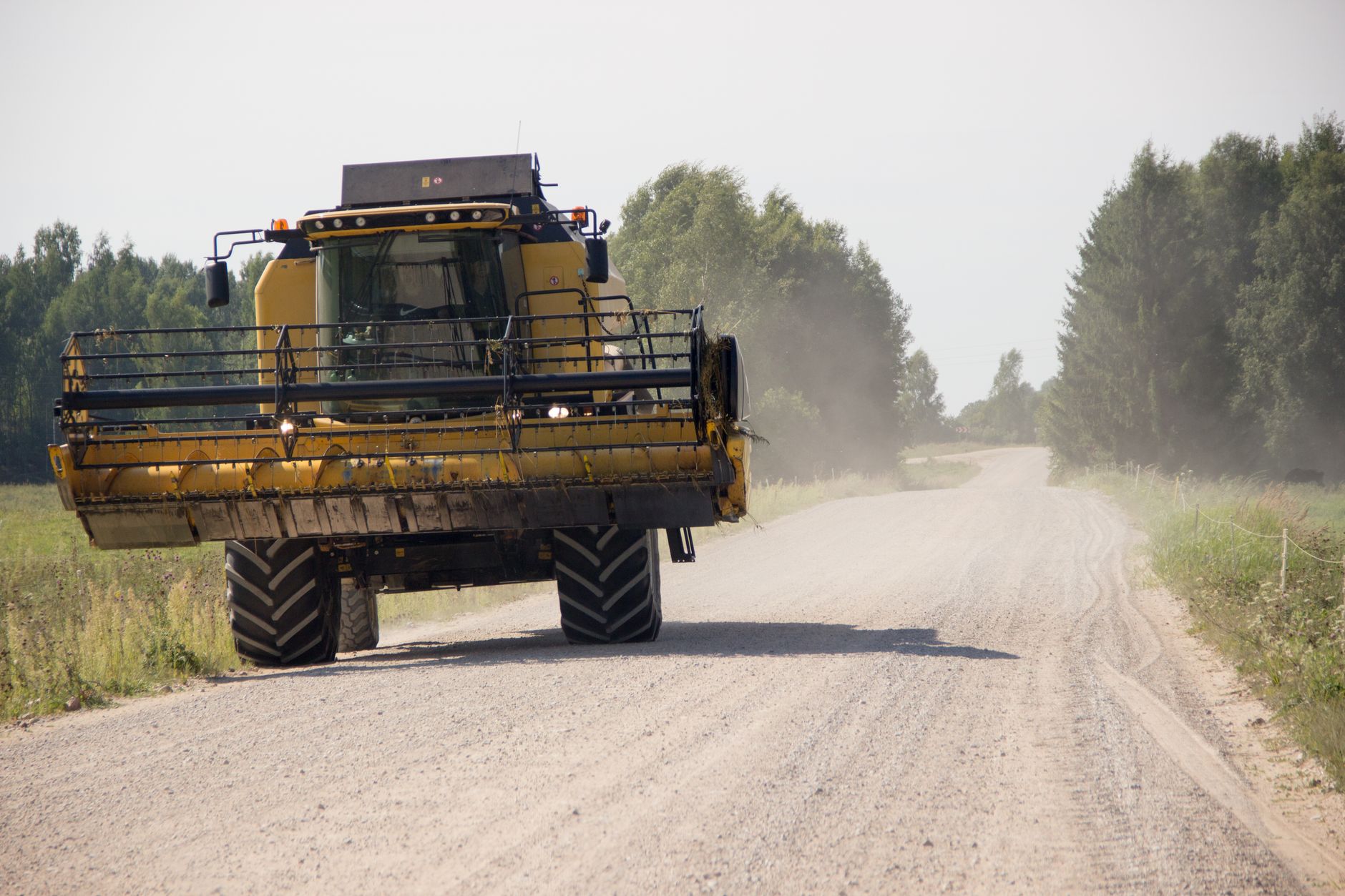
The Combine I Drove for Dad
A Preacher From the Phone Book
I went to the viewing Wednesday evening, and Pastor Rennick was there, and I will say he was pleasant enough. He wore a good gray suit and he had a soft handshake and he called my father Harry.
Nobody had ever called my father Harry. He was Harold, or he was Mentzer down at the elevator, or he was Dad. Harry was a man I had never met.
Rennick got me by the casket and he said, “Your father, Harry, was clearly a pillar of this community,” and he squeezed my shoulder, and I understood right then that the man knew nothing. He had a page of notes Paulette had typed up for him, I found out later, and the page said Harold grew corn and loved the Lord and left a loving wife.
It did not say he pulled a calf out of a heifer at two in the morning in a sleet storm and then went in and fried eggs like nothing had happened. It did not say he gave the Vincents a year of free seed the spring Dan Vincent’s back went out. It did not say he carried my mother up the stairs the last two weeks of her life because she weighed nothing by then and he would not hear of a hospital bed in the living room.
A man cannot know those things in one afternoon on a bricked patio. I did not blame Rennick. He was doing a job, the way you would do a job for a stranger.
I blamed the arrangement. I blamed the idea that my dad’s send-off should be handled like catering, a preacher hired by the hour because he prayed beautiful on the radio, while the people who had actually buried their hands in that same dirt alongside Harold Mentzer for half a century were expected to sit in the pews and be quiet.
I stood at the back of that funeral home a long time Wednesday night and I watched the line come through. Half the county came. Old men in clean overalls who smelled like the barn even scrubbed up. Farm wives with casseroles already in their cars. The Schroeders, the Vincents, the Hemmelgarns, Denny Fox who ran the elevator, Vince Brinkman who custom-chopped silage for three townships.
And Elmer Troyer, eighty-some years old, a cattleman from out on the Dutch ridge who had bought and sold stock with my dad since before I was born. Elmer came through the line slow on his cane, and he got to me, and he did not say he was sorry for my loss. He said, “Your daddy was the last honest man at the sale barn, Doug.” Then he looked toward the casket a long minute and he said, “They giving him a proper send-off?”
I did not know how to answer that. So I just said we were doing our best, and Elmer looked at me like he knew there was more to it, and he moved on down the line.
That was the night I made the calls.