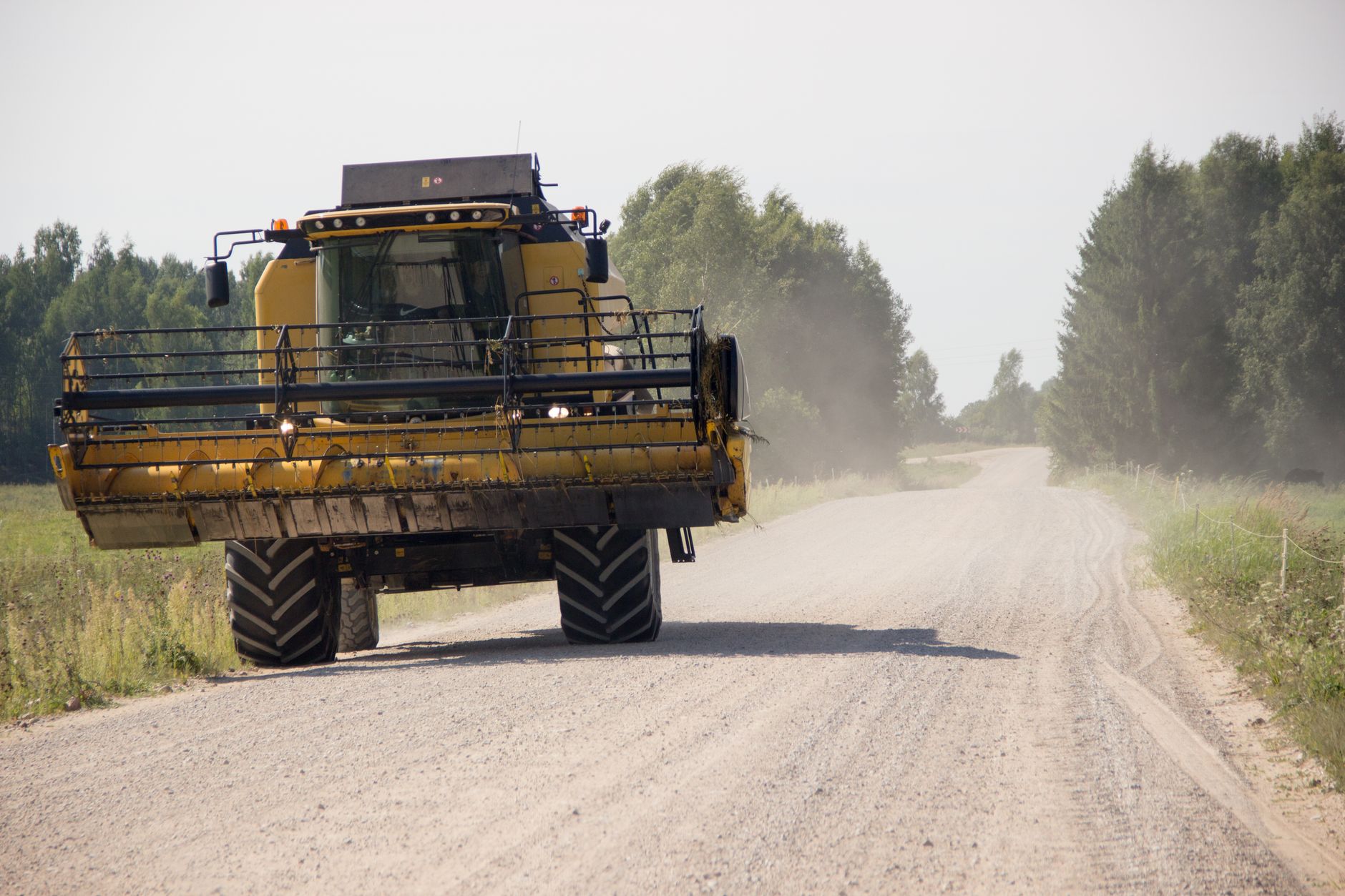
The Combine I Drove for Dad
Nineteen Harvests
You have to understand what the farm was to understand why the hallway hurt the way it did.
My dad was Harold Mentzer, and he farmed a little over nine hundred acres of corn and beans in Putnam County, Ohio, flat black ground that his own father had drained with clay tile a hundred years back. I came home from two years at the community college in Lima when I was twenty-four, and I never left again.
Nineteen falls I rode the grain cart alongside that combine. Nineteen springs I ran the planter behind him while he worked ground ahead of me. We did not talk much. Farmers do not. But I knew the sound of his voice on the two-way radio better than I knew my own, and I knew every low spot in every field by the way the yield monitor dropped.
My two older brothers had gone another way. Ray sold crop insurance over in Findlay and did well at it. Carl drove for a feed company and lived up by Toledo. They loved Dad, I want to be clear, they just were not farmers, and the day-to-day of it fell to me.
Mom passed when I was thirty-one. Breast cancer, eleven months from the first word of it to the end. Dad went gray and quiet for about three years, and I half thought he would sell out and move to town.
Then he met Paulette at a Farm Bureau banquet, and she was lively and she laughed at his jokes, and inside a year they were married at the courthouse in Ottawa. I was glad for him. I truly was. A man should not finish out his life eating cold sandwiches over the sink.
Paulette came from town. Her first husband had managed the Chevy dealership before he passed, and she liked nice things, and there is no sin in that. She redid the farmhouse kitchen and she bricked the patio and she got Dad to buy a side-by-side so they could ride the lanes in the evening without his knees hurting.
What she never did was understand the ground. To her the farm was the thing that paid for the kitchen. To Dad and me it was the whole reason a man got up in the dark.
I farmed on shares with him those last years. We shook hands on it every January at his kitchen table, him and me, and that handshake fed my wife and my two kids. There was never a paper. In our family a handshake was the paper.
I tell you all that so you will know. When Paulette handed my father’s funeral to a radio preacher and offered me the lunch if there was time, she was not just slighting a son. She was telling the whole county that the nineteen years did not count, that I had been the hired help who happened to carry the name.