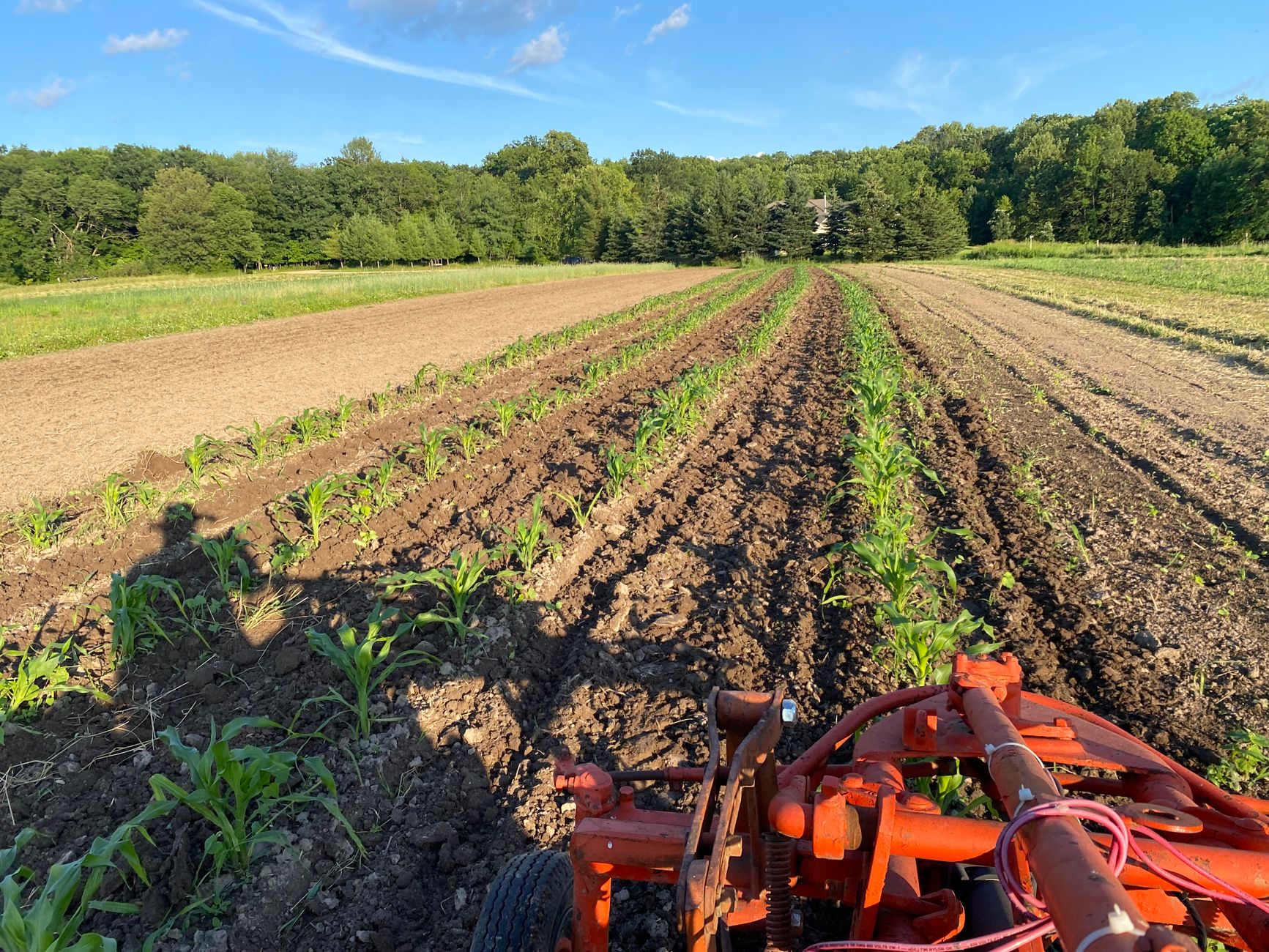
The Spring Grandma Rode in My Tractor
I did not notice who was behind us until we pulled onto the scale. I looked in the mirror and saw Roger’s truck, loaded with his own corn, three trucks back and creeping up.
My hands went cold on the wheel. Grandma saw him too. She did not say anything. She just straightened her scarf.
The man in the scale house was Mike Olson. He had worked that scale since I was in high school, and he was the one who had printed Roger’s name on my corn the October before.
He did not know any better. People bring in corn, and Mike weighs it, and he writes down whoever is driving.
Grandma had me help her down out of the truck. She walked across the concrete to the scale house door, slow, with her cane, and she pulled the door open herself.
Mike looked up from his screen. When he saw who it was, he stood up.
“Mrs. Holm,” he said. “I have not seen you out here in twenty years.”
“Twenty-two,” Grandma said. “Since Walt died. Sit down, Mike. You are going to need a pen.”
The scale house was small and warm and smelled like coffee and dust. There was a man from town in there buying a bag of feed, and two drivers waiting on their tickets, and all of them got quiet.
Behind us, the door opened again. I turned and saw Roger standing in the doorway with his seed cap in his hands. He must have seen Grandma climb out of the truck and walked up from the line.
He looked older than I remembered. He was sixty-six that year, and the summer had put ten more on him. He did not say anything. He just stood there with his cap in his hands.
“Mike,” Grandma said. “Last October, my son brought you six thousand bushels off my ground, and you put his name on the ticket. That was not your fault. You did not know.”
Mike looked from her to Roger and back. He did not say anything either.
“That corn was my granddaughter’s,” Grandma said. “She bought the seed. She paid for the fertilizer. She planted it, and she would have harvested it, except she was in the hospital having my great-granddaughter.”
The man buying feed set his bag down. Nobody in that room was breathing.
“This corn is hers too,” Grandma said. “This load and every load out of that field for as long as I am alive. You put Jenna Holm on the ticket. And then you give me that ticket, because I am going to sign it myself, so there is no question in anybody’s mind whose ground it came off.”
Mike printed the ticket. He turned it around on the counter and handed her the pen, and Grandma signed her name on the back in her careful church-bulletin handwriting: Evelyn Holm, landowner.
Then she turned around and looked at Roger.
“I rode in that tractor every round this spring so you would see it,” she said. “Now I want you to say it. In front of these men. The same men you told I would not be farming with a baby.”
Roger’s face went red, then white. He looked at the floor. He turned his cap around once in his hands, all the way around, the way my dad used to when he was working up to something.
“Mom,” he said.
“Not to me,” she said. “To her.”