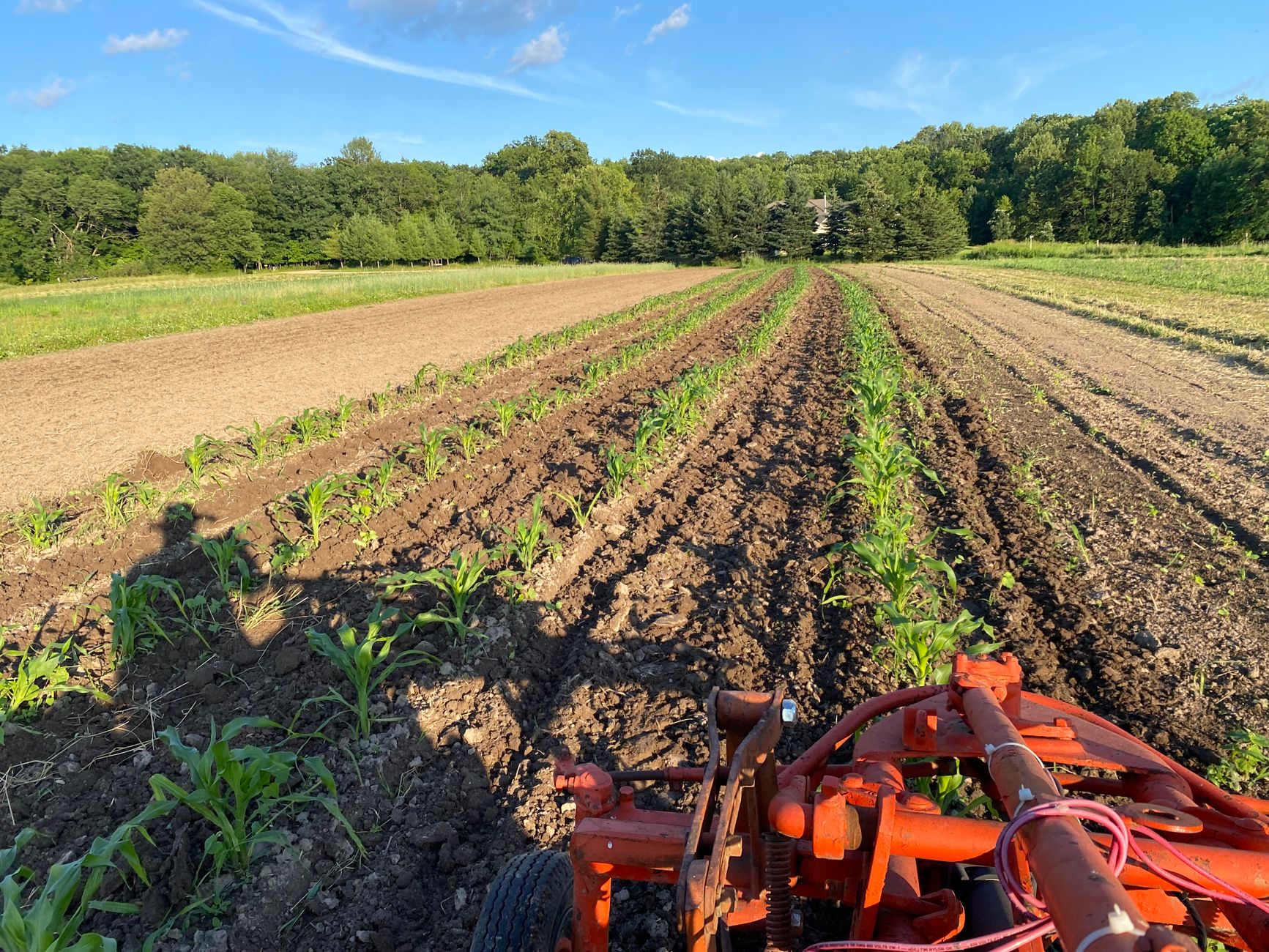
The Spring Grandma Rode in My Tractor
“Yes,” she said. “Finally. I should have done it a long time ago, with Roger. I made it easy for him. I made everything easy for him, his whole life, because he was the oldest and he struggled.”
We finished the last round just as the light went orange along the shelterbelt. I lifted the planter and pulled out onto the headland and shut the tractor down.
It was quiet. You could hear the meadowlarks out on Jim’s pasture across the road. Grandma sat there with her hands folded on her purse.
“Thirty acres,” she said. “Every round.”
“Every round,” I said.
Ben came over with the baby. He helped Grandma down the ladder and onto the box step, and then he did something I did not expect.
He put Maisie in her arms right there, at the bottom of the tractor, on the edge of the planted field.
Grandma stood there holding my daughter in the evening light, with her cane hooked over Ben’s arm and her purse hanging off her elbow. She looked out at the planted ground for a long time.
“Now it is planted,” she said to the baby. “Now we wait.”
The corn came up even that year. I walked it every week through June and checked my stands, and it was as pretty a field as I ever grew.
Grandma had me drive her down the field road every Sunday after church so she could look at it.
Roger did not come by. He did not call. Sue came to Grandma’s for coffee a couple of times that summer, and once she brought Maisie a little stuffed calf, and she said Roger was “working through some things.”
I did not ask what things. I did not need to.
In August, the bank called Roger again. I found that out from Grandma, who found it out from Sue. He had sold forty head of calves early to make one payment, and he was still behind on another.
“I am not going to bail him out,” Grandma told me. “I want you to know that. I have thought and prayed on it, and that is not the help he needs.”
“What help does he need?”
“He needs to stand up in front of somebody and say what he did,” she said. “Not in front of a judge. In front of his own people.”
Harvest came the second week of October. Ben combined our field with his dad’s combine on a Saturday, and I ran the truck back and forth to the elevator in Parker, because that was where the corn had gone the year before, and Grandma said that was where it ought to go now.
She insisted on riding along for the first load. Ben’s mother kept Maisie at the house.
Grandma climbed up into the truck with Ben’s help, holding her purse in her lap, and I had never seen her look so set on anything.
“You let me do the talking at the scale,” she said.
“Grandma, I can handle the ticket.”
“I know you can handle it,” she said. “This one is not for you to handle.”
The elevator in Parker sits right on the edge of town by the tracks. In October, the line to the scale can back up a quarter mile down the highway, and that Saturday it did. We sat in line twenty minutes with the windows down.