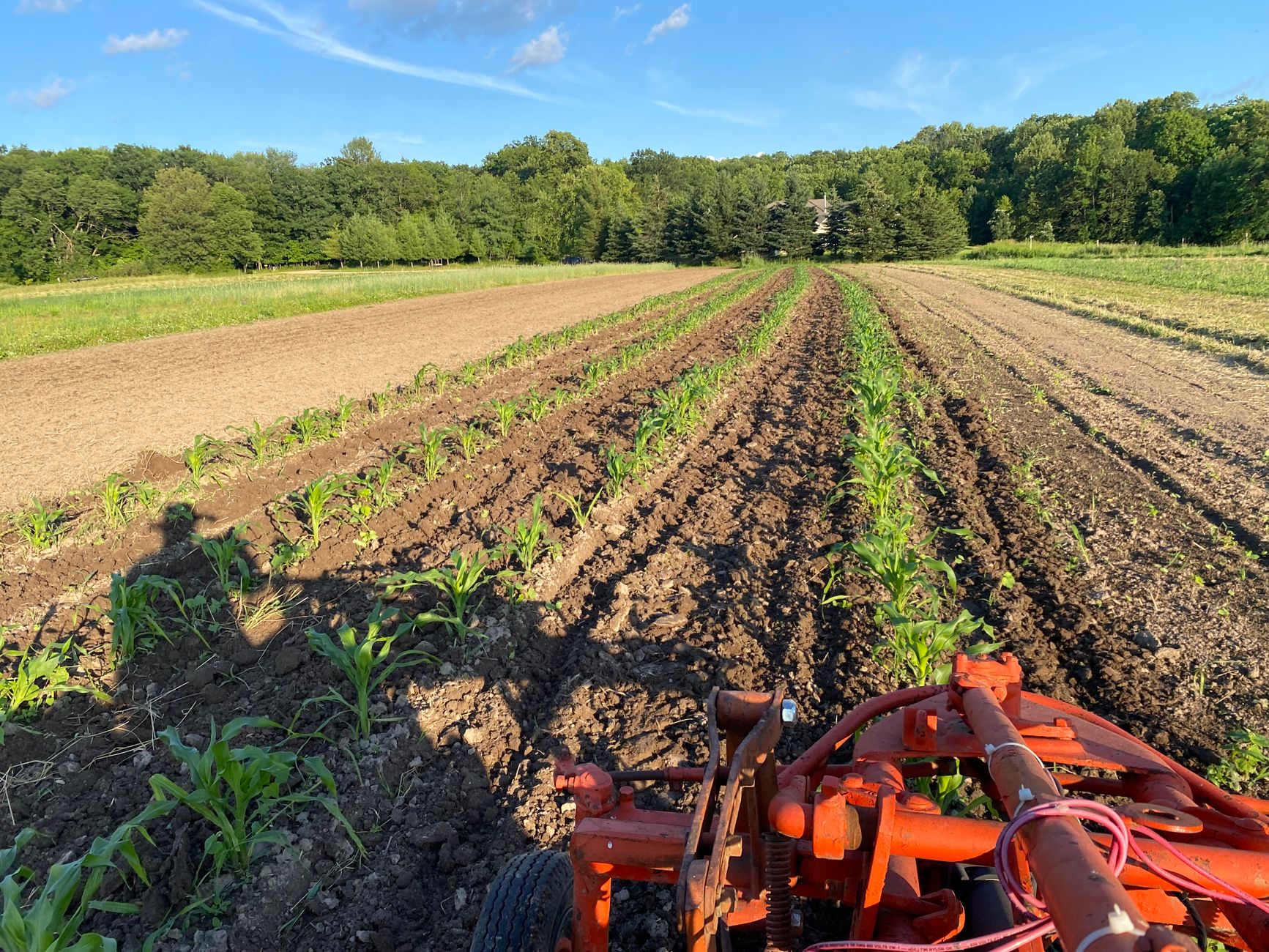
The Spring Grandma Rode in My Tractor
Grandma looked me over from the porch and nodded like I had passed an inspection.
She had on her blue quilted coat, the one she wore to church from October to May, and a scarf tied under her chin.
She had her purse, too, and I asked her what she needed a purse for in a tractor.
“A lady does not go out without her purse,” she said. “Help me up.”
Ben boosted her from behind and I pulled from the cab, and with Ben’s dad’s box step and her cane hooked over my arm, she made it up.
She was breathing hard. Then she sat down in the buddy seat and smoothed her coat like she was settling into a pew.
“Well,” she said. “Go on.”
I pulled out of the yard and onto the field. The ground had been worked the week before, and it was black and smooth and smelled like spring always smells, wet and alive. I dropped the planter and started the first round.
Ben stood at the field edge in his brown hooded jacket. He had Maisie bundled in a pink snowsuit his mother had bought her, because the wind out there was still cold in the evenings, and he held her up so she could see the tractor.
Every time I turned at that end, Grandma waved at the baby. Every time, Ben lifted Maisie’s little hand and waved it back.
“She is going to think the whole world is a tractor,” Grandma said.
“There are worse things to think,” I said.
The county road runs right along the south side of that field. It is gravel, and it is the way most people get to the blacktop from the north part of the township. On a May evening, there is traffic.
The first car that came by slowed down to a crawl. I could see the driver lean forward over her steering wheel. Then she waved, and Grandma waved back, and the car went on.
The second was a neighbor, Jim Peterson, who farms the section across the road. He stopped in the middle of the gravel and rolled his window down and just looked. Then he lifted two fingers off the steering wheel and drove on.
“Jim knows,” Grandma said. “Jim always knows.”
We did eight rounds that first night before the light went. Grandma did not say much.
She watched the monitor with me and asked what the numbers meant, and I showed her how the planter counted seeds as they dropped.
“Thirty-two thousand an acre,” she said. “When your grandpa planted this field, we put in maybe fourteen. We thought we were rich if we got eighty bushels.”
Ben helped her down when we were done. She stood on the box step a minute with her hand on his shoulder, catching her breath, and then she reached over and touched Maisie’s cheek with one finger.
“You come back tomorrow, little girl,” she said. “We are not finished.”
The second night, there were more cars. Word goes around a township faster than the wind.
By the third night, there were people who had no reason to be on that road at all, driving it slow at six o’clock.
Nobody said anything to us. Nobody had to. Everybody in that part of the county knew whose corn had gone to Parker the fall before, because Roger had told them himself, and now everybody could see who was planting it this year.