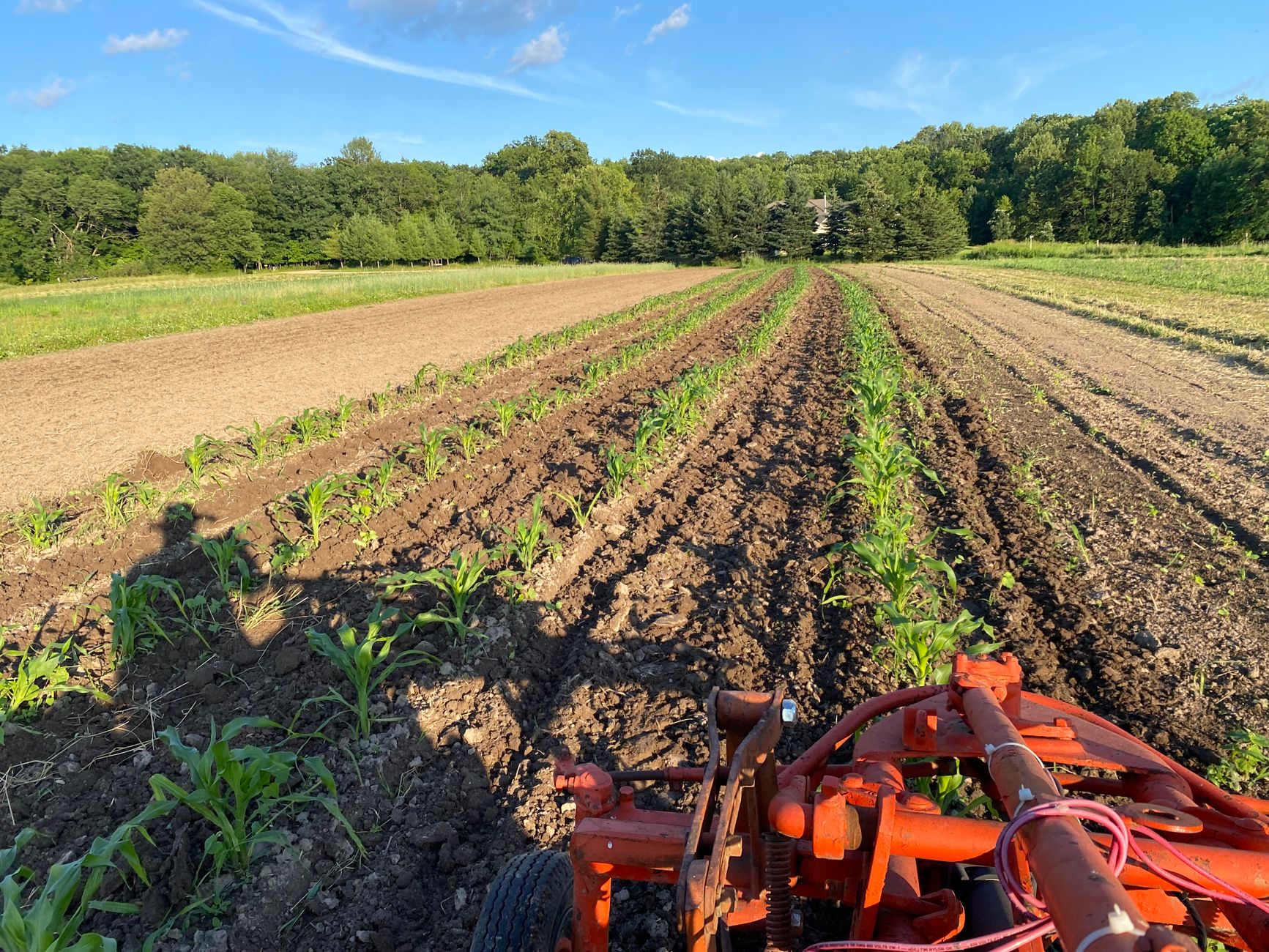
The Spring Grandma Rode in My Tractor
“Ben,” I said. “Please take your boots off.”
He stood there with one boot laced. He is not a man who likes being told to sit down when something is wrong.
But he looked at me on that floor, and he looked at the baby, and he unlaced it.
“Then what are we doing?” he asked.
“I do not know yet,” I said. “I want to talk to Grandma first.”
People have asked me since why I did not just call the sheriff. It was theft.
Anybody at the elevator would have told you whose field that was, and Roger had bragged about it in front of half the town.
The answer is that Grandma asked me not to. She asked me the next morning at her kitchen table, with the coffee going cold between us, and she held my hand with both of hers while she asked.
“Don’t call the sheriff on my boy,” she said. “I am ninety-one years old, Jenna. I cannot spend whatever time I have left watching my son stand in front of a judge.”
“Grandma, he took my whole crop.”
“I know what he took.” Her voice did not shake. “I know exactly what he took. I am not asking you to pretend he did not. I am asking you to let me fix it my way.”
I looked at her hands on mine. They were thin and spotted and strong. Those hands had milked cows and buried a husband and a son, and they had held my daughter the day before.
“What is your way?” I asked.
“First,” she said, “that ground is yours to farm for as long as I am breathing, and I will see that it stays in good hands after. Roger will not set a tire on it again.”
“And second?”
She let go of my hand and folded hers on the table. She looked out her kitchen window at the stubble field, and something in her face set like concrete.
“Second,” she said, “come spring, I am riding with you.”
I did not understand. I thought maybe she meant she wanted to come out and watch, the way she used to sit on the porch and watch my dad plant. I told her that would be nice.
“No,” she said. “Not watch. Ride. In the cab, beside you, every round. I want every person who drives that road to see whose corn goes in that ground.”
I almost laughed. Grandma was ninety-one. She used a cane on the porch steps. The thought of her climbing into a tractor cab was about the last thing I expected to hear that morning.
But she was not laughing. She was looking at me the way she looked at the pastor when he got a hymn number wrong.
“I mean it,” she said.
So I did not call the sheriff. I went home and told Ben, and Ben listened all the way through, and then he nodded slowly.
“Then I will be standing at the end of that field every night she rides,” he said. “With the baby. So nobody can say we were hiding.”
That was the winter. It was a long one. Maisie had colic until Christmas, and I went back to the co-op in January on four hours of sleep, and every time I drove past that stubble field, my jaw got tight.