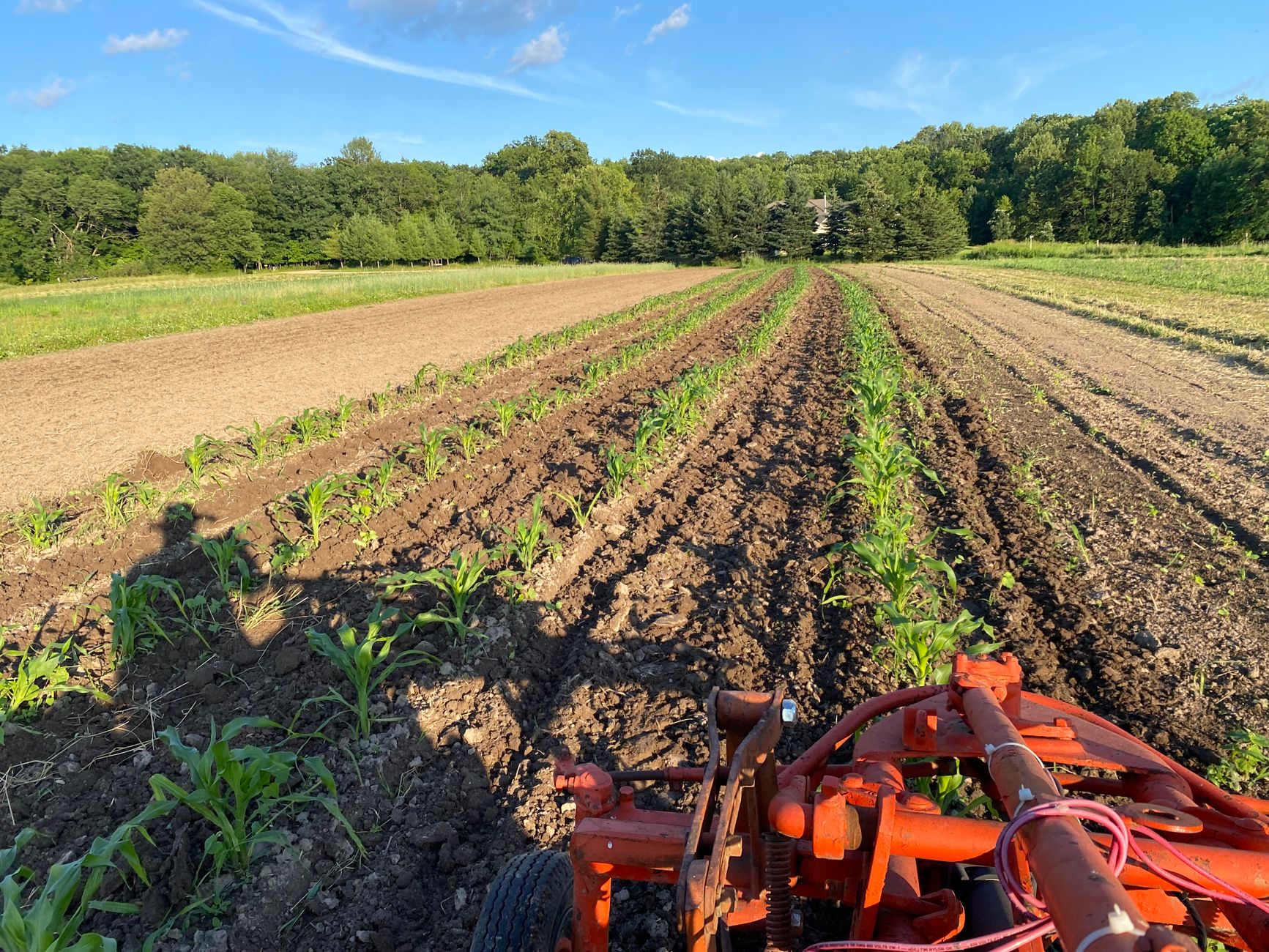
The Spring Grandma Rode in My Tractor
A ninety-one-year-old woman in a blue coat in the cab of a tractor says a lot without saying a word. It said that Grandma knew.
It said that she had chosen. It said it out loud on a public road every evening for anybody to see.
On the third evening, Roger drove by.
I saw him coming from a half mile off. He drove slow, slower than anybody, and when he got even with the field, he looked right at the cab. Grandma was looking right back.
He did not wave. He did not stop. He just looked, and then he drove on north toward his place.
Grandma waved anyway. She lifted her hand off her purse and held it up until he was past.
“He was always the one who had to see a thing before he would believe it,” she said. “When he was little, I could tell him the stove was hot all day long. He had to put his hand on it.”
I did not say anything. I watched the rows. I felt her looking at me, and after a while she reached over and put her hand on my knee.
“I am not doing this to shame him, Jenna,” she said. “I want you to know that. I am doing it so he sees it plain. A thing he cannot argue with.”
“I know, Grandma.”
“I do not think you do,” she said. “Not all the way. But you will.”
The fourth night was the last. We had six rounds left when I pulled out of her yard, and the sky was clear and the wind had laid down for the first time all week.
Ben was at the field edge again. Maisie was awake this time and kicking her feet in that snowsuit, and when Grandma waved, Maisie got so excited she nearly bucked out of Ben’s arms.
“She waved,” Grandma said. “Jenna, she waved by herself.”
She had not, really. She had flung her arm out the way babies do. But Grandma had her face pressed close to the glass, and her eyes were full, and I was not about to argue.
On the next to last round, Grandma got quiet. I thought she was getting tired. I asked if she wanted to go in, and she shook her head.
“Your grandpa planted this field in 1958,” she said. “With me riding on the fender. No cab, no seat. Just me hanging onto the fender of a Farmall and him telling me to hold on tighter.”
“I did not know that.”
“He planted it every year after,” she said. “And then your dad. And now you.” She was looking out at the rows, the straight black lines of them going away from us. “I always meant for it to stay with the ones who would plant it.”
I looked over at her. She was smiling, but there were tears on her face, and she did not wipe them.
“I used to think the sad part of getting old was losing people,” she said. “It is not. The sad part is watching the ones you have left hurt each other, and not being able to do one thing about it.”
“You are doing something about it,” I said.