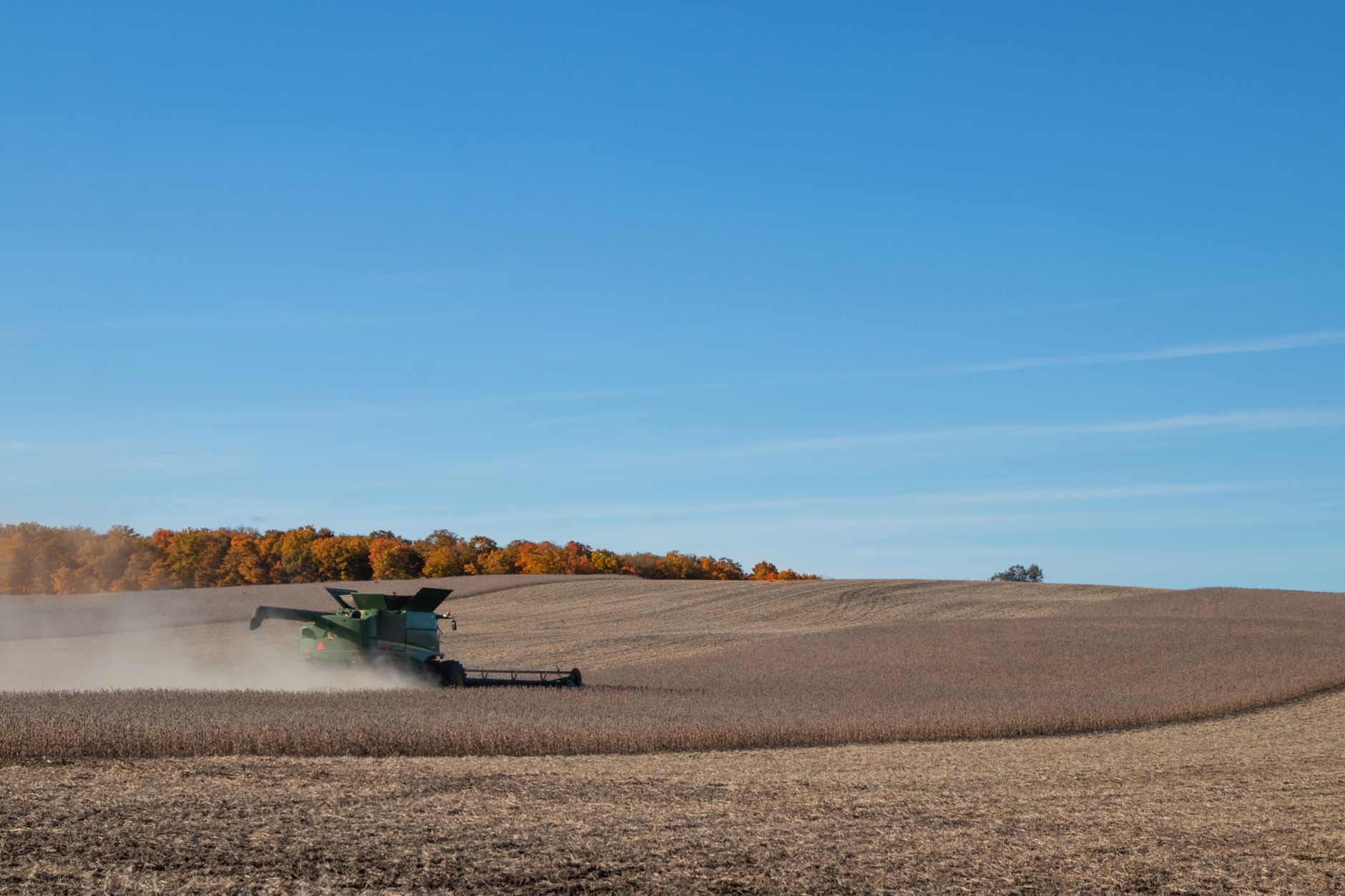
The Combine She Drove Home
The Calls He Had To Make
Before he left the field that night, Colby called the three neighbors.
He called Al Hofer first. He told him he was sorry, but he was not going to make it Monday, and he didn’t know when he’d be able to cut. Al told him not to worry, the beans weren’t going anywhere, and asked if everything was all right at home.
Colby said no. He said it out loud to Al Hofer, a man he had known since Sunday school. He said things were not all right, but they were going to be.
Then he called the Schmidts. Then the Kroekers. Same thing.
Merv stayed with him through all three calls. Then Merv drove him home, because his pickup was parked at the other end of the quarter and Merv said he shouldn’t drive like that.
I didn’t know any of this yet. I was at the farm, backing his father’s combine into the machine shed in the dark, crying so hard I could barely see the mirrors. Merv’s nephew brought my car back later and left the keys on the porch rail.
The Night
I sat in the cab in the dark shed for a long time after I shut it off.
The engine ticked as it cooled. I could hear the wind on the tin roof. I held Lowell’s cap in my lap and I talked to him, which I have done more than I would admit to most people.
I said, “I hope I didn’t just lose our son over a combine.”
I said, “I hope you’d have done the same thing.”
I don’t know if he heard me. I like to think he did. I like to think he said what he said that night in 1998, sitting in the recliner with his leg in the cast, after I came in from the first full day in the field covered in dust.
“Lyn,” he said. “You don’t hurry it. That’s the whole secret.”
I went in the house around ten. I didn’t call Colby. I didn’t text him. I had said what I came to say, and the rest was his to carry for one night.
I did not sleep much.
Sunday Morning
At six-thirty Sunday morning, a pickup pulled into the yard.
I was at the sink in my robe, rinsing the coffee pot. I saw the headlights swing across the kitchen wall, and I knew the sound of that truck. I set the pot down and dried my hands.
He didn’t come to the house. He walked straight to the machine shed and opened the walk-in door and went inside.
I put on my boots and my vest over my robe and went out there. It was cold. There was frost on the windshields of everything in the yard.
He was standing beside the combine with his hand flat on the side of it, the way his father used to stand beside a cow he was worried about.
He heard me come in. He didn’t turn around right away.
“Merv told me about 1998,” he said.
“I figured he might.”
“You never told me.”
“You never asked,” I said. “And it didn’t seem like a thing a mother says. ‘Your father broke his leg and I saved the farm.’ It sounds like bragging.”
He turned around then. His eyes were red. He looked about twelve years old and about forty, both at once.
“I didn’t know you could run it,” he said.
“Well,” I said. “I can.”
The Truth At The Workbench
We sat on two upside-down buckets by Lowell’s workbench. I made him tell me all of it. The truck. The thirty thousand. The missed payment. The second one coming. Jordyn not knowing.
When he got to the part about Jordyn, I stopped him.
“You’re going to tell her today,” I said.
“Mom.”
“Today, Colby. Before church. She’s your wife, not your audience. She’s going to find out, and it’s going to be from you or it’s going to be from the bank, and you get to pick which one she never forgives.”
He put his face in his hands. Then he nodded.
Then I made him look at me.
“Now let’s talk about the money,” I said.
I had done the numbers at three in the morning. I’ll tell them to you the way I told them to him, because I think the numbers are the part people like to get right.