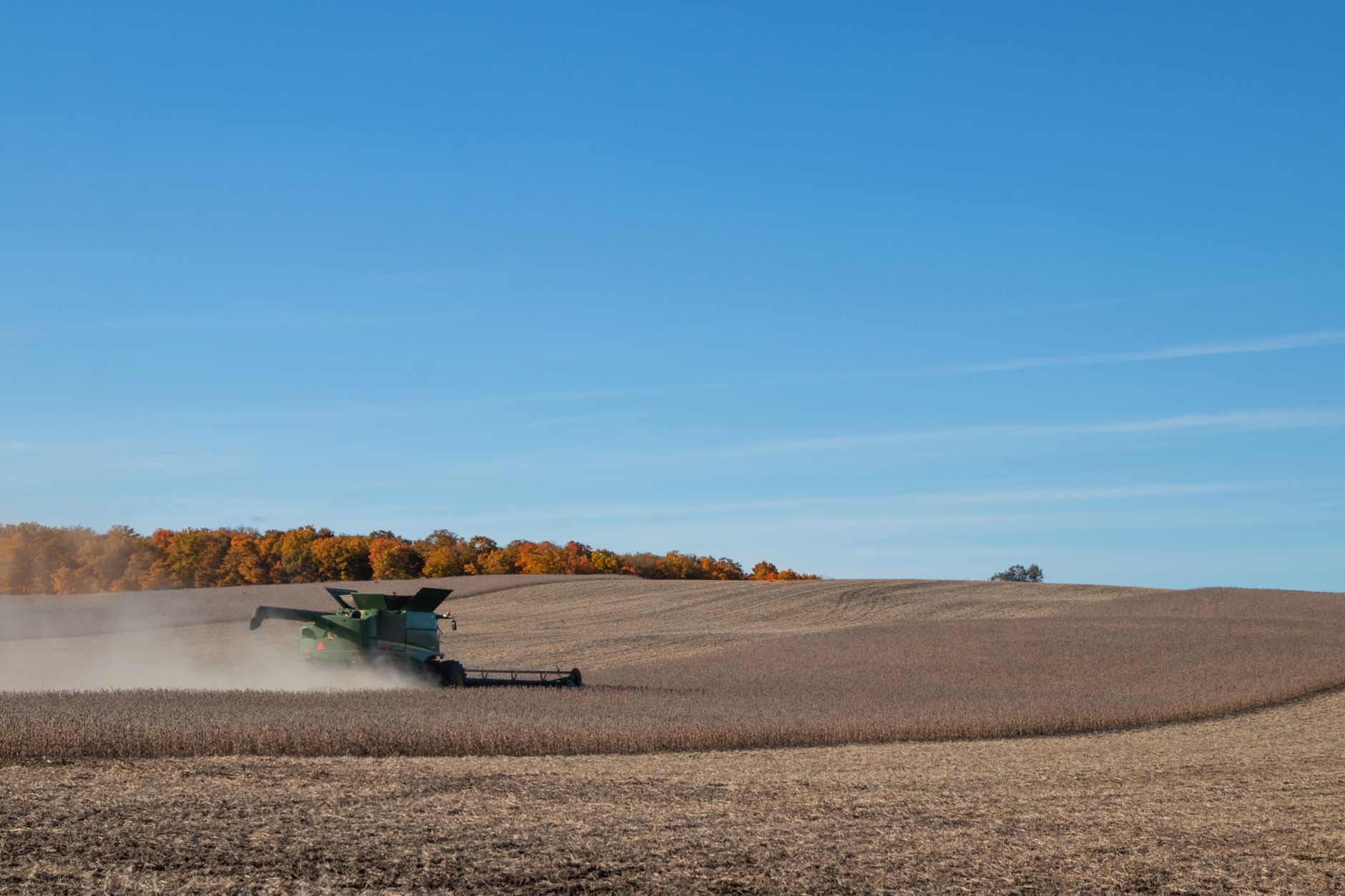
The Combine She Drove Home
What I Agreed To
He sat at my kitchen table and drank iced tea out of the same glass he used when he was nine. He was tall like his father, with the short beard he had grown the winter Lowell died.
“I’ve got my two hundred acres of beans over by Hardy,” he said. “I can’t afford to hire it cut, Mom. Not this year. Let me run Dad’s combine on my own ground and I’ll have it back in the shed by the first of November.”
Colby drives semi for a living. He farms a little on the side, rented ground, the way his father started out. He had married Jordyn two years before, a sweet girl who teaches second grade in town and laughs at everything I say.
I said yes. Of course I said yes. He was my son, and that machine had been his father’s, and I thought it would do Lowell’s heart good to know it was cutting his boy’s beans.
I told him to fill it from the farm tank. I told him I’d cover the fuel for his two hundred acres. I figured that was maybe two hundred and fifty gallons, call it nine hundred dollars. I thought of it as a gift.
He hugged me at the door. He smelled like diesel and cigarette smoke from the truck stop, though he swore he didn’t smoke. He said, “Thanks, Mom. Dad would’ve said yes too.”
I believe he meant it when he said it.
What I Found Out
His two hundred acres were done by the twentieth of September. I know because Jordyn posted a picture of him in the cab with a thumbs up, and I put a heart on it.
Then the diesel tickets kept coming.
At first I thought the driver had mixed up the tanks. Then Merv Penner came into the co-op to pay his feed bill, and he leaned on my counter the way he has leaned on it for nineteen years and said, “That boy of yours does nice work. Cut my beans clean as a whistle.”
I smiled at him like I knew what he was talking about.
“Thirty-five an acre,” Merv said. “Fair price. I’d have paid forty to the outfit from Kansas, and they’d have left half of it on the ground.”
So that was it. My son was running custom harvest with his father’s combine. Neighbors’ beans, all over the south end of the county. Thirty-five dollars an acre, which is right in line with what the custom rate sheets say for soybeans out here.
I went home that night and did the arithmetic at the kitchen table, because arithmetic is what I do. I called around a little, quietly, the way you can in a small county. The Hofers. The Kroekers. The Schmidt brothers. Merv.
Close to twelve hundred acres. At thirty-five dollars an acre, that is a little under forty-one thousand dollars.
He had not paid a dime for fuel. Not a dime for parts. Not a dime toward the wear on a machine that has a payment due on December first, a payment with my name on it.
That machine had gone from 2,400 hours to almost 2,500 since August. I knew that because I went out to the farm tank one evening when he was refueling and looked at the screen in the cab while he was up on the platform with the hose.
He didn’t even notice me looking. He said, “Hey, Mom,” and kept pumping.