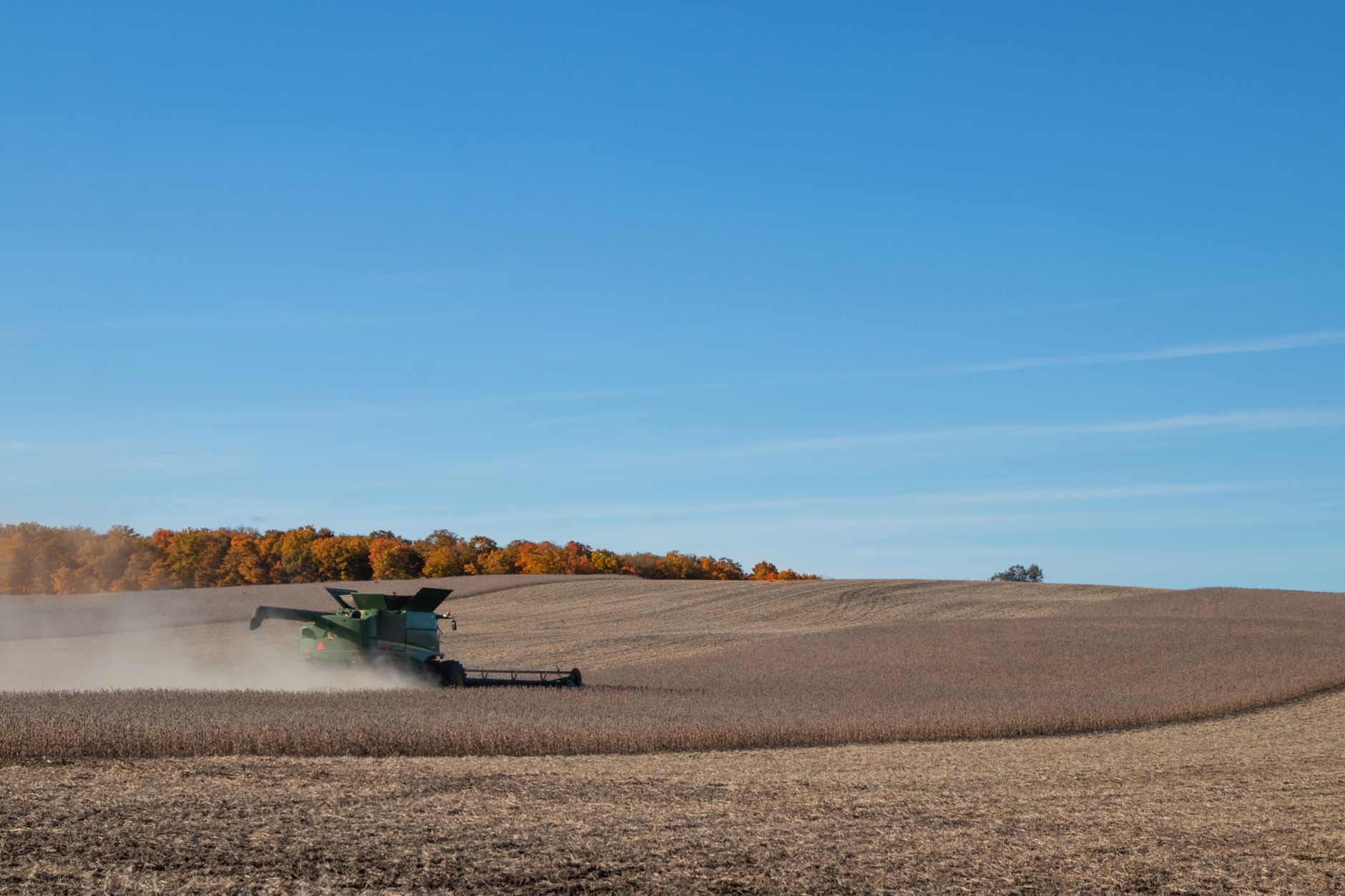
The Combine She Drove Home
What Lowell Said
Here is the part Merv told my son that I had never told him myself.
“I was standing at the elevator with your dad that November,” Merv said. “He was still on crutches. Somebody asked him how the harvest came out, and he said best yields we’ve ever had. And somebody else said, well, you lucked out that Lynette could drive.”
Merv told Colby he never forgot what Lowell said next.
“Lowell said, ‘Luck nothing. She ran it better than I do. She doesn’t hurry it. She listens to it.’ And then he said, ‘If I’d had to farm without her, I’d have been working in town by Christmas.'”
Colby sat on the tractor step and didn’t say anything.
“That combine your mother’s driving home,” Merv said. “Your dad didn’t buy that with his money. They bought it with theirs. Same as the ground. Same as the house. Same as the one she ran in ’98 with you in her belly.”
He let that sit.
“Your dad did tell you it’d be yours someday,” Merv said. “I believe that. He told me the same thing once. But someday is not this fall, son. And it was never going to be by taking it out from under your mother.”
What Colby Said
My son is not a bad man. I want to say that plain, because I am telling this story about the worst month of his life, and that is not fair to him unless I say it.
He sat there on Merv’s tractor step for a long time. Then he told Merv what he had not told me, and had not told his wife.
In July, before his father’s combine ever came into it, Colby had put thirty thousand dollars down on a used semi. A good truck, newer than the one he was driving for the outfit in Hastings. He was going to go out on his own, haul grain and cattle, be his own boss. Lowell had always talked about being his own boss.
The thirty thousand was everything Colby and Jordyn had saved, plus a loan against his pickup. The payment on the truck was almost twenty-nine hundred dollars a month.
And then the freight rates dropped in August. And the work he had lined up fell through. And by September he had missed one payment and was a week from missing the second.
“I saw the custom work as the way out,” he told Merv. “I thought, Dad’s combine is just sitting there. Mom doesn’t need it. I can make forty grand in six weeks and catch up the truck and nobody has to know.”
“Your wife doesn’t know?” Merv asked.
“She knows we’re tight,” Colby said. “She doesn’t know how tight.”
“And your mother?”
He shook his head. “I couldn’t tell Mom. Not this year. She’s got enough.”
So he told himself it was his inheritance. He told himself his father would have wanted it. He kept telling himself that until he believed it enough to say it to me on the phone.
Merv told me later that Colby’s voice broke when he said that last part. He said he didn’t look at him while he cried, because a man deserves that.