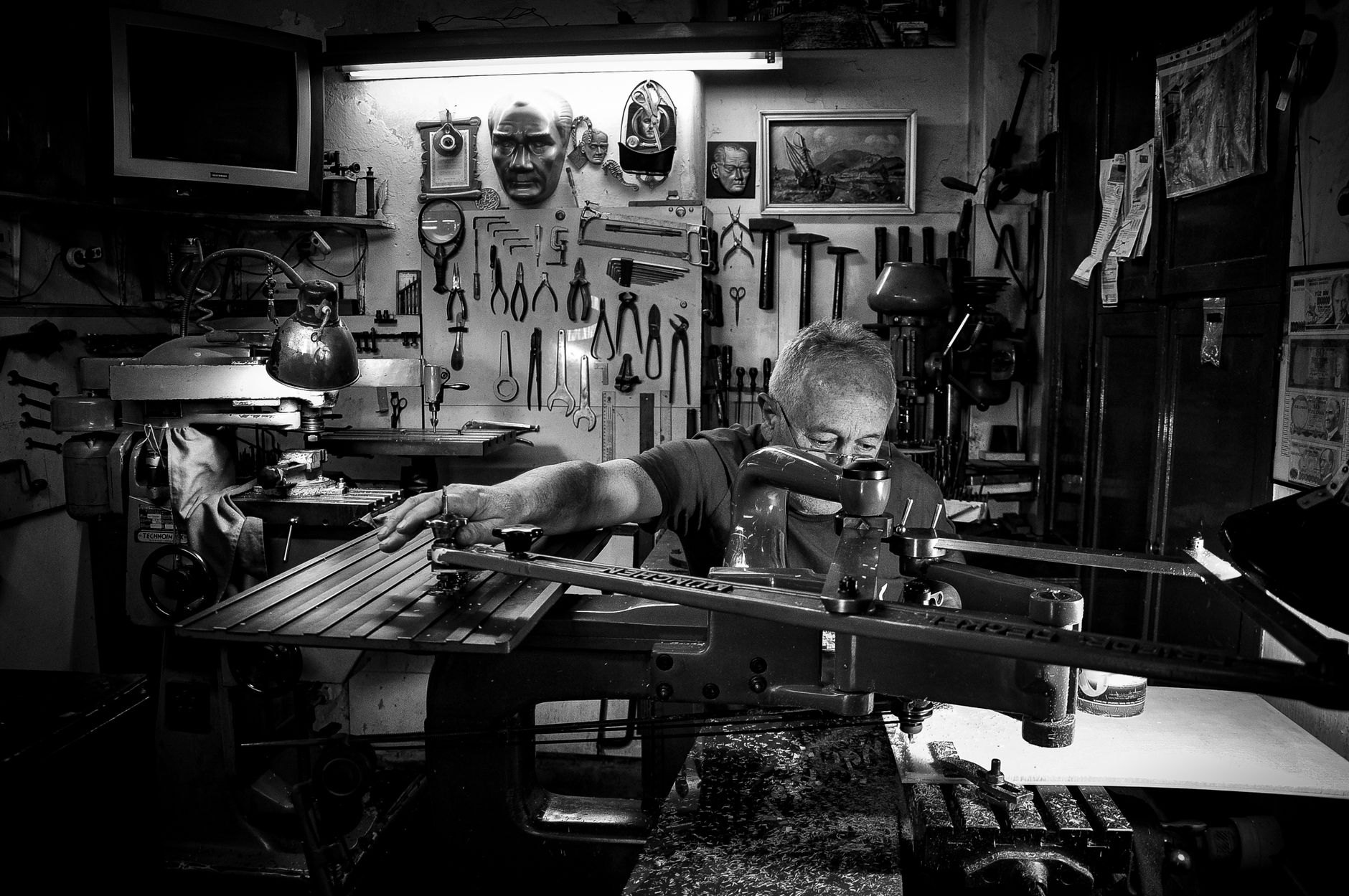
The Workbench Nobody Was Allowed to Touch
That made me angrier than anything, and I want to be honest about it, because the easy telling would have me noble from the start. I lay awake furious that my wife and my son shared something about my father’s own bench and I had been left out of it.
It took me a good while to see that being left out was exactly the room my father had lived in for forty years, and that I had built the same room for my son and handed him the key.
For three weeks I said nothing. I saw the line of light twice more and went back to bed both times. I rehearsed speeches in my truck on the way to the elevator, firm ones and fair ones and one where I just put a padlock on the side door, and gave them all to the windshield on Highway 14.
I never gave one to my son, because I was afraid of what I would find out. If I walked in and he had scarred the maple, I would have to forgive him, and I did not know how. And if I walked in and he had not, then I would have to look at what he was doing out there at midnight, and what it said about how little room I had left him to ask.
The night I opened the door
So that Tuesday I put down the glass of water. I put on my boots without lacing them and took my coat off the hook in the mudroom.
The first frost had come that week, and the grass between the house and the garage crunched under my feet. Jonas’s bike was leaned against the side door where he always dropped it, one pedal still turning from the way he had let go.
I heard it before I got there.
A wooden mallet tapping a chisel handle. Not hard. Patient. A tap, and a pause, and a tap, and a pause, and then the long dry whisper of something being pared away.
I had not heard that sound since I was twelve years old. I stopped on the step like a man who has walked into a cold room in his own house.
There is a small window in the side door, four panes. I looked through it before I did anything else.
The lamp over the bench was on, the gooseneck lamp my father had clamped there in 1971. It threw a circle of light across the maple, and in that circle were my father’s folded glasses, and his flat pencil, and my son’s back.
He had on a flannel shirt and my father’s old canvas apron, which hung to his knees and was wrapped twice around his waist and tied. His sleeves were pushed up. The little radio my father kept on the shelf, the one with the dial taped to a single station, was playing very low, and a man was reading the grain markets.
Jonas had switched it on and left the dial exactly where it was.
I put my hand on the knob.
I turned the knob.