The Workbench Nobody Was Allowed to Touch
The week after the funeral
My father died on the fourteenth of February, 2022, at the hospital in Owatonna, three days after the stroke. He was eighty-seven.
I was there for all three days. For most of that time he could not speak. Once, near the end of the second night, he opened his eyes, found my face, and said one word, slurred and soft.
“Drawer.”
I thought he meant the dresser in his bedroom, where he kept his good handkerchiefs and his rosary. I drove over to Third Avenue in the dark and opened every drawer in it. Socks. Handkerchiefs. The rosary. A birthday card from my mother, 1979.
I brought him the rosary in the morning. He looked at it, then at me, and closed his eyes. I told myself that was what he had wanted.
I was an only child, and my mother had been gone eleven years, so there was nobody to tell me no about the house. I put it on the market in March.
The garage was the problem.
I could not sell the bench. I could not burn it, or give it away, or stand there while an auction crew from Waseca carried it out and stuck a lot number on it.
So I did something Pam, my wife, still brings up at Christmas with a look I cannot argue with.
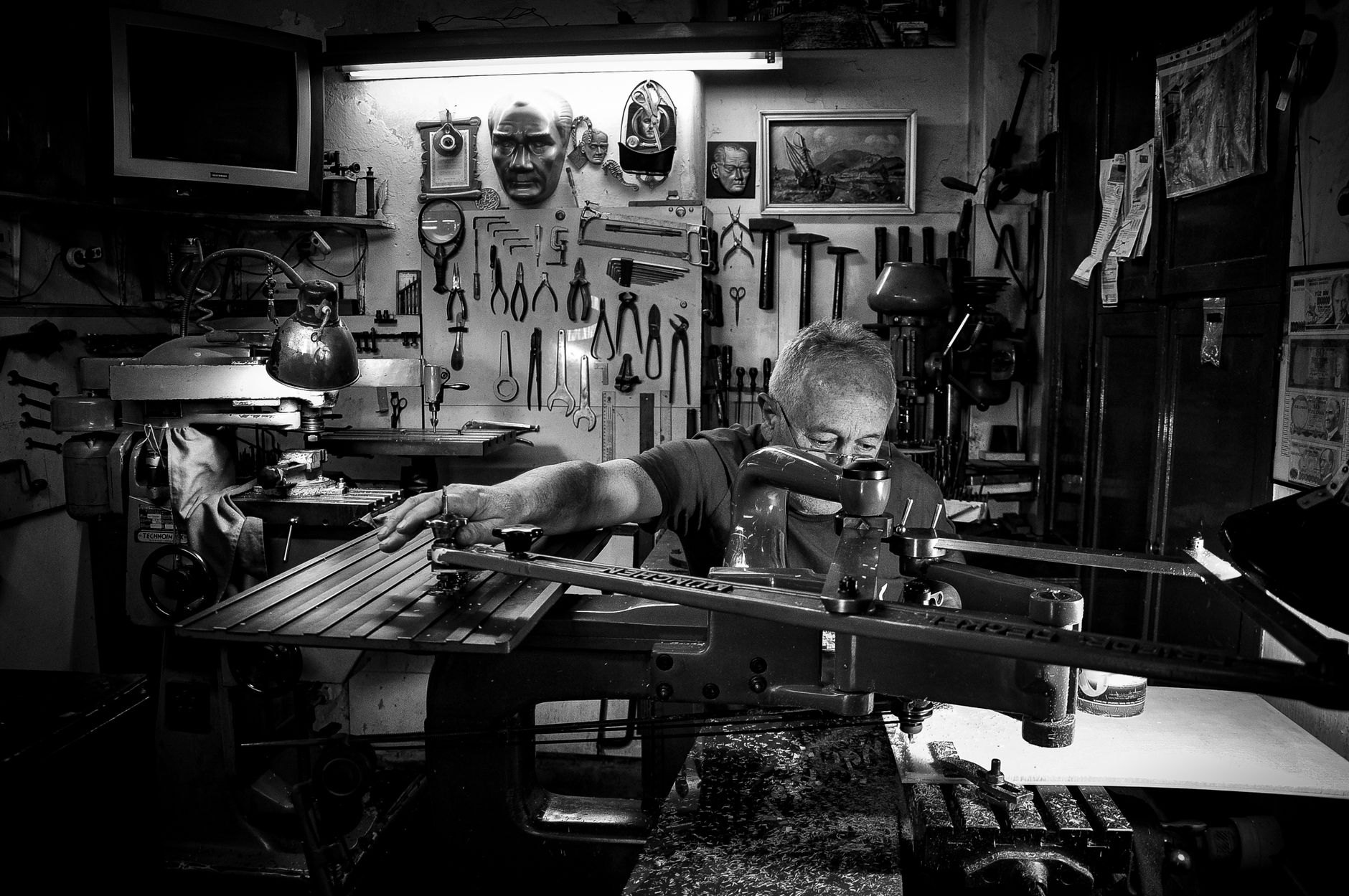
Before anyone touched anything, I took ninety-four photographs. Every drawer open. Every wall. The pegboard in four sections with a tape measure held against it. The glasses and the pencil, from above, from the side, from the low angle that shows the shadow.
The one drawer I did not open was the bottom left, which had swollen in the damp and stuck. I photographed it shut, and I told myself that leaving it alone was a kind of respect.
Then Orlin Kubat, who had worked the next machine over from my father for thirty-one years and was seventy-nine himself that spring, brought his flatbed and his grandson. We took the whole thing apart one piece at a time and hauled it across town to my garage on the north side.
I rebuilt it from the photographs. It took three weekends. I set the pegboard at the exact height, hung forty-one tools in forty-one outlines, and put the glasses and the pencil back on the end of the bench where the picture said they belonged.
Pam moved her Buick out to the driveway. It has sat out there every winter since, with a scraper on the dash, and in four years she has not complained once in actual words.
The rules
I never wrote the rules down. I never had to.
Nothing leaves its outline. Nothing is borrowed, nothing is used, nothing is moved so much as a quarter inch. The first Sunday of every month I take down each tool, wipe it with an oiled rag, and hang it back where it was.
And every night before I lock up, I stand in the side door and run my eyes across the pegboard. Forty-one shapes. Forty-one tools. I do it the way other men check that the stove is off.
But here is what I believed, and I believed it with my whole chest. A tool nobody touches is still his. The minute somebody picks it up, it starts to be somebody else’s, and one day you look around and he is gone from it.
I could not stand the idea of him being gone from one more thing.