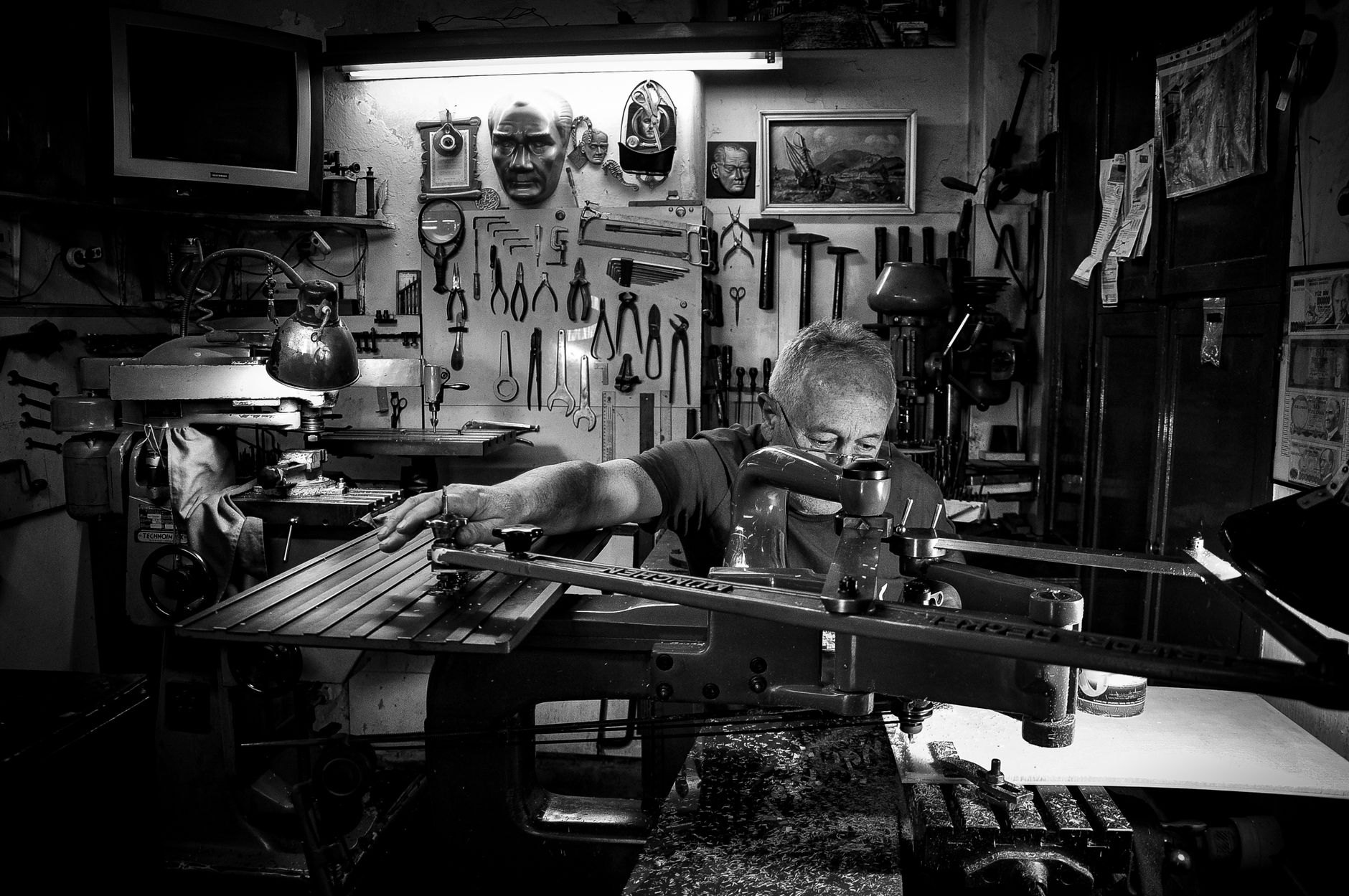
The Workbench Nobody Was Allowed to Touch
Small changes
It started the first week of October, with the vise handle.
My father always left the handle of the leg vise at nine o’clock, pointing straight out to the side like the hand of a clock. I know because I photographed it that way and I had wiped it that way for four years.
One Sunday I came in for the monthly oiling and it was at six o’clock, hanging straight down.
I stood looking at it for a while. Then I turned it back to nine, went in the house, and told myself it must have slipped.
The next week it was the three-quarter-inch chisel. It was hanging in the outline for the half-inch, close enough to be right and wrong enough that I felt it in my stomach like a missed stair.
I took it off the board. The edge was bright and flat. I had wiped that chisel clean forty-some times, but I had never honed it, because I did not know how, and I had never seen it look like this. I touched my thumb to the edge and drew it back with a thin red line.
Somebody had taken that chisel to a stone, and known what he was doing.
Under the bench, in the corner behind the bottom drawers, there were pale curls of wood in the dust. Not pine, not maple. White oak, with the sharp, dry-sweet smell it has when it is cut fresh. I picked up a curl and it unrolled in my fingers like a ribbon.
And then there were my father’s glasses. This was the part that stopped me.
I had left a thin layer of dust on the bench top, on purpose, because he had not wiped it. Now it was gone in a wide rectangle all around the glasses and the pencil. Every inch of maple around them was clean. The glasses themselves had not moved a hair.
Somebody had cleaned that bench around my father’s glasses without touching them, the way you mow around a headstone.
I knew who it was. There was nobody else it could be.
What I did not know was what I felt. First it was the hot, stupid feeling of being robbed. I stood there five minutes with the chisel in my hand, angry, and then I made myself say it plainly in my head. Robbed of what? A heap of iron and wood. A dead man’s property, which my own son, his grandson, had been quietly cleaning around.
And then I thought of the mallet, and the way Jonas had set it down, and the feeling went somewhere else, and I could not follow it.
That night I saw the first line of light under the garage door.
Pam was in bed with her book. I stood in the bedroom doorway and said, “Jonas has been in the garage.”
“I know,” she said.
“You know.”
“I know he’s been out there at night, Curt.” She took off her reading glasses and folded them, which is what she does when she is going to be firm. “I think you should go out and see for yourself.”
“See what?”
“Go out and see.”
“Pam.”
“It’s not mine to tell,” she said. “It’s his.”