Forty Years Behind the Lunch Line
Going through the line
I would like to say I said something wise. I did not.
I said, “Brett Ruehl, you put that spoon down, you’re going to hurt somebody.”
The whole gym laughed. It was a great warm sound, a wave of it rolling up the bleachers, and it broke the spell, and people began to breathe again and wipe their faces and reach for the person next to them.
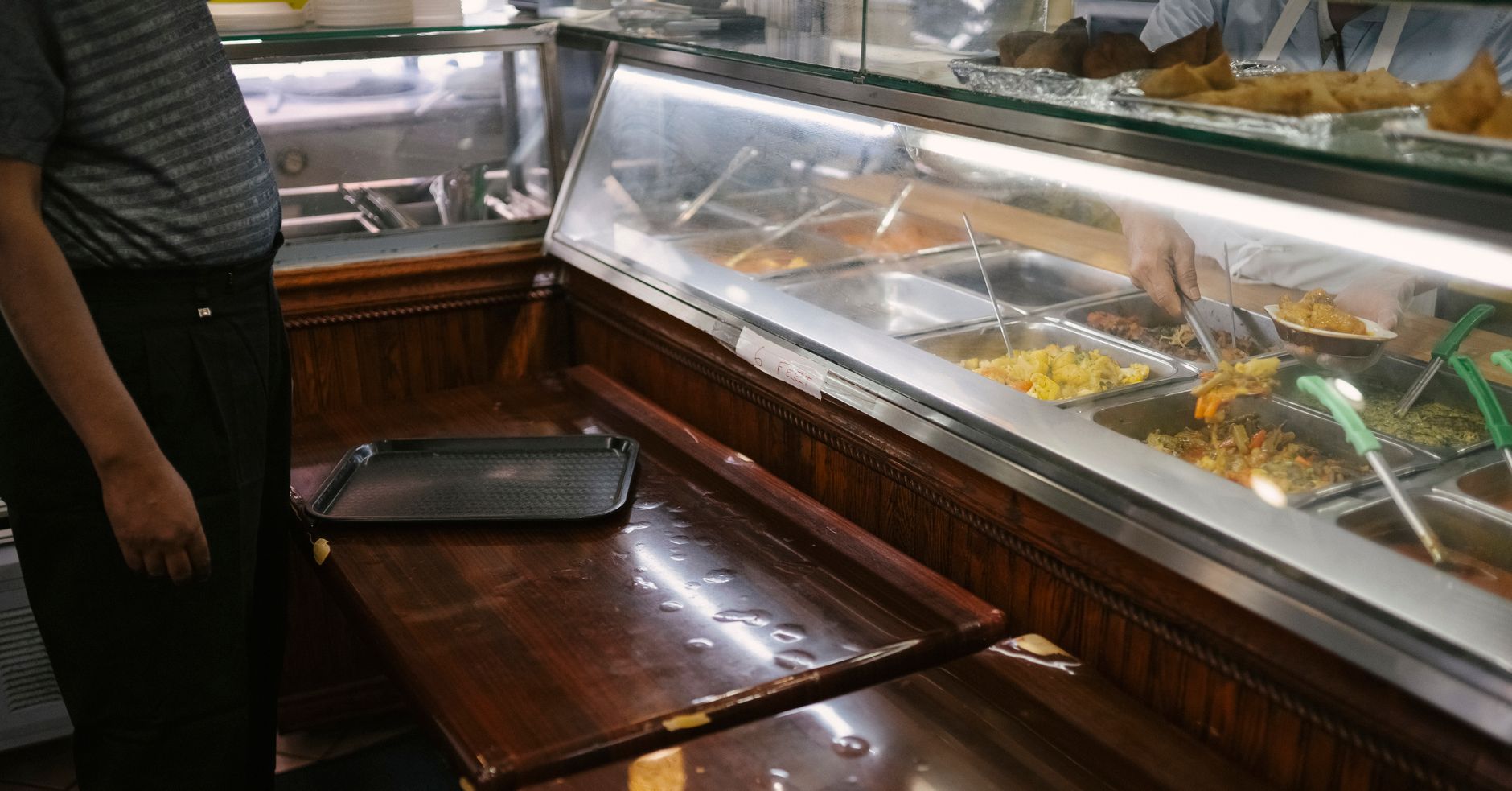
Keith had come up beside me with a tray. A plain brown cafeteria tray, the same one I had handed out nearly two million times.
“Miss Marlene,” he said. “The line’s open.”
I took the tray. I did not know what else to do. My hands knew it before I did, and I held it the way a child does, with both hands on the sides.
“Go on,” Brett said, and pointed with the spoon. “Start at the beginning.”
The beginning of the line was Tyler Amos, the soldier. He was twenty-nine. I remembered him at six, with a dinosaur lunchbox that he refused to put down, and a card in the green box that said, in my own hand, Dad deployed. Be gentle.
He had a plate of green beans with a perfect little mound of them, and he held it out to me with both hands, the way I had taught every child to receive a tray.
“Take a milk, Miss Marlene,” he said.
His voice was steady. His eyes were not.
“Thank you, Tyler.”
“Yes, ma’am.”
I took the milk. I took the next thing, and the next. The two sisters, who I knew as Brenda and Colleen Haskins, gave me a scoop of mashed potatoes and said “Seconds are free” at exactly the same moment. The man in the seed company jacket gave me a piece of baked chicken. The deputy gave me a corn muffin and called me “ma’am,” and then said, “I’m sorry, I mean Miss Marlene, I can’t help it.”
Every one of them had a line. They had all been told, I think, to say one thing to me, and they said it, and it was always something I had said to them once, years before, and had forgotten.
“Wash your hands.” “Look at me, not the floor.” “You can have another.” “It’s okay to be hungry.” “Take a milk.”
I walked the whole line. It was thirty feet, I suppose. It took me about ten minutes. The gym was silent through all of it, except for the squeak of my shoes and the slow tick of the old clock over the scoreboard.
I kept my chin up. I will say that for myself. I had been steady at Hal’s funeral, and I meant to be steady now, in front of children I had once told to stand up straight.
At the end of the line, there was one last server. It was Verna. She had slipped around behind the table while I was not looking, and she had a pan in her hands. She lifted the foil.
Rolls. A full pan, light golden, glistening at the tops, the way mine come out of the oven. She had made them at four that morning, with the dough that she said she was setting aside for me.
“Pick one,” she said.
I took one.