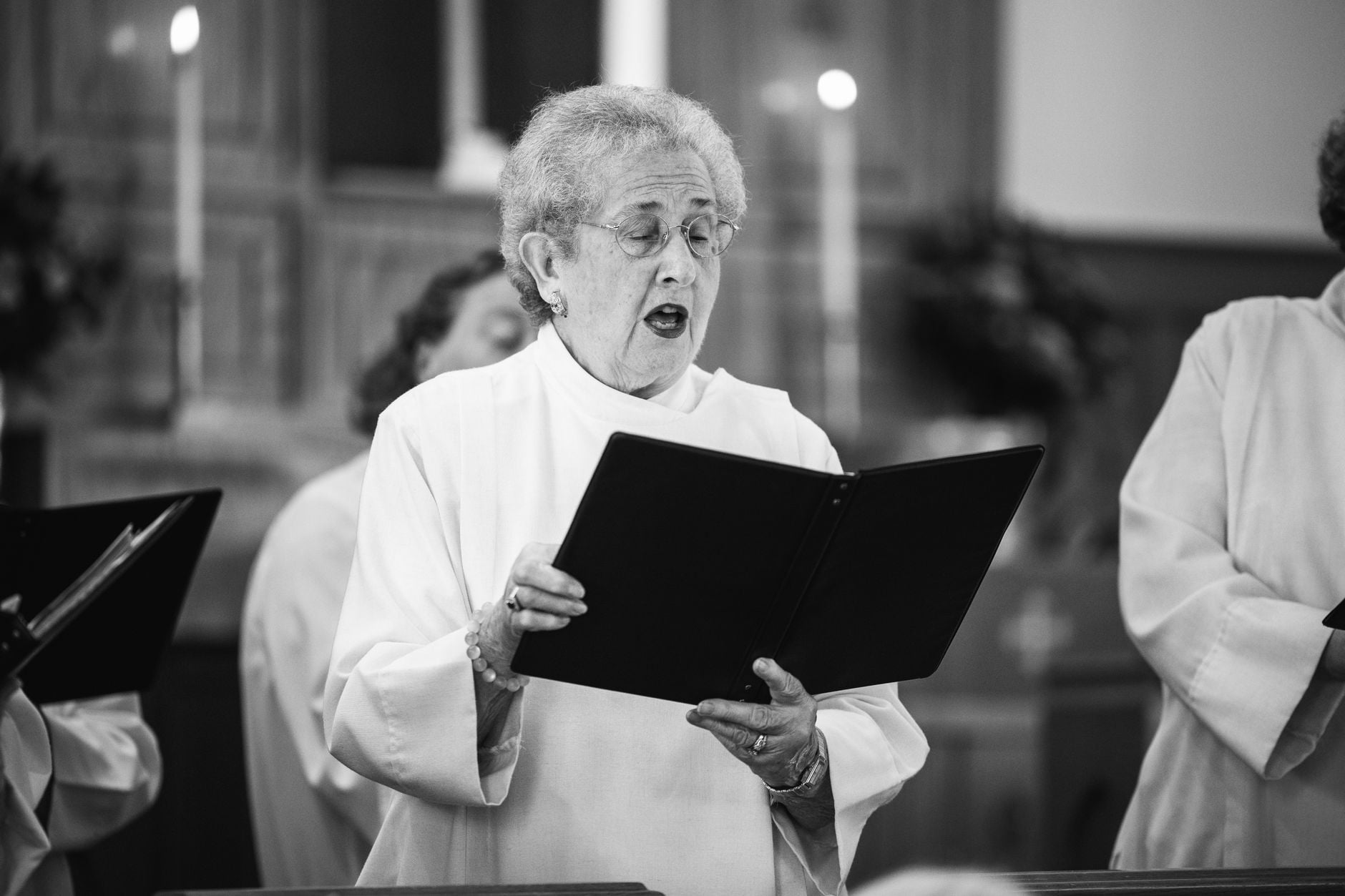
The Choir That Sang Under My Window
I was in my chair by the east window when I heard the cars.
It was ten minutes to eleven on the second Sunday of January, and I had my blue cardigan on, and my pearl earrings. I dress every Sunday morning. Nobody sees it, but I have been dressing for church since before I could tie my own shoes, and a habit that old does not stop because the church has stopped coming to you.
Harold’s afghan was over my knees. The oxygen machine hummed on the floor beside me like a refrigerator running in another room. Outside, the maple at the corner of the yard stood bare against a sky the color of a nickel, and the thermometer on the porch post said eleven degrees.
The sound in the drive was car doors, one after another. I thought it was the propane man. He comes when he pleases and he never calls ahead.
I lifted the lace curtain with two fingers and looked out.
There were four cars and a pickup on my gravel. Eight people were getting out of them, and every one of them was wearing a maroon robe over a winter coat.
I knew that maroon the way I know my own hands. I had hemmed the sleeves on half of those robes.
My name is Lavina Trout. I am eighty-two years old, and I sang alto in the choir at Bethel Lutheran Church in Elkader, Iowa, for sixty-one years. I am going to tell you how I came to be sitting behind a curtain that morning, watching my own choir stand in my yard in the cold, because the sitting behind the curtain is half of what this story is about, and I am not proud of that half.
How I came to be in that chair
I grew up on a farm eleven miles north of Elkader, along the Turkey River bottoms. My mother sang soprano and my father sang nothing at all, but he whistled through his teeth while he milked, and I believe I learned to hold a pitch from the way the cows leaned toward him.
I joined the junior choir when I was nine. I joined the adult choir at twenty-one, the fall after Harold Trout and I were married in that same sanctuary, with the same eleven stone steps out front.
Harold did not sing. He sat in the fourth pew on the aisle, every Sunday for fifty-one years, with his hat on his knee and his eyes closed, and when I asked him once why he shut them, he said it was easier to hear me that way. I never got a better compliment, and I have had to live without it for nine years now.
He died in March, nine years ago, of a stroke in the seed house. We had a good farm, a hundred and sixty acres of corn and beans and a small herd of Angus, and our son Dale took it over without ever making a speech about it. Dale is fifty-seven now. His wife Connie keeps the books and a garden big enough to feed a county.