The Last Harvest in the Combine Cab
The second Saturday
By the second Saturday Tyler was at the wheel.
I put him there in the last bean field, a long flat eighty with no obstacles and nothing to hit, and Linda’s rule was that I sit right beside him with one hand near the hydrostat lever. I had been driving a combine for fifty years and was prepared to enjoy being patient.
His first pass wandered like a drunk man’s. The rows of beans on the platform side showed it plain, a ragged line of uncut plants where he had steered off the edge. He saw it too. He started to say something and stopped.
“Don’t look at the platform,” I said. “Look at where you want to be in a hundred feet. Pick a fencepost.”
“What fencepost?”
“The one at the end. Look at it, and your hands will figure out how to get there.”
He looked at it. On the second pass the line came straighter. On the third it was almost right. By the fifth round he had stopped looking at his hands, and I noticed that, and I did not say so.
At some point in the afternoon the monitor flashed a yield number, and he leaned over and read it the way you read a report card.
“Fifty-six?”
“Fifty-six bushels an acre. That’s a decent field. Last year it was sixty-one.”
“Why’s it different?”
“August was dry.”
He nodded, and turned back to his fencepost.
The switch to corn
Corn was a different animal, and I told him so.
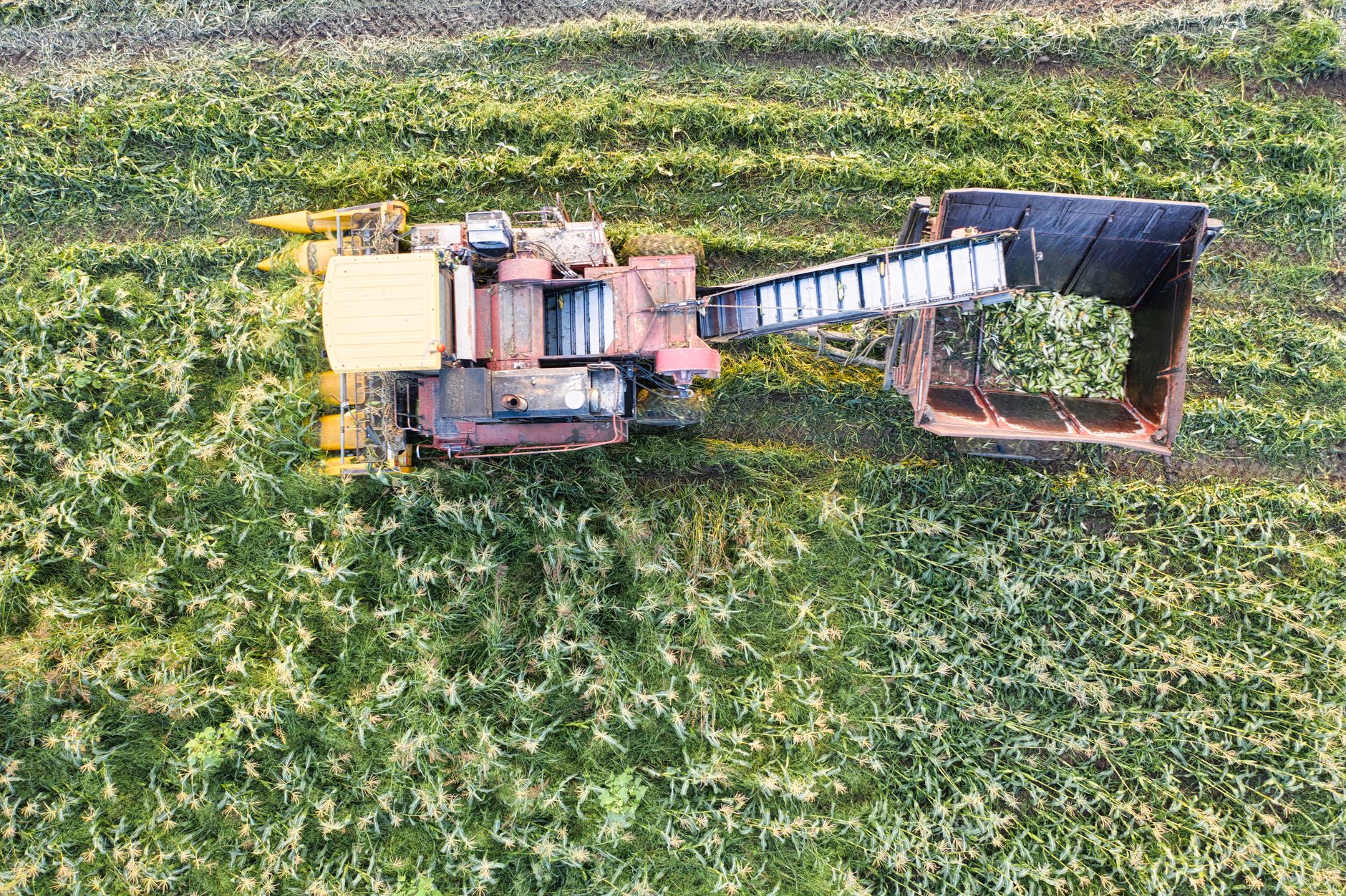
The week after that we pulled the bean platform off and put on the six row corn head. The corn head has snapping rolls underneath that pull the stalk down and strip the ear off against the deck plates, and gathering chains that run the ears back toward the feeder house. You set the deck plates by the thickness of the stalks. Too tight and the ear is crushed. Too loose and the ears slip by and fall.
I showed him how to read the sound. A combine in corn talks all day, a steady rushing sound like a creek running over gravel, and the sound changes when something is wrong. A choke gives a groan low in the throat. A rock makes a crack and then a long silence, and you stop quick and shut it down.
“What if it’s quiet?” he asked.
“That’s the one to worry about.”
We ran corn after school, three evenings a week, with the headlights on by six, and all day on Saturdays. The moisture was twenty-two percent the first night, falling a little each day, and dropping most on the sunny afternoons. The corn stood ten feet high and the leaves had gone to paper.
Tyler learned to drive it by listening. He learned to hold the combine at three and a half miles an hour, the pace where the head gathers every ear, and to keep the machine centered on the row so the ears did not hit the plates crooked and snap off. He learned the monitor. He got so he could glance at the moisture number and say, “Twenty and a half,” before I did.
On the fourth night he took a ballpoint pen out of his sweatshirt pocket and wrote the number on the inside of his left forearm, because he did not have paper. Small neat numbers in blue. 21.4. 20.9. 20.6.
“What’s that for?” I said.
“So I remember what time of day it dropped.”
“You could write it down later.”
“I’d forget,” he said, and shrugged, and went on driving.
I did not ask what he wanted to remember it for. I had a rule, and I held to it. I told myself he was a fifteen-year-old boy with a pen, which was true, and that boys wrote on their arms, which was also true.