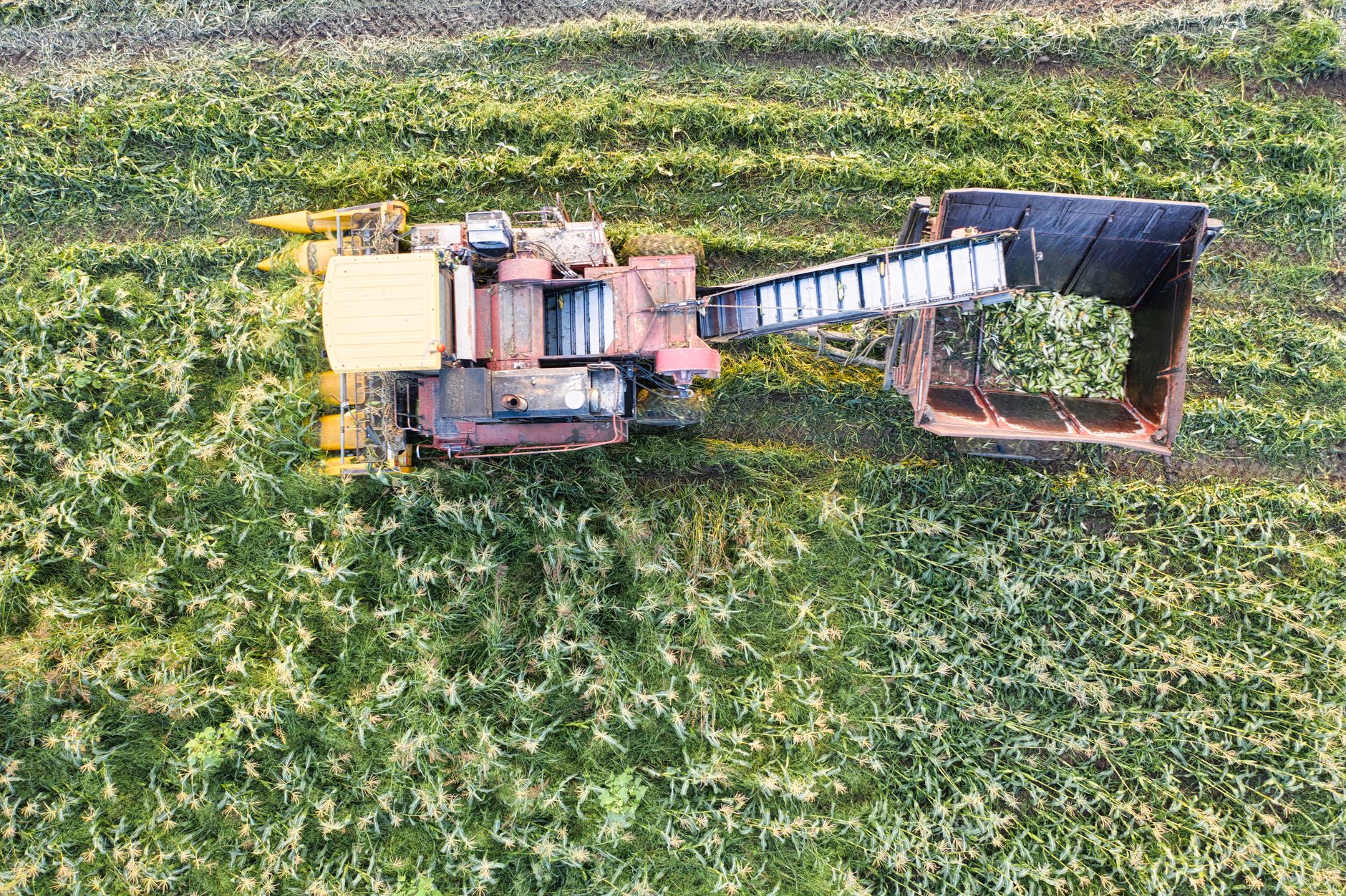
The Last Harvest in the Combine Cab
What I had sold, and why
I should say plainly what I did, because I have heard the versions the neighbors tell.
I farmed two hundred and forty acres north of Pierz, in Morrison County, for fifty-one years. I started in 1975, the spring after my father’s heart quit on him in the barn. I was twenty-one. I milked sixty Holsteins until 2004 and then I sold the herd, and after that it was corn and soybeans, about half and half in a rotation. The Home Eighty had the house, the machine shed, the old barn and the two bins, with a creek running along its east side. The North One Sixty was ground I bought from the Schmitz estate in 1988, with a loan I paid off the week Linda graduated from nursing school.
Last winter I had my left knee replaced. In March the surgeon cleared me for everything except what I actually do, which is climb nine rungs into a combine a hundred times a fall. In May a bearing went in the planter and the repair bill ran nine thousand dollars. In June I stood at the end of a corn row at four in the afternoon, so tired I sat down on an upturned bucket, and I told my wife Arlene I was done.
She did not argue. Arlene has been married to me since 1976 and she has learned that arguing with me on a bad day only fixes the bad day in place. She put a plate of ham sandwiches in front of me and said, “Then we’ll call Darrell.”
Darrell Mertens farms the section next to mine. He is fifty-eight, a dairy man still, and he had been asking about my ground, politely, for six years. He made me a fair offer in August on all two hundred and forty acres. I signed in August. The closing was set for the first of December, after harvest, so I could take the crop off my own land. The auction was set for the middle of November, for the machinery.
My two children had both told me the same thing when I called them. Do what’s best for you, Dad. Roger said it from Duluth, where he is an electrician with two kids in travel hockey. Linda said it at our kitchen table with a coffee cup in both hands. Neither one of them said they wanted the farm. I told myself that was a relief.
I did not ask them. That is the part of this story I understand best.
My father’s question
My father, Elmer Lindgren, never asked me whether I wanted to farm.
It was not that he was unkind. But in his mind the question had been answered the day I was born. He handed me a pitchfork at six. He taught me to drive the Farmall at nine. At sixteen, when I mentioned once that I liked drafting class and might look at a school in St. Cloud, he looked at me across the milk house like I had said I was thinking of moving to the moon, and then he went quiet, and the subject died there.
I did not hold it against him. I loved the work, and I still do. I would not trade the sound of a field coming in for any other sound I know. But I never found out whether I would have chosen it.
So when my own children came along, I made myself a promise. I would never hand either one of them a pitchfork. Roger showed no interest in the farm and I let him go without a word. Linda wanted to be a nurse from the age of ten, when she set a robin’s wing with a popsicle stick, and I let her go too. I figured that was all there was to it, and I kept my mouth shut about the farm and the future, with both of them, for thirty years.