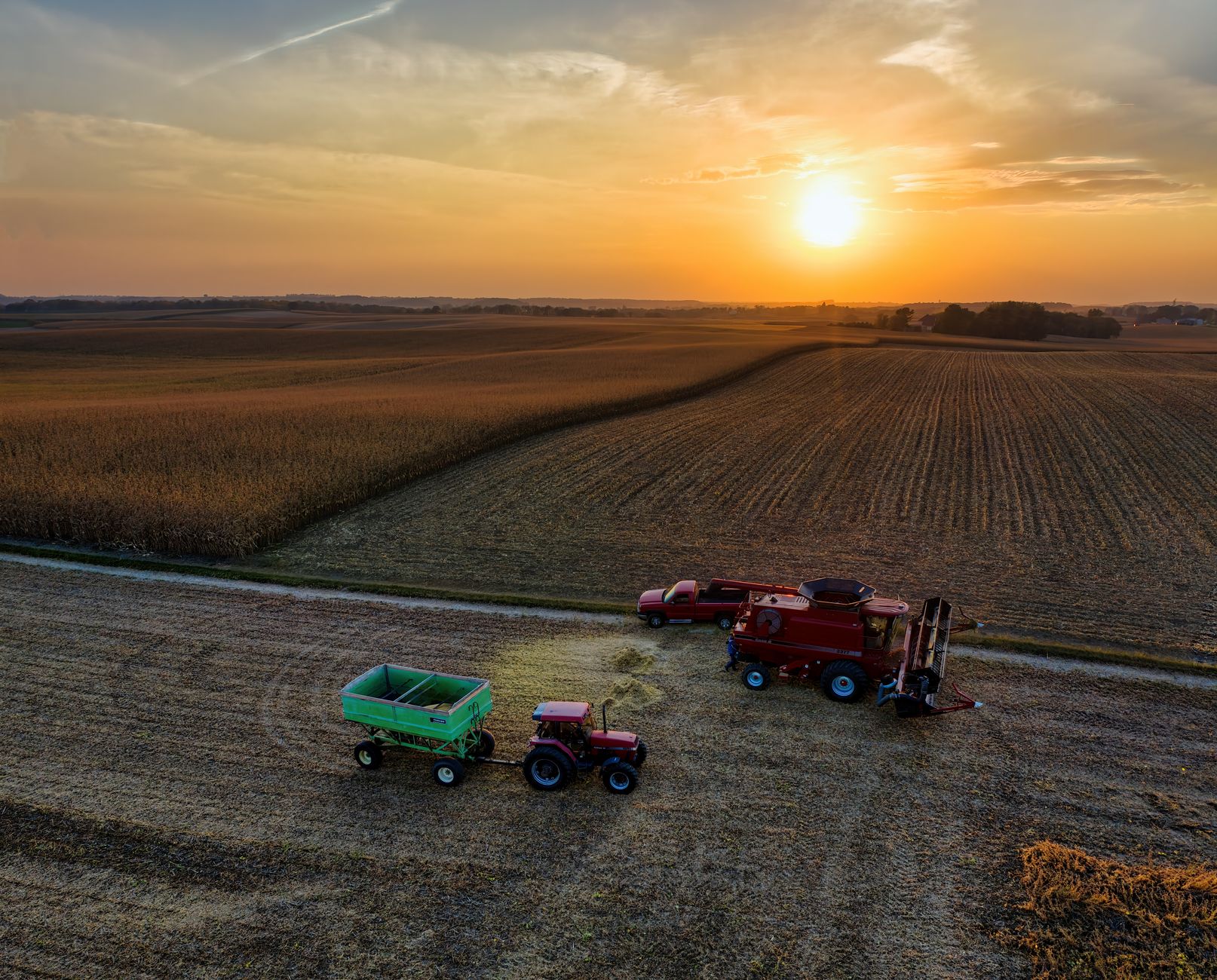
The Last Four Rows He Left
The board on the wall
It was the second week of the gleaning before I went back out to my father’s shop and I made myself look at that board over the workbench again.
Leave four rows. 1954.
My father was seven years old in 1954. He could not have painted that board as a boy. The wood was old but the paint under the grime was newer than seventy years. He had made it later, as a grown man, and put a boy’s year on it.
I had never asked. He was not a man you asked twice. The first time I asked why four, he gave me the line about leaving something for whoever comes behind, and the second time I asked, years later, he just looked at me until I changed the subject.
But now he was gone, and the board was mine, and there is no door a daughter will not finally open once her father is not standing behind it.
I got the flat bar out of his toolbox and I worked the board loose from the wall. He had nailed it up with cut nails, square old things, like he meant it to stay through a tornado.
It came off in two pieces of my prying, and I turned the big piece over in the shop light, and there on the back, in pencil gone soft and silver with age, was my father’s hand. Not three words this time. A paragraph. A letter, nearly, from a man to no one, or to whoever pried the board off the wall after he was done needing it.
I sat down on his shop stool and I read it in the cold, and I had to read it three times before I could take it in, and then I understood the whole of my father, all fifty-three harvests of him, in one sitting.
Who my father really was
I had always thought the four rows were charity. A good man with enough, giving a little to those with less. That is a fine thing, and I was proud of it, and I had it completely wrong.
The four rows were not charity. They were a debt.
Here is what my father wrote on the back of that board, in pencil gone soft and silver, and I am going to give it to you exactly, because it is not mine to smooth into something prettier than it was.
Winter of 1954, he wrote. Dad hurt his back bad on the picker and we brought in half a crop and I was seven years old. We ate cornmeal mush that whole winter and some nights we did not eat that. In October a man down the road left the last four rows of his field standing and sent word for me to come glean them. He would not let it be called charity and he would not let Dad thank him out loud. Four rows carried us through to spring. When I was grown I asked him why four and he said four was what your family needed so four is what I left. I have left four rows every fall since. Whoever takes this board down, leave four rows standing, and do not put your name on it. That is the whole of it. V.
I sat on his shop stool and I understood the cornmeal in my hands at last, the no-name sacks we had just ground and bagged, and why a field of hand-snapped corn had closed my throat.