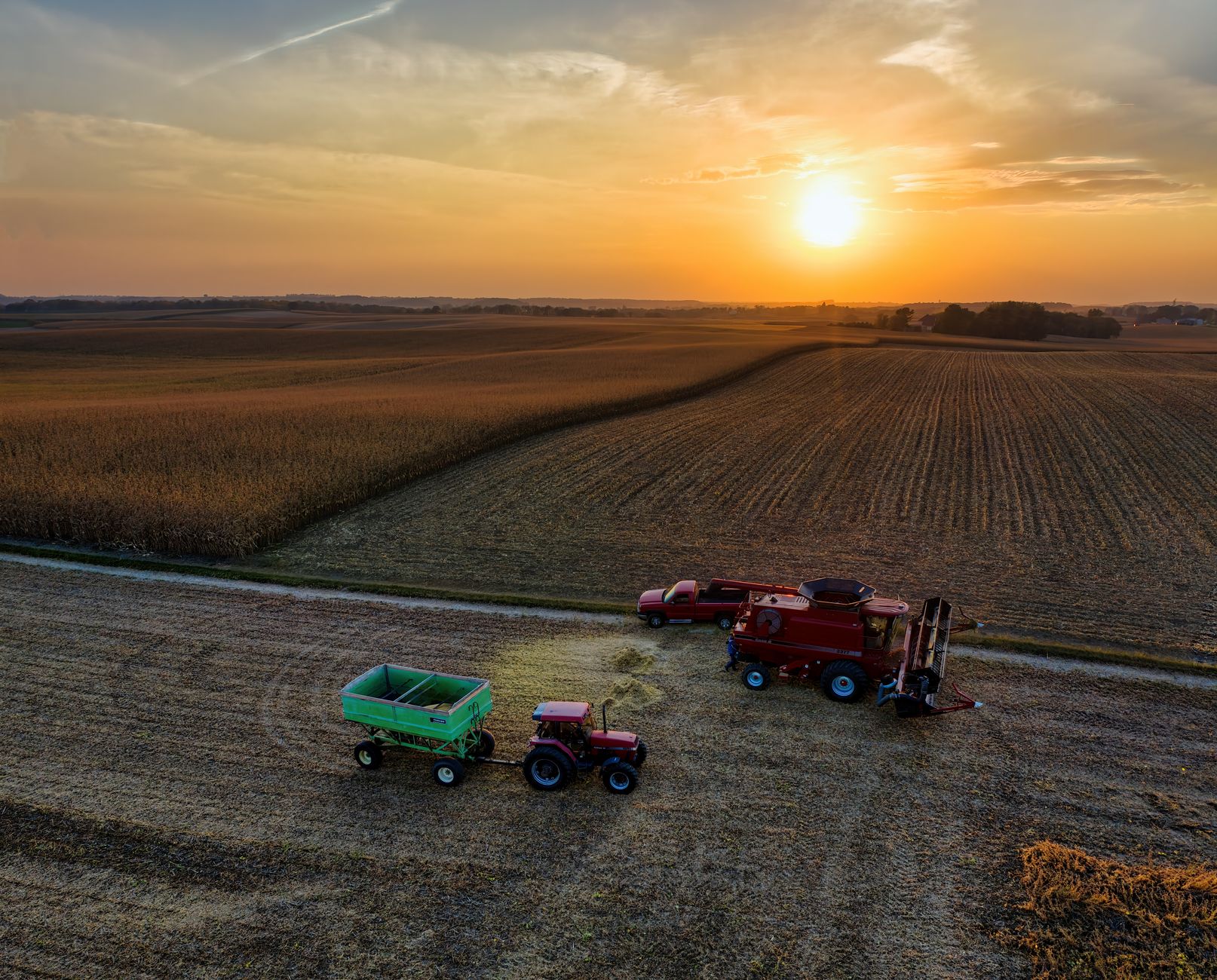
The Last Four Rows He Left
Two days on the phone
I am not a woman who makes phone calls. I raised my kids and I kept the books for the farm and I let my husband do the talking in town. I would rather drive a combine than dial a stranger.
I made forty-some calls in two days.
I called the church ladies, mine and the Lutherans both. I called the high school, and a counselor there put it out to the FFA kids as service hours. I called the Co-op and asked for the loan of a grain truck and a flatbed, and the manager said take two.
I called Dale back and got him to pin down the list of farms. There were eleven. Eleven men had left their four rows that October, most of them not knowing the others had.
I made a map on the back of a feed-store calendar. Eleven fields, the section roads between them, the order that made sense. I figured the miles. I figured we could do three farms a day with two crews.
I called Pam back and I read her the plan, and she started to cry on the phone, and she said in twenty years nobody had ever once offered to organize it. They just gave her corn and left the rest to God and the weather.
And I thought about my father, and I said, well. God is good, but God likes a phone tree.
That Saturday we gleaned the first three farms. Thirty-one people, most of them kids, moving down the standing rows with five-gallon buckets, snapping the ears and tossing them into the truck beds.
I drove the flatbed from field to field. I did not snap a single ear myself. I kept the crews moving and the trucks running and the water jugs full, and for the first time in two months since we buried him, I slept that night without the house feeling empty.
What a field full of children sounds like
I want to put down here, so I do not lose it, what the gleaning looked like, because the camera on my phone cannot hold it and I do not want to only have it in my head.
It looked like a church picnic that had wandered out into the corn.
The FFA boys made a game of it, racing down the rows, trying to clear a row before the kid next to them. The church ladies worked slow and did not miss an ear, and they fussed at the boys to slow down and get the low ones too.
There was a little girl, maybe seven, the daughter of one of the young couples, and she could not reach the ears, so her job was to carry the full buckets to the truck, and she did it all day with her whole heart like it was the most important work in Nebraska, and I suppose it was.
The farmers whose fields they were came out and stood at the ends of the rows. Some of them had never seen their four rows gleaned. They had left them every year and driven away and never once watched who came.
Dale stood at the end of his own field with his arms crossed and watched a dozen children clean his four rows in forty minutes, and I saw him turn away and look at the tree line for a while, and I did not say anything to him about it.