Thirty Christmas Eves in the Poor Box
“Doc Vandiver drove out,” Father Ted said. “In his Plymouth, with chains, four miles of drifted road. He took your father in the front seat. He gave Herb a shot of penicillin and sat with him through the evening, and your grandmother came home after one and found a doctor in her back bedroom with her baby, and a bill she thought she could never pay. That’s what I’ve been told. Bert was on the kitchen floor with his back against the stove, asleep, still in Warren’s coat. He had the coins in his fists. The doctor, going out, worked them loose one at a time so as not to wake him.”
“Herb lived.”
“Herb lived. He’d have died by morning, the doctor told Father Vlasak afterward. The fever would have taken him.”
I was crying by then. I hadn’t known I was. It just ran, the way it must have run down my father’s face at the box.
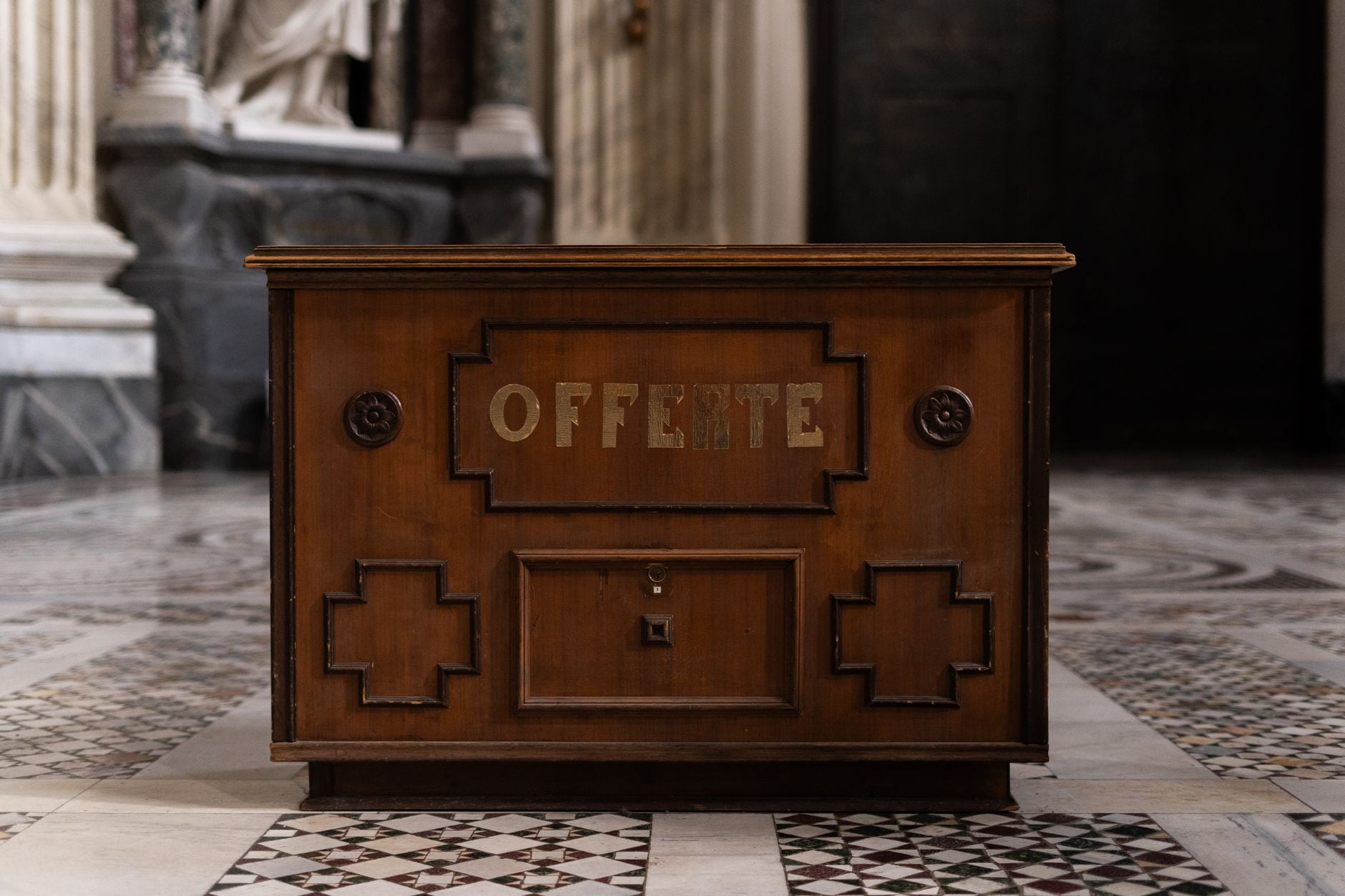
“Now here is the part nobody knows but me,” Father Ted said. “I served the six o’clock Mass on Christmas morning. I came in early to light the candles, and Dr. Vandiver was already standing at the box in his fur collar and his galoshes, with a fold of bills in his hand. He put three dollars and twenty cents through the slot. Then he put in five dollars more besides, and he stood there a moment with his hand flat on the lid. Then he saw me. He didn’t speak. He put one finger to his lips.”
He smiled a little at that.
“Which was nothing new that week. I had already said nothing once.”
I don’t know how long we sat there. Out in the church Mrs. Pfeiffer had given up on the third bar and started the processional hymn through, and I could hear people finding the page.
“He put it back,” I said finally. “Vandiver put it back himself.”
“Yes.”
“So the box wasn’t short.”
“The box was never short, Dale. Not for one full day. Father Vlasak counted eight dollars over that Christmas and told the Altar Society the Lord was generous.”
“And Dad knew.”
“He knew. The doctor stopped him outside the church on Easter, hand on his shoulder, and told him the box was square and the matter closed. I was ten feet away holding the cross. Your father said, ‘Yes, sir,’ the way you do. And then he carried it forty-two years anyway. The box was whole. The doctor was another thing.”
He ran a thumb along the edge of the cigar box.
“He never said a word to me about it, and I never said one to him. Two grown men who had been boys together in this church, and neither of us could find the door to it. And then in 1994 the first envelope came.”
I picked up the slip again. I couldn’t stop turning it.
“That was the year he made the last payment on the north quarter,” I said. “The one he’d bought in 1972. I remember. The bank sent the paper in a long envelope and he read it standing at the mailbox in the cold, and then he walked back to the house and put it in the family Bible, and he didn’t say anything at supper. I thought he was just tired.”