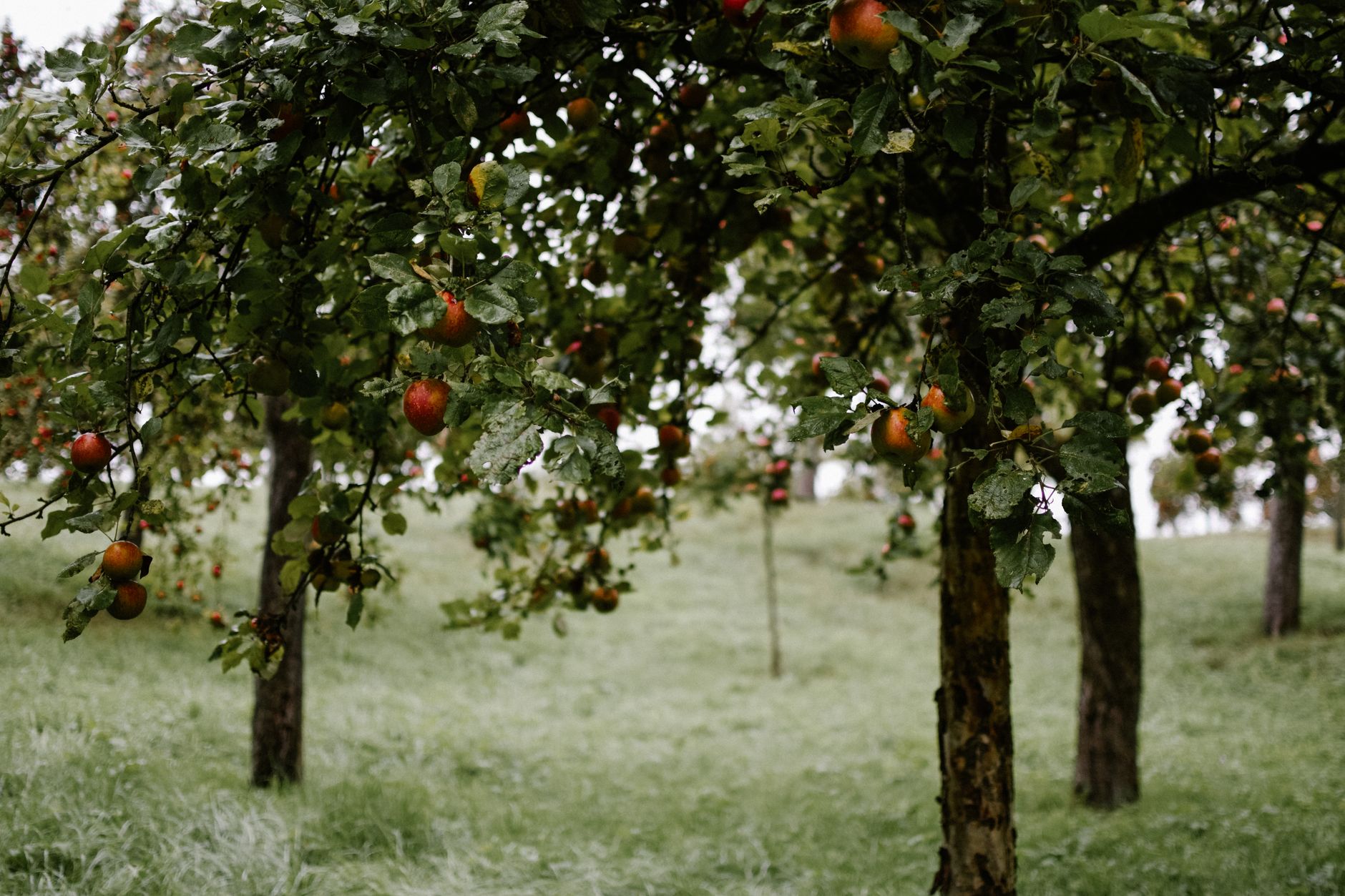
The Harvest My Neighbor Took
Four Dollars A Pound
By ten o’clock there was a sign at the end of the Rudds’ driveway. It was hand painted on a sheet of plywood, in the pretty looping letters that Corinne used for the church bake sale. RUDD FAMILY ORCHARD. HEIRLOOM APPLES. SIXTY YEARS IN THE FAMILY. $4 A POUND. A folding table sat under it with six bushel baskets of our apples stacked in tiers, and a cash box, and a little chalkboard that said, in the same looping hand, Ask me about our secret grafting!
I stood at my own mailbox across the road and read it three times.
The Rudds have never owned a fruit tree. Dean’s father farmed corn and soybeans, and when he sold off the land, the only trees left on the property were two silver maples and a dead pear that the previous owners had planted too close to the septic. Everyone in Marlow knows that. But the sign was not for Marlow. It was for the weekenders driving out from Lancaster and Philadelphia in their clean cars to buy something to feel good about.
I called the sheriff’s office. A deputy came out around noon, a young man with a sunburned neck, and he was as kind as he could be. He photographed the broken branches and the ladder, and then he stood in the lane with his hat in his hand and told me what I already suspected.
“Ma’am, I can write this up as trespass, and I will. But fruit that has already been picked, once it’s in a basket, is very hard to prove belongs to anyone. Whose is it? There’s no brand on it. And she’s going to say it came off her side of the fence.”
“It came off my side of the fence,” I said. “I watched her climb it.”
I thanked him. I did not scream. I did not march across the road and pull down that sign, though I wanted to more than I have ever wanted anything. I stood in my kitchen with my hands flat on the counter and thought about Boyd, who told Emmett the last summer never to take anybody’s word for what a tree was worth until he had cut the fruit open himself.
So I decided to cut open the fruit myself.
That afternoon I put on a clean blouse and drove down the lane and across the road to the Rudds’ stand. Corinne was sitting behind the folding table in a lawn chair with a straw hat on, and she looked up and her smile went on like a lamp.
“Lorraine,” she said. “Oh, honey. I am so glad you came over. I was worried sick about you.”
“I would like one pound of the pink ones,” I said.
I will give her this: she did not blink. She weighed it on a little hanging scale and put the apples in a paper bag. I handed her a five dollar bill, and she counted my change into my palm, one dollar, and told me again how sorry she was for my loss.
At home, at the kitchen counter, I cut one apple in half with Boyd’s paring knife.
The flesh was blushed all the way through, a deep seashell pink from the skin right down to the core, and the core itself was shaped like a star. In each of the five chambers of that star lay two seeds, side by side, instead of one. Boyd called that the double. It came down to him from a cutting his grandfather carried over from the old country, and in forty years of grafting he never found it anywhere but the old twisted tree at the end of the third row. He took scion wood from that tree and spliced it onto six other trunks on our land. Seven trees in the county. He named the apple the Sayer Blush, and he never sold a single graft of it, because he wanted it to stay at home.
Only one other man alive knew that apple the moment he saw it. He had been standing next to Boyd with a roll of grafting tape in the spring of 1989 when they spliced the first branch. His name was Cecil, and for forty-four years he had been the head judge of the fruit and vegetable barn at the Marlow County Fair.
I put my knife down and picked up the telephone.