The Harvest My Neighbor Took
My husband Boyd died on a Tuesday in September, twelve days before the apples were ready, and for about four days afterward I believed the worst thing that could happen to our family had already happened.
I was wrong, though not in the way I would have guessed. The worst thing was waiting on the other side of our back fence, and she had already brought a pair of canvas bags.
The Marlow County Fair runs the second week of October, on the grounds behind the high school, with a grandstand that smells like fried dough and old paint. It has a fruit and vegetable barn, and in that barn, on the long front table under the good lights, sits the heirloom apple class. For thirty-one years the blue ribbon in that class went home with my husband, pinned in order on a shelf in our bedroom, oldest on the left.
Our neighbor on the other side of the fence was Corinne Rudd.
I do not want to make her sound like a cartoon. Corinne was fifty years old, married to a quiet man named Dean who drove a feed truck, and she sat on the church women’s circle and the fair board and the library fund. She had a new kitchen, a new truck in the drive, and a laugh that carried across a parking lot. For years she brought us zucchini bread at Christmas and I brought her jam.
She also entered the heirloom class every single October, and every October she took the red ribbon, or nothing, while the judge walked past her to my husband. Boyd never gloated. He would carry her basket to her car. I think now that was the worst of it. He was kind about winning, and she could not forgive him for being kind.
The Day We Buried Him
We buried Boyd on a gray Saturday at the Methodist cemetery up the hill. Emmett, our son, drove in from Harrisburg with his wife and their three year old daughter, who slept through the whole service on her father’s shoulder in a pair of patent leather church shoes that were a size too big. Emmett is thirty-eight. He looks like his father around the jaw, and when they handed him Boyd’s old green seed cap at the graveside, he held it against his chest like a hurt bird and did not put it on.
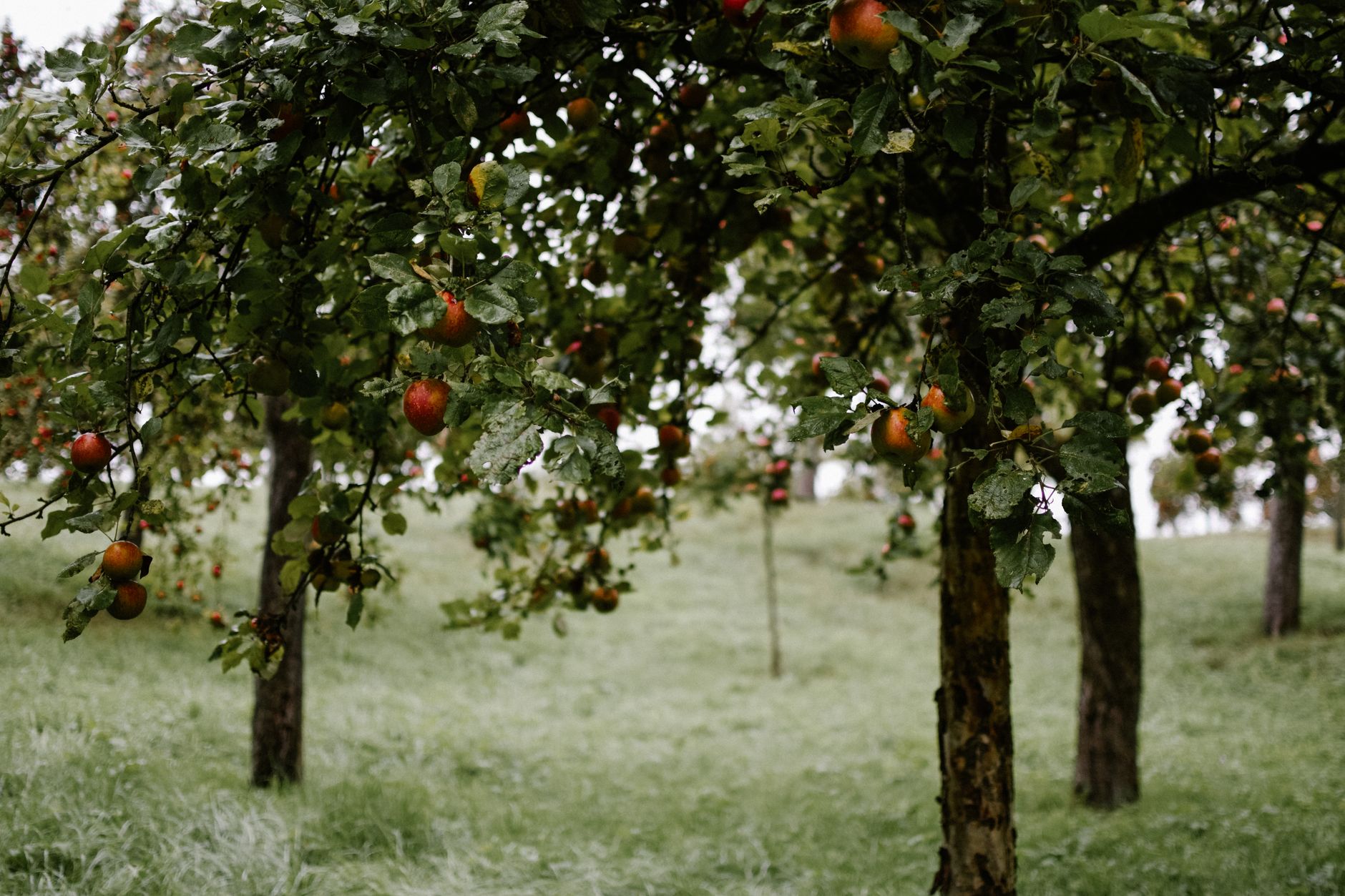
By four o’clock people had thinned out, and Emmett and I walked up to the barn to get away from the casseroles. We stood in the lane looking at the orchard in the thin light. The trees were heavy. Boyd had said two weeks earlier, lying in the hospital bed in the front room, that this was going to be a record year. The branches bent under red and gold and the long pink-striped fruit he loved best, the one he called the Blush.
That was when I heard a branch crack.
It was a dry, flat, unmistakable sound, and it came from the back corner where our land meets the Rudds’. We both turned. In the dusk, halfway over the split rail fence with one leg hooked across the top, was Corinne Rudd. She was still in her funeral dress, the navy one with the little white collar. She had two canvas totes slung over her shoulders, and they were fat and heavy and bulging with fruit. A third bag sat on the grass at the foot of the fence, tipped over, with apples rolling out of it into the weeds.