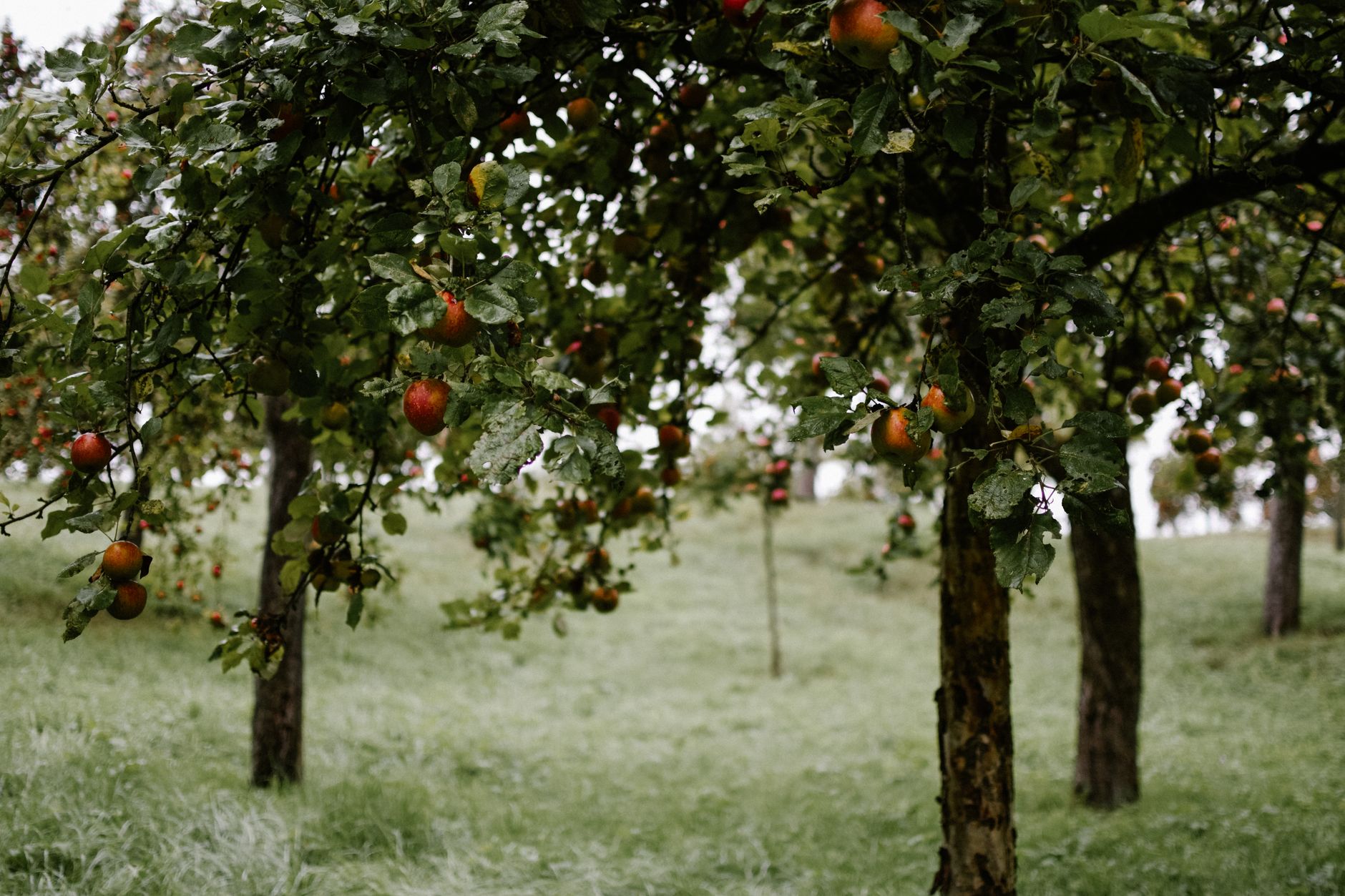
The Harvest My Neighbor Took
“And I bought two bushels,” a man said from the back.
“I told my sister in Lancaster about your orchard!” said a woman near the front.
And then, from the very first row of the fair board, a big gray-haired man whose name I will leave out, because he is a decent person who had a bad afternoon, slowly rose from his folding chair. He did not look at Corinne. He looked at the tabletop. He said, “The board will need to take a recess.”
Corinne was standing alone on the stage.
I want to be fair to her, and I find that I can be, now, with some distance. She did not scream. She did not run. She stood with her hands still half raised, as if caught in the middle of a gesture, and looked at the basket she had polished with a flannel rag every morning for three weeks. She looked at the grandstand, and for the first time, I think, she saw the people in it. Not an audience. People who had known her thirty years.
Then she picked up the card, very carefully, and set it face down on the table, and walked off the side of the stage without a word, leaving the basket behind.
The Ribbon Nobody Won
Cecil let the grandstand murmur for a full minute, and then he lifted the microphone a final time.
“The heirloom class,” he said, “has five finalists. Four of them are honest baskets, grown by honest people, and I will give them their ribbons in a moment, because they have earned them.” He set the halved apple down on the table, very gently, on its cut side. “The fifth is not a basket of apples that was grown by any person standing on this stage. There will be no ribbon for it.”
He paused.
“And as for the blue,” Cecil said, “I have decided that this year it will be withheld. Not for any reason of mine. For the man who held it thirty-one years. I have never in my life given a posthumous ribbon, and I am not going to start today, because Boyd Sayer would have been mortified.” A small, wet laugh went through the grandstand. “But I will tell you what I believe. I believe that a man’s orchard ought to be left to his own people to harvest. And I believe that if you take something that is not yours, in this town, in front of this barn, the fruit has a way of telling on you.”
He looked at me again, from the stage. I do not know how to describe what I saw in the old man’s eyes. I think it was Boyd.
The applause came slowly, and then all at once. It did not go to Cecil, though he deserved it. I realized after a while that it was going to me.