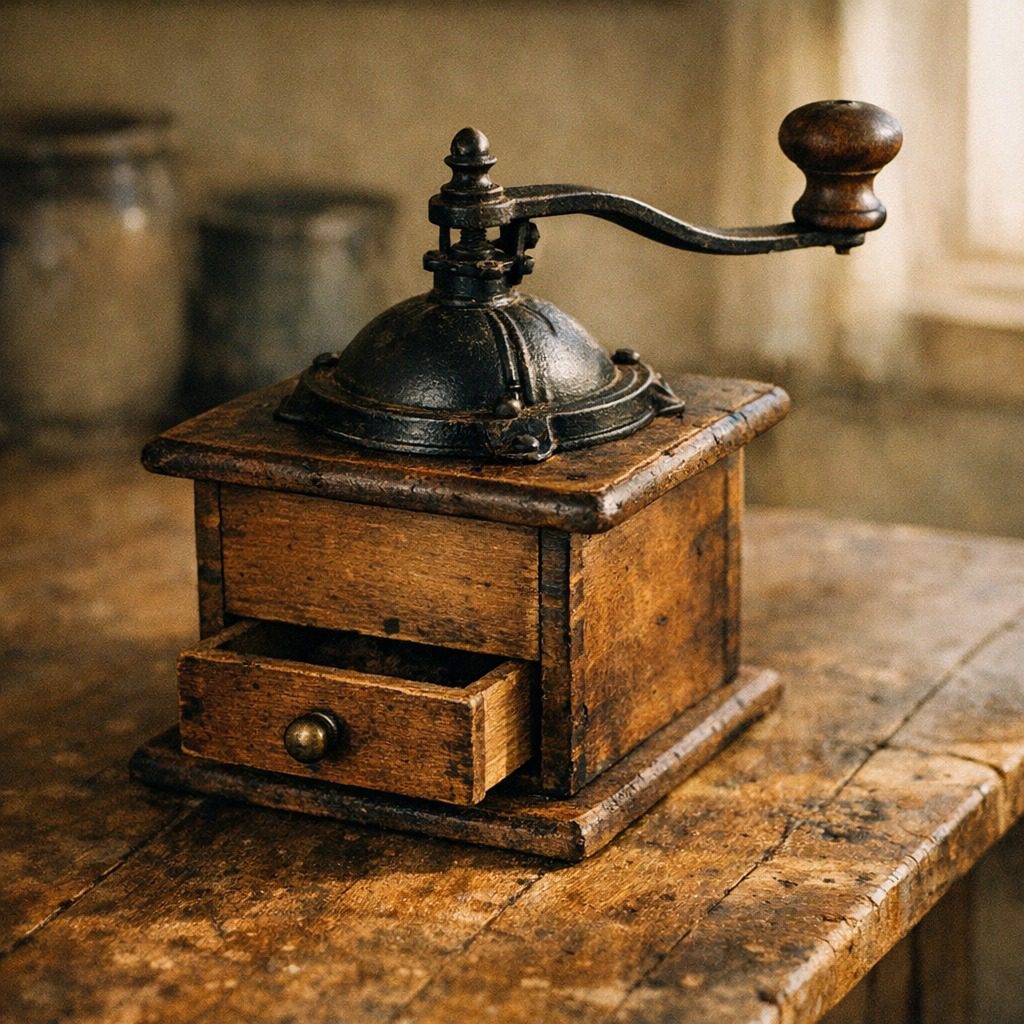
The Coffee Mill They Left Me
The store on the county road
My grandfather’s coffee was not only a private thing. For a while it was almost famous, in the way things can be famous in a place where everyone knows everyone.
There used to be a store in town, Hobart’s, a real country store with a wood floor and a screen door and a counter where the old men sat. Fred Hobart ran it and there was a coffee urn at the end of the counter and it was, by universal agreement, terrible. Then one winter Fred’s urn died and my grandfather, who was in there buying fence staples, said he could fix him up something better. He brought his own beans and his own mill down the next morning and ground a batch and showed Fred’s boy how to run the percolator right, and within a month there were men driving in from the far townships for a cup of Hobart’s coffee.
It was my grandfather’s blend, though he would have been embarrassed to call it that. Three beans he mixed by feel, a base and a dark and a bright, and he ground it at Fred’s counter on Saturday mornings for years, sitting on a nail keg with the box mill on his knee, and men would come in off their trucks and set their money down and say give me a cup of Walt’s, and Fred would pour it and the money went in Fred’s drawer and my grandfather never took a dime. He did it because the counter at Hobart’s was where his own father had sat, and grinding coffee there was a way of keeping a hand on something that was slipping away even then.
Hobart’s closed the year I turned twenty-two. Fred died, the boy did not want it, the building sold to a man who gutted it and it sat empty. That was the end of Walt’s coffee at the counter, and everyone said what a shame, and everyone forgot, and my grandfather got older and ground his coffee alone at the kitchen table with only me to nod at.
I tell you all of this so that when I tell you what the mill was worth, you understand I do not mean money.