The Widow Who Asked For Me By Name
It was my twenty eight week checkup, forty minutes before my ultrasound appointment, when Deputy Trace Boone’s cruiser rolled up my gravel driveway instead of the ride I was waiting on. I had my purse already on my shoulder and my shoes already on my feet, standing at the screen door running through the questions I wanted to ask the tech about the baby’s weight, when the sight of that county star on the driver’s door knocked every one of those questions clean out of my head. I remember pressing my hand flat against my belly, the way you do when you are trying to keep something safe just by touching it, and thinking, with a kind of cold certainty I could not explain, that whatever he had come to tell me was going to change the shape of my morning completely.
*Who I was before any of this*
My name is Misty Coldwell. I am twenty nine years old, and at the time all this happened I was seven months pregnant with the child my husband Tucker and I had stopped letting ourselves talk about out loud, because we had lost two before her and learned the hard way that hope, spoken too early and too often, has a way of getting overheard by whatever is listening. Tucker works the overnight shift at the grain elevator outside Castellane’s Fork, Kentucky, the little farming town we both grew up twenty minutes apart from and never managed to leave, and most nights by the time I am climbing into bed alone he is just clocking in, hauling grain dust and sweat and a headlamp through buildings that never fully go quiet. I do not say that to complain. It is decent work and it kept us afloat through two losses and a mountain of hospital bills neither insurance nor prayer ever fully covered. I say it because it matters to what happened next. Most nights, I am the only living, breathing thing in our little rented house on Featherstone Road, save for whatever is kicking me from the inside.
I do not talk much about the two we lost before her, not because the grief has gone quiet but because I have found most people do not know what to do with it once you say it out loud, and I got tired of watching their faces search for the right response. The first ended at nine weeks, in a bathroom at my mother’s house, quiet and private and over almost before I understood what was happening to me. The second went further, far enough that we had already picked a name and painted a wall, and losing her at nineteen weeks taught me a kind of caution I have never fully shaken since, a habit of holding my breath through every appointment until the technician says the word heartbeat out loud. By the time this pregnancy took, Tucker and I had stopped decorating anything, stopped saying the word due date to anyone outside the two of us, and I had gotten very good at carrying hope quietly, the way you carry something you are afraid of dropping.
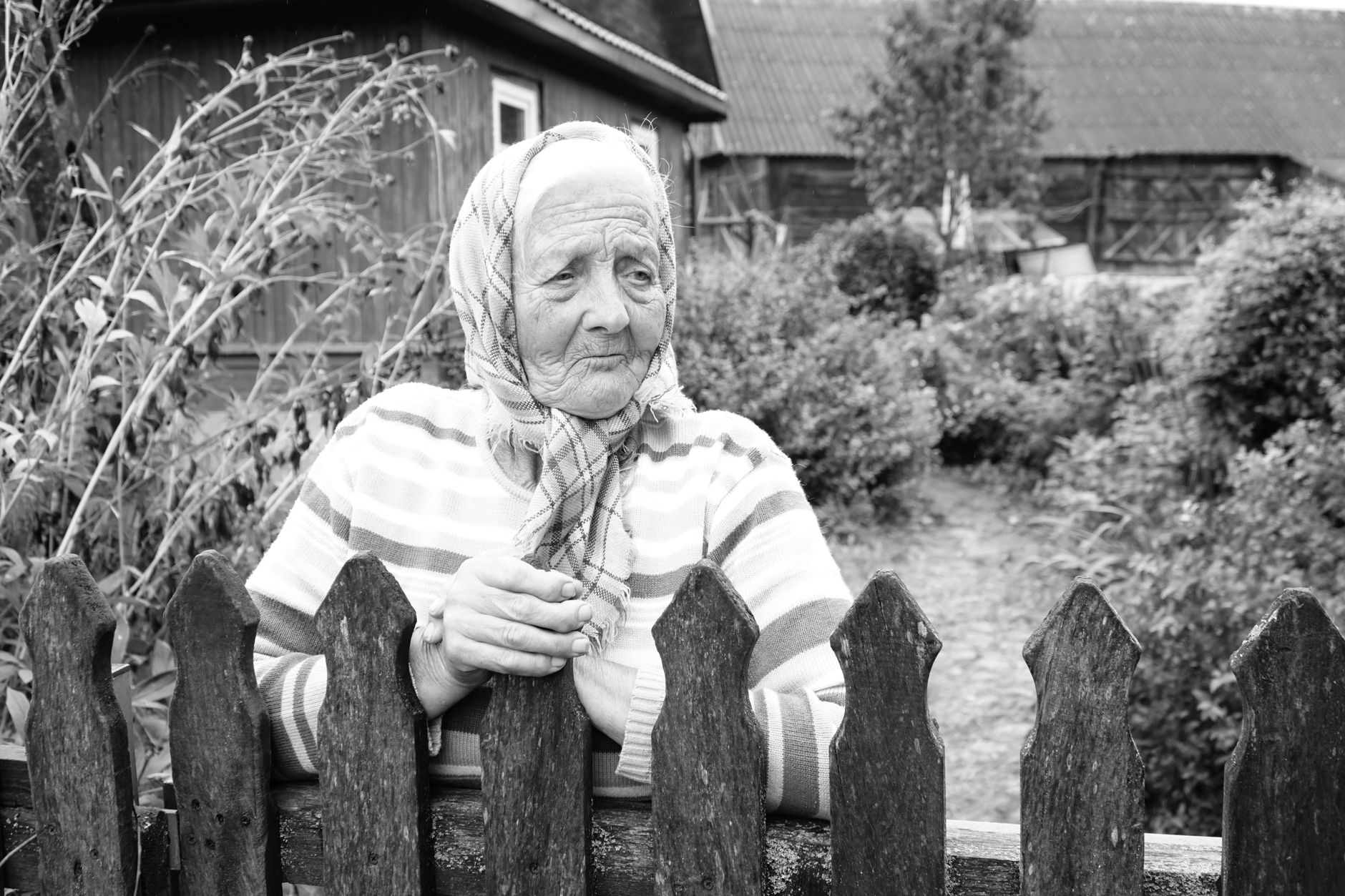
Our house sits on a half acre next to a much older, much bigger piece of land that belonged, for over fifty years, to a woman named Vesta Redding. I had waved to Vesta across our shared fence line for four years without ever once sitting down at her kitchen table, the way you do with an elderly neighbor you like well enough but never quite make time for, always meaning to bring over a casserole and never quite doing it. She was eighty one years old, small and straight backed in the way of a woman who spent sixty years on her feet, with white hair she still set in pin curls every Sunday morning whether she made it to church or not. Her husband, a quiet, broad shouldered farmer named Purnell Redding, had died nine years before I ever moved in next door, and from what I understood, the two of them had never had children of their own. What family Vesta had left ran thin and far away, scattered across two states, none of them close enough, or interested enough, to notice that her front yard had grown up past her knees.
*The woman next door*
I want to tell you about Vesta honestly, because if I only tell you about the sheriff’s cruiser you will miss the reason any of it happened at all. Vesta Redding was the kind of proud that looks, from a distance, like coldness. She turned down casseroles. She turned down rides to the grocery store, telling anyone who offered that she had been driving that same road since before their mothers were born and intended to keep at it. What she could not turn down, because pride cannot argue with a hip that no longer wants to bear weight, was the state of her own yard. By the middle of that summer, the grass along her fence line stood knee high and gone to seed, swallowing the base of her mailbox post and hiding the bottom two porch steps entirely. I noticed it the way you notice a friend losing weight quietly, all at once and then unable to stop seeing it.
The only person who came around with any regularity was her late husband’s great nephew, a man in his late thirties named Judd Kestler, who drove up from two counties over in a truck too clean for the roads he claimed to work on. Judd had started appearing at Vesta’s place with more frequency that spring than he had in all the years before it combined, and every visit seemed to leave her a little more tired, a little more folded in on herself, standing at her porch rail after his truck pulled away with an expression I did not have a word for yet. I told myself it was none of my business. Family is family, and an outsider does not get to referee what happens between blood relatives, even the thin, far flung kind. I would learn later how wrong that instinct was, and how much it can cost an old woman when good neighbors decide her business is not theirs to notice.
*The night I mowed her grass*
The county fair closed out that Saturday night with a fireworks show the whole town turns out for, laid out over the fairgrounds pond so the color doubles itself on the water, and it was during the hour before that show, with the light going long and gold and everybody in town gathering lawn chairs two miles up the road, that I finally did something about Vesta’s grass instead of just noticing it. Tucker had left for his shift an hour earlier. I had nowhere I needed to be and a mower sitting idle in our shed, and something about watching Vesta struggle down her porch steps that morning to drag her own trash can to the curb, wincing with every step, put a decision in me that I did not examine too closely. I wheeled the mower across the property line myself, seven months pregnant, moving slow and taking breaks in the shade every fifteen minutes the way the midwife had told me to, and I mowed that whole overgrown acre while the sky went the color of a ripe peach behind me.
It took me the better part of two hours. Somewhere in the middle of it, sweating through my shirt with my lower back aching in a way I chose to ignore, I passed close by Vesta’s screened porch and heard her voice through the screen, tight and higher pitched than I had ever heard it, on the phone with someone. I was not trying to listen. But a pregnant woman pushing a mower does not move fast, and the words came to me anyway, in pieces, the way overheard things do. “I am not signing anything else, Judd, not until I understand it.” A pause. Then, sharper. “You keep telling me it is just paperwork, and every time I look up it is one more paper.” I kept mowing, because it was not my conversation to be part of, but I slowed down along that side of the yard without quite meaning to, and through a gap in the porch screen I caught sight of a manila folder sitting open on her side table, a document on top of it with a court seal printed in the corner, the kind of seal you only ever see on something serious.
I finished the yard as the first fireworks were cracking open over the fairgrounds two miles off, gold light flashing against Vesta’s windows in rhythm with the booms. She came out onto the porch once the mower went quiet, moving carefully down to the top step, and thanked me in a voice that had gone soft and unsteady, nothing like the voice I had heard through the screen twenty minutes earlier. “You didn’t have to do that, Misty,” she said, and then, looking at my belly, at the mower, at the darkening yard around us, she added something I did not think much of at the time and have thought about every day since. “You’re the only one who’s looked at this yard and seen a thing worth taking care of instead of a thing to be settled.” I told her it was nothing, that I was glad to do it, and I went home and showered and fell asleep before Tucker’s shift ended, never once imagining that folder on her side table was the last ordinary thing I would know about Vesta Redding’s life for a long, long time.
*The phone call I did not hear*
I did not know it that night, and would only piece it together in fragments over the following weeks, but Vesta had called Judd back less than an hour after I went inside. What was said between them I only ever got secondhand, filtered through a records officer’s careful language and, much later, through Vesta’s own halting retelling from a hospital bed. What I do know is that Judd pushed harder that call than he ever had before, telling her the paperwork sitting on her side table needed her signature by the end of the week or the whole arrangement, whatever exactly that arrangement was, would fall apart and leave her with nothing but a house she could no longer keep up and a court that would decide her business for her regardless. Vesta refused him outright for the first time in months. She told him she had had enough of signing what she did not understand, that she intended to call a lawyer of her own choosing, and that he was not to come back to her house until she had.
Sometime after that call ended, alone in a farmhouse with grass finally cut short around it, Vesta Redding’s heart did something it had never done before. She would later describe it to me as a fist closing slowly around the inside of her chest, and then a heaviness down her left side that put her on the kitchen floor before she understood what was happening. What she did next is the part of this story that still makes my throat tighten no matter how many times I turn it over. Flat on her own kitchen floor, unable to stand, she dragged the cordless phone off the counter by its cord and dialed 911 with a hand she could not fully feel. A dispatcher named Corenna took the call, and logged, in the flat clinical language dispatchers are trained to use, that the caller reported chest pain and one sided weakness, gave her address in a slurred but coherent voice, and then, before her words went from slurred to silent altogether, said one more thing that Corenna wrote down exactly as she heard it because something in the caller’s tone told her it mattered. Find the girl who mowed my lawn. Tell her the tin under the back stairs. Tell her it’s real.
*Forty minutes I do not remember driving*
I know all of that now. I knew almost none of it the morning Deputy Trace Boone stepped out of his cruiser onto my gravel drive, hat in hand, moving toward my porch with the careful, unhurried walk of a man who has learned that showing up fast only frightens people worse. I want to be honest about what went through my mind in those first few seconds, because it was not noble and it was not calm. I thought first of Tucker, alone on a grain elevator catwalk at three in the morning, and my stomach dropped clean through the porch boards. Then, absurdly, guiltily, I thought of the mower, of whether I had done something wrong on Vesta’s property, run over a buried pipe or a hidden sprinkler line, something that had somehow turned into trouble with the law. Pregnant women are told, over and over, to guard their peace, and I stood on that porch with my hand on my belly bracing for whatever was about to knock my peace flat.
“Mrs. Coldwell,” Deputy Boone said, and I noted, the way you note strange details when your body is flooding with adrenaline, that he took his hat all the way off before he said my name, “I’m going to need you to come with me to Baptist Regional. Vesta Redding is asking for you, and I’m told it’s urgent, and that you’d know why.” I told him I did not know why, that I barely knew the woman beyond a fence line and one evening with a mower, and he said, gently, that he did not have more to tell me than that, only that the hospital had called the sheriff’s office at dawn asking them to help locate a woman matching my description on Featherstone Road, because an eighty one year old patient kept surfacing out of unconsciousness saying the same six words and refusing to be calm until someone found her. I do not remember most of the twenty minute drive to Baptist Regional. I remember Tucker’s voice, thin and worried through my phone on speaker, telling me he was already signing out early and would meet me there. I remember counting my own breaths the way the midwife taught me, in for four, hold for four, out for four, because somewhere under the fear was a stubborn, animal instinct to keep my daughter steady no matter what was about to happen to me.
*What Vesta said with a hand that could barely close*
They had Vesta in a room on the third floor cardiac unit, tubes running into the back of one hand, the left side of her face drooping just slightly in a way that made my own chest ache to look at. A nurse warned me, before I went in, that she had suffered what they believed was a moderate stroke, likely brought on by a sudden spike in blood pressure, and that she had been agitated, by hospital standards, ever since regaining partial consciousness, refusing sedation until she had said her piece to whoever walked through that door. When I stepped inside, her eyes found me immediately, and her right hand, the one that still worked properly, lifted an inch off the blanket in a gesture that took everything she had left. I crossed the room and took it without thinking, and she gripped my fingers with a strength that startled me for a woman who could not yet fully speak.
“The girl who mowed my lawn,” she said, each word deliberate and slow, fighting the slack half of her mouth for every syllable, and something in her face cracked open with relief when I told her yes, it was me, I was here. What followed took her nearly ten minutes to get out, in pieces, with long pauses where I thought she had drifted off again, and I am going to lay it out here the way I finally understood it whole, rather than the broken way it actually reached me. Weeks earlier, during a bad bout of flu that had left her feverish and confused for the better part of four days, Judd had come by with what he called routine paperwork, a document he told her was simply for a property tax exemption available to elderly homeowners. Foggy with fever, trusting a man who shared her late husband’s blood, she signed it without reading it closely. It was not a tax exemption. It was a durable power of attorney, granting Judd broad authority over her financial and property decisions, and in the weeks since, he had used it to begin the paperwork for a sale of her farm to a development company two counties over, a sale she had never agreed to and, until that phone call two nights before her collapse, had not even fully understood was underway.
The court document I had glimpsed through her porch screen was a petition Judd’s own lawyer had filed, laying groundwork to have Vesta declared unable to manage her own affairs, a formal guardianship that would remove any remaining ability she had to contest the sale herself. What terrified her most, she told me, gripping my hand tighter with every sentence, was not the money, though the farm had been in Purnell’s family for three generations and was worth a great deal more than Judd had ever let on. It was that she had begun, in the fog of the last few weeks, to doubt her own memory of events, to wonder if perhaps she really had understood and agreed to all of it and simply forgotten, the way Judd kept gently suggesting she had. “I needed proof I wasn’t losing my mind,” she told me, the clearest full sentence she managed that whole visit. “I kept a copy. I kept everything. It’s in a tin under the back stairs, behind the loose board, where Purnell used to keep the deed safe from the bank examiners back when we still worried about things like that. Find it before Judd does. Please.”
*The choice I almost didn’t make*
I want to be honest about the part of me that wanted to say no. I was seven months pregnant, married to a man who worked nights, still carrying the particular fragility of two prior losses in every corner of my body, and here was a dying woman’s great nephew, a stranger to me, entangled in what sounded very much like fraud, and I was being asked to walk into that man’s blast radius holding evidence against him. I thought about Tucker, standing in the hallway outside, and what he would say if I told him I intended to drive to an empty farmhouse and pry up a floorboard on behalf of a woman I barely knew. But I thought too about the way Vesta had looked at me on her porch step, grass clippings still stuck to my sandals, telling me I was the only one who had looked at her yard and seen a thing worth taking care of. I thought about what it would mean to be the kind of woman who mowed a stranger’s lawn out of kindness and then let that same stranger get robbed of everything Purnell had built, simply because helping further was inconvenient. I told Vesta yes before I had fully finished deciding it in my own head.
Tucker, when I finally reached him in the hallway and laid it out, went quiet in the way he does when he is working hard not to say the first thing that comes to him. He asked me twice if I was certain I felt up to it, physically, and I told him honestly that I did not know, that my back had ached since the mowing and my ankles had not gone back to their normal size in three days, but that I could not picture driving home and leaving a woman’s whole life’s proof sitting under a floorboard for a man like Judd to find first. He did not argue with me after that. He asked instead if he could come along, and stood two steps behind me the entire time we were in that farmhouse, one hand resting light on my shoulder blade the way he used to before the losses taught us both to brace instead of touch. I think he understood, better than I did in the moment, that I was not just retrieving a tin of old paperwork. I was choosing, in a very small and very concrete way, to be the kind of mother our daughter would eventually need me to be, the kind who does not look away from a thing simply because looking away would be easier.
Deputy Boone, once he understood what was actually at stake, treated the whole thing with a seriousness that surprised me. Financial exploitation of a vulnerable adult, he explained in the hallway, is a real category of crime in Kentucky, one his department took calls about more often than most people realized, usually from a relative circling closer once a diagnosis or a fall made an elderly person easier to steer. He had a charge nurse witness Vesta give her verbal consent for me to enter her home and retrieve her own belongings on her behalf, wrote it into an official report with a timestamp, and drove me himself to Featherstone Road rather than let me go alone, in case Judd had already let himself in with whatever key he had talked his way into over the past few months.
*The tin under the back stairs*
The house smelled like lemon oil and old wood, the particular smell of a home kept carefully for fifty years by someone who never stopped caring how it looked, even after her legs stopped letting her clean every corner of it. I found the loose board exactly where Vesta said it would be, third step from the bottom on the back staircase, and beneath it a rusted tobacco tin that had clearly sat undisturbed for years before that summer. Inside it, wrapped in a plastic grocery bag gone brittle with age, was the original deed to the farm, one hundred and forty acres, still solely in Vesta Redding’s name, notarized the year after Purnell died and never once amended since, direct proof that whatever Judd had been telling his development company contact about the property already being partially transferred was, at best, a lie he was racing to make true before anyone checked.
Beneath the deed sat a letter in Purnell’s own handwriting, dated a full decade before his death, the kind of letter a careful man writes and tucks away for a day he hopes never comes. It asked, in plain unsentimental language, that whatever happened to him, the land stay a working farm, sold to no one outside the family unless Vesta herself, of clear mind and free will, chose otherwise, and it named, almost as an afterthought at the bottom, that Judd’s branch of the family had asked Purnell for money against that same land twice before and been refused both times. And beneath that, folded separately, was the thing that mattered most in a courtroom, a photocopy of the power of attorney Judd had gotten Vesta to sign during her flu, with a note in Vesta’s own shaking hand stapled to the back of it, dated the same week she signed it, reading only, I do not remember agreeing to this the way he says I did, and I am frightened that I am starting to believe him over myself. She had kept a written file on her own confusion, the same instinct her late husband had passed down to her, because some part of her, even sick and doubting herself, had refused to stop documenting.
*What the attorney found*
Deputy Boone connected me, through a victim’s advocate at the sheriff’s office, to an elder law attorney named Adair Prewitt, a sharp, no nonsense woman who had built her entire practice around cases exactly like this one and did not waste a single word once she read through the tin’s contents at her kitchen table two days later, with Vesta’s blessing and a signed release from her hospital bed. The power of attorney itself, Adair explained, was likely valid on paper, since Vesta had technically signed it while conscious, but the pattern around it, a document mislabeled as a tax form, obtained during a documented illness, followed within weeks by an undisclosed sale attempt and a guardianship petition timed to remove Vesta’s ability to object, painted exactly the kind of coercion and misrepresentation a court takes seriously. Combined with Vesta’s own contemporaneous note expressing confusion and fear at the time of signing, Adair believed they had more than enough to have the power of attorney revoked and the guardianship petition dismissed outright, and likely enough to refer the whole matter to the county attorney for a criminal exploitation charge against Judd besides.
It took six weeks from that kitchen table conversation to the morning a judge formally revoked Judd Kestler’s power of attorney, dismissed his guardianship petition with prejudice, and referred the case to the commonwealth’s attorney for review under Kentucky’s financial exploitation of a vulnerable adult statute. Judd never showed up to contest any of it. His own attorney withdrew from the guardianship filing within a week of Adair’s letter arriving on his desk, and the last I heard, through the same small town grapevine that carries everything eventually, he had moved two states away and stopped answering calls from anyone connected to Castellane’s Fork at all. Vesta never got the satisfaction of a courtroom confrontation, the kind you might want for her, the kind I wanted for her. What she got instead was quieter and, I think, better: her name alone back on a deed to one hundred and forty acres nobody could touch again without her say so, and a farm that would stay exactly what Purnell had asked it to stay.
I sat in on one meeting at the county attorney’s office, near the end of that six weeks, mostly because Vesta asked me to and I did not know how to tell an eighty one year old woman recovering from a stroke that I had a nursery to finish painting. The assistant county attorney handling the review, a tired looking man with a stack of files three times the size of Vesta’s alone, told us plainly that cases like hers rarely made the news and rarely went to trial, because families like Judd’s counted on exactly that quiet, on an old woman being too embarrassed, too tired, or too doubtful of her own memory to push past the first uncomfortable conversation. He said the tin under the back stairs, the dated note in Vesta’s own hand describing her fear and confusion the same week she signed the paperwork, was the single most useful piece of evidence he had seen cross his desk in over a year, because so few victims think to write anything down in the moment they are being taken advantage of. Vesta, sitting straight backed in a hard plastic chair with her cane hooked over one knee, told him it was not her first instinct to write it down. It was Purnell’s. He had spent forty years telling her that paper outlives memory, and outlives liars too, and she had simply never stopped believing him.
*What Vesta built once she was well enough to build anything*
Vesta spent five weeks in rehab relearning to grip a coffee cup and walk the length of a hallway without a hand on the rail, and I visited more Sundays than I missed, sometimes with Tucker, once heavily enough into my third trimester that a nurse made me sit down before I had even reached the doorway. She came home to Featherstone Road in September, moving slower than before but sharper, in every way that mattered, than she had been in months. The first thing she did with Adair’s help was draft a new estate plan entirely, naming a local land trust as the eventual steward of the farm’s working acreage so it could never again be dangled in front of a relative looking for a shortcut, and naming Adair herself, rather than any blood relative, as her healthcare power of attorney going forward.
The second thing she did was smaller, and it is the part of this story that undid me completely the first time she told me about it. She asked Tucker and me to sit with her at her own kitchen table, the same table where Purnell’s ten year old letter had once sat wrapped in a grocery bag, and she told us that a woman does not get to choose her family by blood, only by who shows up, and that she intended to name us, formally, as her emergency contacts going forward, since the family listed on her old paperwork had proven itself entirely unfit for the job. She set aside a modest trust, not a fortune, nothing that would change our lives the way people sometimes imagine these stories end, but enough to cover a year of the daycare we had been quietly dreading the cost of, funded by selling off ten acres at the far edge of the property that had never been part of the working farm to begin with, land Purnell’s letter had never mentioned at all. And she gave us, still wrapped in the same brittle plastic bag she had kept the deed in, a cedar cradle Purnell had built with his own hands the year they married, for children that had never come, that had sat unused in her attic for over fifty years waiting, she said, for someone worth giving it to.
*The full circle*
My daughter was born on a cold morning in early November, seven pounds two ounces, with a full head of dark hair and a set of lungs that made the delivery nurse laugh out loud. Tucker and I named her Vesta June, and when I called next door two hours after the delivery to tell her, the woman who answered sounded almost exactly like the one who had thanked me from her porch step that fireworks night, steady and dry and entirely unwilling to make a fuss over her own tears. She was in that hospital room by that same afternoon, moving slower than she used to but on her own two feet, holding my daughter in the cedar cradle’s small quilted liner she had sewn herself during the last two weeks of my pregnancy, and telling her, in a voice too soft for anyone but the baby to really hear, that she had a great deal to learn someday about a mower, a fence line, and a summer that could have gone a very different way.
I think about that fireworks night often, the ordinary decision to push a mower across a property line instead of staying inside where it was cooler and easier. I did not do it hoping for anything back. I did it because an old woman’s yard had gotten away from her and nobody else seemed to be looking. But I have come to believe that kindness, the plain unglamorous kind that shows up with a mower instead of a speech, has a way of planting something that outlasts the moment it is given, whether or not the person giving it ever finds out. Vesta Redding is eighty two now, still setting her hair in pin curls every Sunday, still refusing rides to the grocery store, and still, on the second Saturday of every summer, the same weekend the fair closes with fireworks over the pond, insisting on standing on her own porch step to watch me mow her side yard, my daughter propped on one hip, telling anyone within earshot that she raised the finest crop of good neighbors Castellane’s Fork ever saw, and she only had to wait eighty one years to find one worth keeping.
This story is a dramatization. Names, characters, and details are invented, and any resemblance to real people or events is coincidental.