
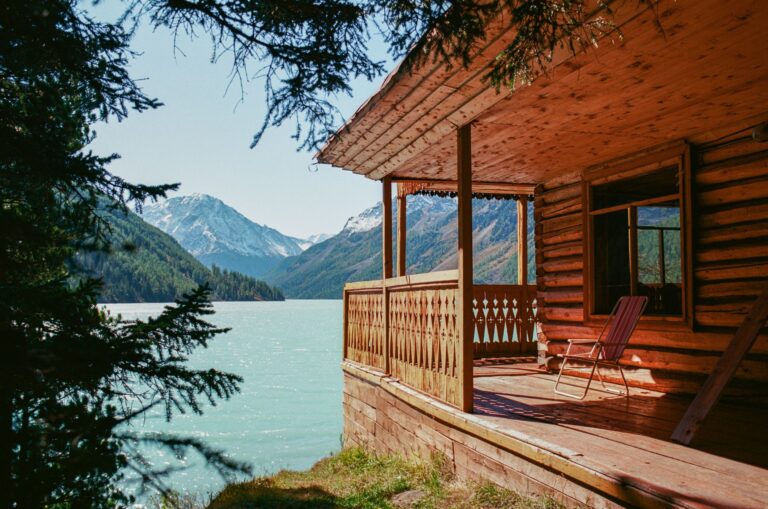
These days, when I drive out to the cabin at Tull Lake on a Sunday afternoon, I let myself take the long way around, past the feed store and the little Baptist church with the crooked steeple, just so I can watch the light come down through the cottonwoods before I turn onto the gravel. I own that road frontage. I have owned it for twenty-four years. My family did not know that until the winter they told me to stop depending on them, and I finally let them find out exactly who had been depending on whom.
I am fifty-four years old. I have lived in Amber Grove, Missouri my whole life, the kind of town where the feed store still cashes checks for people the bank won’t, where the VFW hall smells like Folgers and floor wax every Friday night, and where everybody’s business gets discussed over the meat counter whether they want it discussed or not. My name is Yolande Fairholm. My father was Ellis Fairholm, born and raised on Fairholm land three miles outside town, and my mother came up from a family of cotton pickers and cannery workers near the Texas border, so I have always carried two different kinds of stubbornness in me, and both of them came in useful the year my family decided I was the weak link.
I want to tell you what happened at that holiday lunch. But first I need to tell you how I became the kind of daughter a family can lean on for thirty years without ever once looking down to see what she was standing on.
The Girl Who Was Good At This Stuff
I was the oldest of three. My brother Winnow came two years after me, and my brother Delacour came four years after him, and by the time I was twelve, I already understood something the two of them never had to learn: in our house, being capable was not a gift, it was a job assignment, and once you got the assignment, nobody ever came back to check if you wanted it.
I was nineteen the first time it happened in a way I still remember clearly. Winnow called me at two in the morning from a gas station parking lot forty minutes outside town because his truck had died and he did not want our father to know he’d been out that late with a girl he wasn’t supposed to be seeing. I drove out in my mother’s Buick with a flashlight and jumper cables I didn’t know how to use, and I sat with him for an hour while a trucker who stopped to help got the engine turning over again. Winnow never called a tow service that whole first year he had his license. He called me. It was easier, and it was free, and it never occurred to either of us at the time that “easier” and “free” were doing a lot of work in that sentence.
I was twenty-four when Delacour’s daughter needed her tonsils out and his ex-wife was working a shift she couldn’t get off, and somehow it fell to me to sit in the surgical waiting room filling out insurance forms while Delacour stood in the hallway on his phone, laughing about something with a nurse who clearly thought he was charming. I remember signing my own name on a line that asked for “relationship to patient” and writing “aunt” because there wasn’t a box for what I actually was, which was the only adult in that hospital who had shown up sober, on time, and prepared.
By the time I was twenty-nine, I had quietly become the keeper of the family’s paperwork. My mother handed me the folder for the cabin’s property taxes one October and said, “You’re good at this stuff, honey, you handle numbers so much better than I do,” and I took the folder because refusing would have started a fight I did not yet know how to win. I paid that tax bill on time every year after that. Nobody ever asked to take it back.
None of this happened all at once. That is the part people who have never lived it don’t understand. Nobody sits you down and says, from now on, you will be the load-bearing wall in this family. It happens one favor at a time, spread out over decades, disguised as trust, dressed up as being told you’re special, you’re capable, you’re the one they can count on. By the time you notice the weight, you have already been carrying it so long that your body doesn’t remember what it felt like to stand up straight.
What My Grandmother Knew
The cabin at Tull Lake had belonged to my grandmother, my father’s mother, a woman named for hard winters who outlived two husbands and buried a son and never once, in the eighty-one years I knew her, asked anyone for a single thing. She built that cabin with my grandfather’s insurance money after he passed, a modest three-room place with a wood stove and a porch that faced the water, and for as long as I can remember it was the one place in our family where nobody performed for anybody else.
In her last two years, my grandmother’s hips gave out and she couldn’t manage the drive out to the lake alone anymore, so every Sunday I made the two-hour trip to sit with her, first at her house in town and then, once she was too frail for stairs, in the little room my parents fixed up for her. My mother visited when she could. My brothers visited around the holidays, mostly. I was there every Sunday for two years, rain or shine, because she was the only person in my life at that point who had never once asked me to fix anything.
The spring before she died, she asked me to drive her out to see a lawyer in the next county over, a man named Halbert Voss who had handled her affairs for thirty years. I sat in the waiting room while they talked. When she came out, she patted my hand and said, “Don’t you go looking through my things until I’m in the ground, Yolande. And when you find what I left you, don’t go announcing it to the family. Let them find out when they need to.”
I did not understand what she meant until three months after her funeral, when a certified letter came from Halbert Voss’s office. Inside was a deed. My grandmother had transferred the cabin and its acre and a half of lake frontage into my name alone, six months before she passed, quietly, legally, and completely. Not to my father. Not split three ways between me and my brothers the way everyone assumed the family property would go. To me.
I remember sitting at my kitchen table with that deed in my hands for a long time. I understood exactly what she had done and exactly why, and I understood something else too: if I told my family, it would blow up whatever peace we had left. My father was still grieving his mother. My brothers had never once driven out to see her on a Sunday, and I did not want to spend the rest of my life watching them resent me for a decision that wasn’t mine to make. So I did what I have always done. I kept the peace. I never told them the cabin was legally mine. I let them go on using it exactly like they always had, and I quietly kept paying for it, the way I had quietly kept paying for everything else, because it was easier than the alternative, and because some stubborn, tired part of me still believed that if I just kept holding the family together with both hands, nobody would ever have a reason to let go of me.
For twenty-four years, I paid the property taxes. I paid the insurance. When the roof started leaking eight years ago, I took out a home improvement loan in my own name, nine thousand two hundred dollars, and paid two hundred fifteen dollars a month on it without telling a soul where the money came from. I kept the electric and propane accounts in my name because it was simpler than untangling them from a shared history nobody else wanted to look at closely, and every winter I made sure the pipes wouldn’t freeze, and every summer my brothers and their kids used that cabin like it belonged to all of us equally, because as far as they knew, it did.
The Table
This past November, we all gathered at my parents’ house for the holiday lunch, the way we have every year of my life. My mother had the good tablecloth out, the one with the embroidered edge she only uses twice a year. My father carved the turkey into precise little squares, the way he always does, like presentation mattered more than anything that might be said over it. Winnow made a joke about winter weight that landed the way his jokes usually land, half laugh, half wince. Delacour nodded along about the weather to nobody in particular. My mother laughed her small, careful laugh, the one that always sounds like it’s been measured out ahead of time.
Get a new story in your inbox every morning.
Facebook doesn’t show you every story we post. Our free newsletter does. Join 2,500+ readers.
I remember passing the bread basket down the table and thinking the whole room felt like a play everybody had rehearsed except me.
I reached for the gravy boat when my mother leaned toward me, close enough that her perfume cut clean through the smell of roasted carrots and warm rolls. She did not look at me when she spoke. She kept her eyes on her plate, like she was commenting on the weather.
“Yolande,” she said, quiet enough that only I could hear it, “it’s time you stopped depending on this family.”
My hand stopped in midair over the gravy.
For a second I thought I had misheard her. It was too clean a sentence, too rehearsed, to belong in a room full of clinking forks and my father’s radio playing Christmas music three weeks early. “I’m sorry?” I said.
She set her fork down, dabbed her mouth with her napkin, and finally turned her head enough to meet my eyes. “You need to start standing on your own two feet,” she said, calm as anything. “We can’t keep carrying you, honey. It isn’t healthy. For any of us.”
The room did not go quiet. That was the part that actually hurt. The radio kept playing. Delacour kept chewing. Winnow cleared his throat and studied his plate like it had suddenly become fascinating. My father sliced another perfect square of turkey and did not look up once. Nobody said, what do you mean. Nobody so much as blinked in my direction. And their silence told me everything their faces wouldn’t. This was not new information to them. This was a conversation they had already had, without me, and my mother had simply been elected to deliver the verdict.
My mind ran backward through twenty-four years in about four seconds. Nineteen, the gas station, the jumper cables. Twenty-four, the hospital waiting room, the insurance forms, the box that had no room for what I actually was to that child. Twenty-nine, the tax folder handed across a kitchen table like a compliment. Three months ago, the propane bill at the cabin, paid at midnight so my nephew’s ski trip with his friends wouldn’t be, in my sister-in-law’s words, “ruined over money nobody even talks about.”
Every single time, I had been the one leaning down to catch somebody. And somehow, in the story my family had been telling itself, I was the one who leaned.
“Your mother’s just saying maybe some independence would do you good,” Winnow finally offered, eyes on the tablecloth. “You’ve seemed kind of distant lately.”
Distant. I almost laughed. Distant is the word people use when you stop being available on demand. Distant is what they call you the year “sure, I’ve got it” finally turns into “I can’t this time.”
Delacour swirled the ice in his glass. “If you’re struggling, Yolande, just say so. Nobody’s judging you.” And there it was, the story they had all clearly agreed on beforehand: not that I had quietly carried the weight of this family for half my life, not that they had all grown comfortable letting me, just that I was the burden, and the burden had finally started to show.
I looked at my mother. She met my eyes without flinching, which told me this had not been an impulse. She had chosen her moment. She had probably expected tears, or an argument she could dismantle piece by piece the way she always did. What she had not expected was for me to nod slowly and say, in a voice as even as hers had been, “Okay.”
Something flickered across her face. That had not been in her script.
I pushed my chair back. The legs scraped hard across the hardwood, loud enough that my father actually glanced up. Winnow shifted in his seat but stayed quiet. Delacour watched me with the mild interest of a man watching weather roll in that he assumed wouldn’t reach him.
“I think I’m going to head home,” I said.
“Let’s not be dramatic,” my mother said, a thread of irritation slipping into her voice for the first time.
“I’m not being dramatic,” I said. “I heard you. That’s all.”
That unsettled her more than an argument would have. I could see it. I finished my water, set the glass down without a sound, and walked toward the front hall. Nobody stood up. Nobody asked me to stay. In the mirror by the door, my own reflection looked steady, almost composed, like I was leaving early for some other engagement rather than walking out of the only family I had. Behind me I heard my father ask if anyone wanted more potatoes.
The cold outside hit me clean and honest, nothing like the warmth in that house, which I understood now had never really been warmth at all, just good lighting.
What I Did That Night
I did not cry on the drive home. My hands did not shake. What I felt instead was a clarity so precise it almost scared me, the particular stillness of finally seeing something you’d spent years refusing to look at directly.
I let myself into my house, made a cup of tea I never drank, and opened my laptop at the kitchen table. Then, methodically, the way I have always done everything that matters, I went through every account, every autopay, every quiet arrangement I had built over twenty-four years of being told I was good at this stuff.
I canceled the automatic payment on the cabin’s propane account. I canceled the automatic payment on the electric. I logged into the loan portal and set up a payment plan that would come entirely out of a separate account I controlled, one my family did not know existed, instead of the joint household account my father still checked out of habit. I removed myself as the backup payer on Winnow’s car insurance, ninety-two dollars a month I had covered without complaint since his divorce two years earlier because he’d “just gotten back on his feet” and never quite finished getting there. I looked, for a long time, at the folder labeled Cabin – Taxes/Insurance/Maintenance that I had kept on that laptop for over two decades, and I did not delete a single line of it. I only stopped paying out of it.
I was not trying to punish anyone. I want to be honest about that, because it would be easy to tell this story as revenge and it was not that, not that night. That night I was simply doing, for the first time in my adult life, exactly what my mother had told me to do at that table. She had said, stop depending on the family. I heard something underneath that sentence too, something she probably did not intend for me to hear: stop making the family depend on you. So I did both, at the same time, in the space of about ninety minutes, sitting alone at my kitchen table with a cup of tea going cold beside me.
Three Days Later
The heat at the cabin went out on a Wednesday. I found out because Delacour called me at seven in the morning, his voice already climbing before I’d finished saying hello.
“The propane’s out,” he said. “We’re up here with the kids for a long weekend and it is thirty-one degrees and there’s no heat, Yolande. What happened?”
“I stopped paying for it,” I said.
There was a pause long enough that I could hear my nephew asking his father something in the background. “What do you mean you stopped paying for it,” Delacour said. “It’s the family cabin.”
“It’s not on autopay through me anymore,” I said. “You’ll need to call the propane company and set up your own account, or work it out with Mom and Dad.”
“You can’t just do that,” he said. “You’ve always handled the cabin stuff.”
“I know,” I said. “I’m not handling it anymore.”
He hung up on me. I sat with the phone in my hand for a while after that, waiting to feel guilty, and mostly I just felt tired, the particular tiredness that comes after you’ve been holding your breath for so long you forgot you were doing it.
The Week Between
The days after that call were quiet in a way our family almost never is. Nobody called to check on me. Nobody asked why I’d stopped covering the cabin, not directly, not to my face. I heard secondhand, through a cousin who still talks to everybody, that Delacour had ended up paying the propane company himself, three hundred and forty dollars to get the account reopened under his own name, and that he had not enjoyed it.
I spent that week doing something I had never once done in twenty-four years. I sat down with my own finances, separate from the family’s, and looked honestly at what it had cost me to be the load-bearing wall for so long. The nine thousand two hundred dollar roof loan, still had eleven months left on it. The insurance I’d carried for Winnow. The property taxes. The small, steady bleed of money and time that nobody in that family had ever thanked me for because, as far as they knew, none of it was mine to give in the first place. It was just what Yolande did.
I also drove out to see Halbert Voss, my grandmother’s old lawyer, who was semi-retired now but still kept an office two days a week above the hardware store. I brought him the deed my grandmother had left me twenty-four years earlier. I told him what my mother had said at that table. He listened without interrupting, the way good lawyers and good pastors both learn to do, and when I finished he took off his glasses and said, “Yolande, you have been letting your family live on land you own outright for over two decades without ever once telling them. That’s your right. It’s also, if you don’t mind me saying so, not fair to you.”
I asked him what he would do. He said he couldn’t tell me that. But he could, if I wanted, help me formalize what my grandmother had already made legally true, and make sure my family understood, clearly and in writing, exactly whose name had been on that deed the whole time.
I thought about it for two days. Then I told him yes.
What Came In The Mail
A week after the holiday lunch, a certified letter arrived at my mother’s house from Halbert Voss’s office. I know what it said because he read me the draft before he sent it. It informed my parents and my brothers that the Tull Lake property, the cabin and its acre and a half, was the sole legal property of Yolande Fairholm, per a deed executed and recorded twenty-four years earlier, and that going forward, continued use of the property by other family members would require a written cost-sharing agreement, to be negotiated directly with the owner. It was not an eviction notice. It was not cruel. It was simply, finally, true, in writing, filed with the county, impossible to argue with.
My mother called me forty minutes after it arrived. I could hear her hands shaking through the phone, which was new; I had never once heard my mother’s voice do that. “What is this,” she said. “What is this letter, Yolande. Is this some kind of joke?”
“It’s not a joke,” I said. “Grandma left me the cabin the year before she died. I never told you because I didn’t want to fight about it, so I just kept paying for everything and let all of you use it like it was still shared. I’ve been doing that for twenty-four years.”
“You should have told us,” she said, and her voice cracked on the word told, somewhere between anger and something closer to shame.
“I did tell you,” I said. “Three weeks ago, at your table, you told me to stop depending on this family. I heard you. I stopped. This is what that looks like, Mom. I’m not depending on anyone for anything anymore, and I’m not going to keep letting everyone depend on me while pretending I don’t have a say in it.”
She did not have an answer for that. For the first time in my entire life, my mother went silent on a phone call, and stayed silent, until she finally said, very quietly, “I didn’t know it was really yours,” and hung up.
What Happened After
I would like to tell you that everything mended cleanly after that, the way it does in the stories where the wronged daughter finally speaks up and the family sees the light all at once. That is not what happened, and I think it is more honest to tell you the truth.
Delacour did not speak to me for almost two months. When he finally called, it was not an apology, not exactly. It was a request, careful and a little stiff, asking what a fair cost-sharing arrangement might look like if he wanted to keep bringing his kids up to the lake in the summers. I told him I’d put together something reasonable, split three ways between whoever actually used the place, with everybody paying their share up front instead of me covering it and hoping to get thanked later. He agreed. It was not warm. It was fair, which, after twenty-four years, felt like more than I had ever actually asked for.
Winnow surprised me. He drove out to my house on a Sunday in December, the first time he had come to see me without a reason attached to it in longer than I could remember, and he sat at my kitchen table, the same one where I’d canceled all those payments, and he told me he’d been doing some thinking since his own divorce about all the ways he’d let himself lean on people without ever once checking whether they could bear the weight. He said he was sorry about the truck, about the two in the morning calls, about never once asking me how I was doing when I showed up to fix things. It was not a grand gesture. It was one Sunday afternoon and a pot of coffee. But it was the first time in my life one of my brothers had apologized to me for something without me having to ask for it first, and I have learned to let small, real things like that count for exactly what they are.
My mother took longer. She showed up at my house in February, unannounced, with a pie she had clearly bought at the grocery store rather than baked, which from my mother is its own kind of confession. We sat on my porch even though it was cold, because neither of us wanted to be inside where things felt too formal. She told me she had spent thirty years believing that because I never complained, I never minded. She said watching my father slice turkey while she delivered that line at the table was the thing she couldn’t stop thinking about, that she had rehearsed those words with him beforehand like it was a kindness, an intervention, and that she had not once, in the planning of it, asked herself what would happen to me the moment I actually believed her and left.
I did not tell her it was fine. It was not fine, and I am done pretending things are fine simply because saying so keeps the peace. But I told her I was glad she came, and I meant it, and we sat on that porch until the pie was half gone and the sun went down over the feed store roof across the road.
My father never called at all. That did not surprise me, and it did not sting the way it might have ten years ago. My father has always shown up in silence, not words, the same silence that let my mother deliver her verdict at that table without a single objection. But in March, when I drove out to the cabin to open it up for the season, I found the dock had already been repaired, new boards fitted in clean and level where the old ones had gone soft with rot, the kind of job that takes a whole Saturday and a truck full of lumber. Nobody left a note. I did not need one. I know my father’s work the way I know my own handwriting, and I understood it for what it was, the only apology a man like that has ever known how to give. I have decided to let it count too.
The Table Now
We still gather for the holidays. That part has not changed, and honestly, I did not want it to. What has changed is smaller than people expect and, I think, more permanent. Nobody hands me a folder across the table anymore and calls it a compliment. When something needs handling now, my mother asks first, out loud, instead of assuming, and more often than not somebody else picks it up before I have to.
Last month, at a birthday dinner for my niece, I watched Delacour reach for the check before anyone else could, and I watched Winnow catch my eye across the table and give me a small nod, the kind that used to mean nothing between us and now means something close to I see what you carried. My mother sat at the head of the table, quieter than I have ever known her to be at a family meal, watching her sons split a bill three ways for once instead of watching her daughter reach for her purse out of habit.
Nobody said anything about the cabin. Nobody needed to. Some conversations only have to happen once, if you make sure the people in the room actually hear them.
The Cabin Now
I still drive out to Tull Lake most Sundays. The propane account is back in my name, because in the end I decided I wanted it to be, but now everyone who uses that cabin pays their share into an account I set up specifically for it, tracked, split evenly, no more midnight bailouts disguised as generosity. My nephew still gets his ski weekends. Nobody’s heat gets shut off in December anymore, mine or theirs.
I think about my grandmother a lot out there, on that porch she built with her husband’s insurance money, the woman who never asked anyone for a thing and who saw, decades before I could see it myself, that her granddaughter was going to spend her whole life being useful to people who mistook usefulness for weakness. She did not leave me that cabin to punish my family. I understand that now. She left it to me because she wanted me to have one place in this world that was entirely, undeniably mine, whether anyone else ever noticed or not.
They noticed eventually. It took a certified letter and a cold weekend with no heat, but they noticed. I did not lose my family over that holiday lunch. What I lost was the version of myself who believed that love had to be proven in propane bills and jumper cables and hospital paperwork signed under somebody else’s name for “relationship to patient.” What I gained was something my mother, of all people, handed me by accident, sitting at her good tablecloth in front of a plate of turkey cut into perfect little squares. She told me to stop depending on the family.
So I did. And it turned out the family had been depending on me the entire time.
This story is a dramatization. Names, characters, and details are invented, and any resemblance to real people or events is coincidental.