The Family That Walked Into My House
The night I found my family standing inside my own living room, my sister Grantly was turning in a slow circle in the middle of my new rug, arms out a little like she was measuring the room for a dance floor. My mother, Wickfield, had every cabinet door in my kitchen standing open, running her fingers along shelf paper I had smoothed down with my own hands two weeks earlier. My father was three steps down the hallway, head tilted, studying the empty guest room like he was already deciding where his recliner would go. Nobody had knocked. Nobody had called. The only warning I got before I even climbed out of my truck was my father’s old Buick parked crooked across my driveway, taking up the space I usually left open for guests I never had, because until that night nobody outside a title company, a loan officer, and one attorney knew this house existed.
I want to explain how it got to that point, because none of what happened that night was an accident, and neither was what came after.
I am forty-three years old. I have worked the floor at Sable Creek Implement Works for eleven years, most of that time on the swing shift because swing shift paid a dollar forty more an hour and I did not have a husband or kids waiting on me to explain why I wasn’t home for dinner. My abuela used to tell me that money you don’t talk about is money nobody can talk you out of, and I did not understand what she meant until I was twenty-six years old and watched my tax refund disappear into my sister Grantly’s wedding deposit without anyone asking me first. My mother explained it to me afterward like she was doing me a favor. “You’ll thank me,” she said. “Family doesn’t keep score.” I have been hearing some version of that sentence my whole adult life, usually right before something of mine left the house without my permission.
It wasn’t only the refund. It was the car I bought used with eighteen months of saved paychecks, the one my father borrowed for a “quick trip to the feed store” and returned four days later with a cracked windshield and a story about deer that nobody in Sable Creek, Nebraska ever fully believed, least of all me. It was the apartment I rented after I finally moved out at twenty-nine, the one Grantly used as her mailing address for two years without asking, so that collection notices for a credit card I had never heard of started showing up in my name. It was every raise I ever mentioned at a holiday dinner, met not with congratulations but with a fresh list of who needed what and why I, unmarried and childless and therefore apparently unburdened, was the natural person to provide it.
There was a summer, the year I turned thirty-one, when my mother organized a yard sale out of my garage without asking, using items I had specifically stored there because they weren’t for sale, my grandmother’s sewing table among them, a piece of furniture I had asked to keep the day she passed and that my mother had somehow decided counted as household clutter three years later. I found out it was gone when I came by to drop off a casserole dish and saw a stranger loading it into a pickup truck at the curb. My mother’s explanation, delivered with the same wounded shrug she gave everything, was that she’d assumed I wouldn’t mind, since it was “just sitting there.” I have learned, over four decades in that family, that “just sitting there” is the phrase my mother uses right before she takes something that was never offered. I loved my family. I still do, in the complicated, tired way you love people who have never once asked what you needed before telling you what they needed from you. But somewhere in my early thirties I stopped believing that anything with my name on it would stay mine unless I made absolutely sure nobody else knew it existed.
So when I decided to buy a house, I told no one.
It took me the better part of four years to save the down payment after the car and the apartment and the wedding and two separate “emergencies” that turned out not to be emergencies so much as inconveniences my parents had decided were mine to solve. I worked every double Implement Works would give me. I ate the same six meals on rotation because groceries for one person who is only trying to feed herself are cheap if you’re not proud about it. I turned down a coworker who wanted to take me to Branson for a long weekend because I did the math on what four days away would cost against what four days of overtime would earn, and the overtime won. I did not tell my mother when I got pre-approved for a mortgage. I did not tell my father when I put in an offer on a modest brick ranch house on the quiet end of Cutter Road, half a mile past where the pavement turns to gravel on the edge of Sable Creek. I did not tell Grantly anything, not one word, because Grantly has never in her life kept a secret longer than it took her to find someone worth telling it to.
The only people who knew were my realtor, a patient woman named Delphine who never once asked why a single woman in her forties wanted to close so quietly, my loan officer, and an attorney named Mr. Halloway I had hired eighteen months earlier for an entirely different reason. That part matters, so I’ll come back to it.
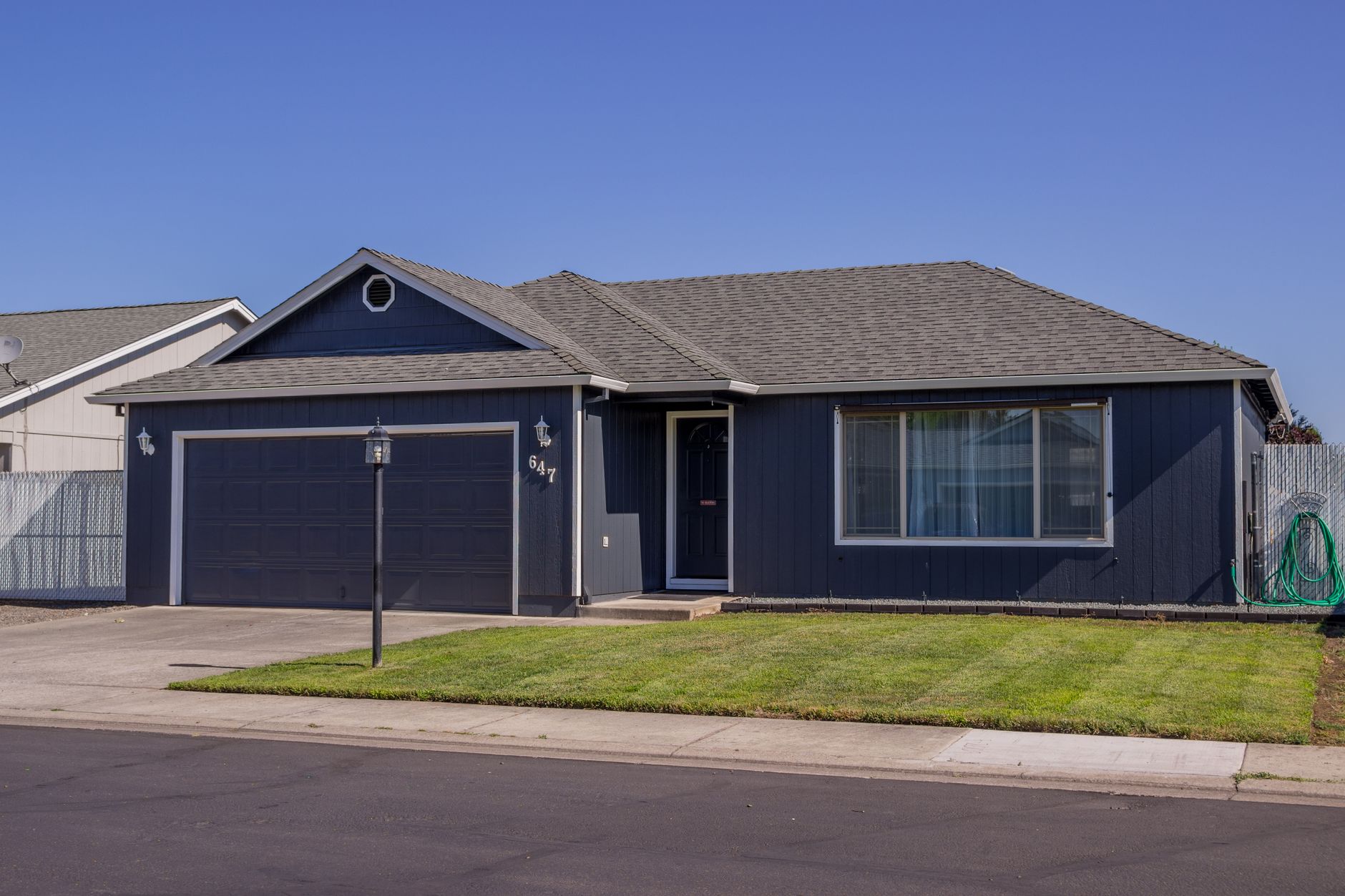
The house itself was not much to look at from the road. It was a small brick ranch with a deep blue front door that the previous owners had painted themselves, a fenced backyard just big enough for a garden, and a kitchen window over the sink that caught the morning light in a way that made the whole room glow gold for about forty minutes every day starting around seven. I closed on it on a Tuesday in early spring, sitting across a table from Delphine and a title officer I’d never met, signing my name a dozen times with a pen that shook slightly in my hand, not from doubt but from the strange, unfamiliar feeling of a decision that belonged entirely to me. I moved my own boxes in over three weekends because I didn’t want a moving truck sitting in my driveway advertising anything to anyone who might drive past and recognize it. I bought my furniture secondhand from an estate sale two counties over, so there would be no delivery truck with a company logo parked out front either. I hung curtains. I planted tomatoes along the fence line even though it was too early in the season, because I wanted to see something of mine growing in that yard as soon as possible, something nobody could later claim they’d “just been keeping an eye on” for me. For six weeks I lived in that house the way I imagine most people live in a house they’ve earned, which is to say quietly, gratefully, and completely alone, and it was the best six weeks I could remember having in years. I cooked meals I actually wanted to eat instead of meals that stretched furthest. I left dishes in the sink overnight without anyone remarking on it. I sat on my own back step some evenings and did nothing at all, which had never once, in forty-three years, felt like something I was allowed to do in a house that had my family’s opinions living in it.
It ended on a Thursday.
I had worked a double and stopped at the hardware store on my way home for a new porch light, the kind of small errand that felt luxurious precisely because nobody was waiting on me to explain it. I turned onto Cutter Road a little after nine and saw my father’s Buick before I saw anything else, parked at an angle that told me whoever drove it hadn’t planned on staying long, or hadn’t cared how it looked staying at all. Every light in my house was on. The blue front door, my blue front door, stood open to the porch.
I found them exactly the way I described. Grantly turning in the middle of the rug like she was already picturing furniture that wasn’t hers. My mother going through cabinets with the particular thoroughness of a woman conducting an inspection. My father in the hallway, quiet, doing the math on square footage the way men of his generation do when they’re deciding a space is theirs without ever having to say the word.
“What are you doing in my house,” I said, and I kept my voice level because I already knew, somewhere underneath the shock, exactly what was happening.
Grantly turned around with the kind of smile you give someone who’s shown up late to their own party. “Mom found some paperwork at your old apartment when she was helping me get the last of my boxes out. Closing documents, with the address.” My mother turned from the cabinets wearing the expression she has perfected over sixty-one years, equal parts wounded and accusing, the look that has ended more family arguments in her favor than anything she’s ever actually said aloud. “You bought a whole house,” she said, “and you couldn’t tell your own mother.”
“I didn’t tell anyone,” I said. “That was the point.”
Grantly had already started toward the hallway, toward the second bedroom with the window that caught the afternoon sun. “My lease is up at the end of the month anyway. This room is bigger than my whole apartment.” My mother added, in the soft, reasonable voice she uses right before the demand arrives dressed as a favor, “And your father and I have been talking about downsizing. This would be perfect for us on weekends, especially with his back the way it’s been.”
Nobody in that room had asked me a single question about whether any of this was something I wanted. Not one. They had found something that belonged to me, and in the space of maybe ninety seconds, they had already begun dividing it up among themselves like a will was being read and I happened to be standing in the room.
That was the moment I understood, fully and finally, that they had not come to my house that night to celebrate anything with me. They had come because they’d found something of mine before I was ready to share it, and in the family arithmetic I had spent my whole life on the losing end of, anything I owned had always, eventually, become theirs to use.
“I need you to leave,” I said, and I walked to the open door and held it.
My mother gasped like I had slapped her. My father’s jaw went tight in the way it does when he’s decided a conversation is over but doesn’t want to be the one to say so. Grantly called me selfish on her way down the porch steps, then again from the driveway, then a third time out the passenger window of the Buick as my father backed it out too fast and clipped my mailbox post hard enough to knock it crooked.
I did not cry after they left. I want to be honest about that, because I think people expect the crying part, and it simply didn’t come. What came instead was something colder and more useful. I stood in my kitchen under that window that used to catch the morning light and I made two phone calls. The first was to a twenty-four-hour locksmith out of the next county, who came out that same night and replaced every exterior lock on the house while I stood on my own porch in the dark, watching headlights that never came. The second call, made the next morning before my shift, was to Mr. Halloway.
Here is the part I said I’d come back to. I had retained Mr. Halloway a year and a half before I ever put an offer in on that house, not because I expected this exact scene to happen, but because I had lived through enough smaller versions of it, the car, the apartment, the refund, that I no longer trusted my family to respect a boundary just because I asked nicely for one. When I told him I was planning to buy a house entirely in my own name and keep it private from my parents and sister, he didn’t ask why. He’d represented enough clients from families like mine to already know. He walked me through exactly how to keep a closing quiet, advised me to keep every piece of documentation, purchase agreement, mortgage note, deed, insurance policy, in a single folder at my attorney’s office rather than anywhere in the house itself, and told me plainly that if my family ever did find the address and try to claim any interest in the property, the paper trail would matter more than anything I said to them in the moment. I had listened to him then mostly out of caution. On that Friday morning, sitting in his office with a cup of coffee I didn’t remember pouring, I was grateful in a way I hadn’t expected to be for a year and a half of caution.
We filed a notice with the county recorder’s office that same week, a formal step Mr. Halloway explained was less about preventing anything, since the deed was already solid and sole in my name, and more about creating a clear, timestamped record that no other claim of ownership or occupancy had been filed, discussed, or agreed to before that date. He also had me sign a sworn statement, on the record, describing the Thursday night incident in detail while it was still fresh. I did not know yet that I would need either of those things within the month. I only knew that for the first time in a long argument I’d been losing my whole adult life, I had finally started keeping score on paper instead of just in my chest.
The video doorbell I installed that Saturday felt, at the time, like a small and almost embarrassing precaution, the kind of thing you buy because a locksmith recommends it and you don’t want to seem like you didn’t take his advice seriously. I did not expect to need it eight days later.
Sunday came, and with it my mother’s earlier line about weekends, which I now understood had never been an offer. It had been a plan.
I was in the backyard checking on my tomatoes, too early in the season as always, when the doorbell app on my phone lit up. I watched, live, from twenty feet away through my own kitchen window, as a small U-Haul trailer backed up my driveway behind my father’s Buick, and Grantly climbed out of the passenger seat already holding a cardboard box marked BEDROOM in her own handwriting. My mother went straight to the front door with the particular confidence of a woman who believed she had been given a key, which she had not, because the only keys to that new deadbolt were on my keyring and one spare in Mr. Halloway’s office safe. She tried the door. It didn’t open. She tried it again, harder, the way people do when they’ve decided the lock itself must be the thing that’s malfunctioning rather than their assumption about being welcome.
“Someone jammed something in here,” I heard her say to my father, loud enough for the doorbell’s microphone to catch clearly. “Try the code on the garage.”
There was no code on the garage. There had never been a code on the garage, because I had never given my family the garage code, or any code, or any key, to a house they hadn’t known existed until eleven days earlier. What my mother was trying, I understood later when I watched the footage a second time with Mr. Halloway sitting beside me, was the code to my old apartment building, the same six digits she’d apparently memorized years earlier and never once asked whether I minded her having. It didn’t work on my new garage, obviously, and the sound of her trying it four separate times, each one a little more forceful, each one a little more audibly frustrated, is recorded start to finish with a timestamp on it.
Grantly, still holding her cardboard box, tried the front door herself, then walked around toward the side gate, which I had also, thankfully, replaced the latch on that same week. She rattled it hard enough that I could hear the metal from the backyard where I was standing perfectly still, phone in hand, recording everything the doorbell was recording along with my own footage from ten feet away. My father stayed by the Buick the whole time, arms crossed, saying nothing, which I have come to understand is its own kind of participation.
It was my mother who finally raised her voice loud enough that a neighbor two houses down came out onto her own porch to see what the commotion was. “This is ridiculous,” my mother said, loud enough for the doorbell, the neighbor, and eventually a Sable Creek County deputy to all have their own separate versions of hearing it. “We are her family. We have every right to be here.”
I did not come out from the backyard. I let it run for six full minutes, because Mr. Halloway had told me, if this ever happened again, to let it play out fully rather than intervening early, so that whatever record existed would be complete and undeniable rather than cut short by my own understandable urge to make it stop. At six minutes, with my mother’s voice rising and Grantly starting to pull at the gate latch hard enough that I worried it might actually give, I called the non-emergency line for the county sheriff’s department and reported an active attempt at unauthorized entry at my address.
The deputy who arrived, a calm young man named Deputy Prentiss, was polite to everyone, including my mother, right up until he asked to see proof that anyone standing in my driveway had permission to be there, and my mother’s answer amounted to a version of the same sentence she’d been giving me my whole life. Family doesn’t need permission. He explained, patiently, that under Nebraska law it absolutely does, once a homeowner has made clear that permission has been withdrawn, and that continuing to attempt entry after being told to leave, as I had told them eleven days earlier at that very door, could constitute criminal trespass. My father finally spoke, for the first time that whole Sunday, to say quietly that maybe they should go. My mother did not agree easily. Grantly cried, the way she has always cried when a plan of hers fails in public, loud and wounded and somehow still managing to make it about how unfair I was being. But they left, and Deputy Prentiss’s incident report, filed that afternoon, became the second piece of paper in a folder that was starting to grow thicker than I ever wanted it to be.
I thought, foolishly, that Sunday would be the end of it. It was not.
What came four days later was worse in a way I hadn’t anticipated, because it wasn’t loud or public or caught on camera. It arrived by certified mail. My mother, it turned out, had gone to a notary public two towns over, a man named Foy who ran a small tax-prep and notary office out of a strip mall and who, I would later learn, had a habit of not asking too many questions about documents brought to him by regular customers he considered friends. She had presented him with a handwritten document, which she called a Family Property Agreement, stating that the house on Cutter Road had been purchased “with the understanding and shared intention” of housing multiple family members, and that I had “verbally agreed” to allow my parents residency rights on weekends. She had signed it. My father had signed it, apparently with some reluctance Mr. Foy later described to investigators. And somehow, on the signature line meant for me, there was a signature that was not mine, close enough at a glance to pass a notary who wasn’t looking closely at a woman he’d known socially for a decade, but nothing at all like my actual signature once anyone with training set the two side by side.
They had tried to record it with the county, the same office where Mr. Halloway had filed my notice eleven days earlier. And because that earlier filing already existed on the record, clearly timestamped, clearly documenting sole ownership and a formal statement about an unauthorized entry, the recorder’s clerk flagged the new document for review rather than simply filing it, and called Mr. Halloway’s office directly, since his was the only attorney of record connected to that property.
I will not pretend I wasn’t shaking when he called to tell me. Not from fear, by that point, but from something closer to fury, the specific kind that comes from realizing the people who raised you were willing to forge your signature rather than accept a single word you’d said to their faces.
What followed was not fast, and it was not simple, but it was thorough. Mr. Halloway had the forged document examined by a handwriting analyst, who confirmed within days what was already obvious to anyone who’d ever seen me sign a paycheck. He combined that report with the county recorder’s timestamped notice from the week before, my sworn statement about the Thursday break-in, Deputy Prentiss’s incident report from Sunday, and six uninterrupted minutes of doorbell footage showing my mother testing a stolen apartment code on my garage while my sister rattled a locked gate and my father stood by and let it happen. He filed for a permanent no-contact and no-trespass order specific to the property on Cutter Road, and separately, on his advice, I filed a report regarding the forged signature with the county attorney’s office, because a document with my name signed by someone else’s hand attempting to cloud title on my own house is not a family disagreement. It is fraud, and Nebraska treats it that way whether or not the person who forged it happens to share your last name.
The hearing was in early June, in a small courtroom I had never had reason to sit in before. I wore the same navy blazer I’d worn to every promotion interview at Implement Works, because it was the only formal thing in my closet and because some part of me wanted to walk in looking like exactly what I was, a woman who had built something slowly and carefully and did not appreciate being told she hadn’t. My mother wore the same wounded expression she’d worn in my kitchen the night this all started, and it worked on exactly no one in that room. The judge, a measured woman named Judge Ashcombe who I got the sense had seen this particular family shape of story more than once in her career, reviewed the deed, the timestamped recorder’s notice, the handwriting analysis, and the doorbell footage in near silence, pausing the video once to ask Mr. Halloway to confirm the timestamp, then again to ask him to replay the six seconds where my mother could clearly be heard reciting the old apartment door code out loud to herself. She asked my mother directly whether she had, in fact, signed a document containing a signature that was not her daughter’s. My mother’s answer took a long time to arrive and did not really answer the question. She talked instead about family, about how things had always been done, about how she never imagined a piece of paper would end up meaning more than blood. Judge Ashcombe listened to all of it without interrupting, then said, quietly, that paper was exactly the point, because paper was the only thing in that courtroom that hadn’t changed its story twice. Mr. Foy, the notary, was not present, having already had his commission suspended pending a separate state review once the forged document came to the state’s attention, a consequence I hadn’t sought but did not mourn either.
Judge Ashcombe granted the permanent no-trespass order that afternoon, specific to my property on Cutter Road, prohibiting my mother, my father, and my sister from entering the premises without my express written invitation, with real consequences attached if that order was violated again. She was, from what Mr. Halloway told me afterward, unusually direct in her closing remarks, noting for the record that a signature does not become valid because the person forging it shares blood with the person she is impersonating, and that a family’s history of shared finances does not create a legal claim to a home one member purchased, closed on, and holds sole title to entirely on her own. The forgery itself was referred separately for review by the county attorney’s office, and while I have chosen not to pursue that piece any further than the referral, the fact that it exists, in writing, in a public court record, said more to me than any apology my mother has never actually offered.
Grantly, in the weeks that followed, discovered what happens when you notify your landlord you’re vacating an apartment because you’re certain a house is about to become available to you, and then it doesn’t. She ended up breaking her lease and paying a penalty out of money I understand she’d been counting on using for a security deposit on my former guest room. I did not feel triumphant about that, exactly. I felt, mostly, tired in the particular way you feel after a fight you didn’t choose but had to finish anyway.
I still live in the brick house on Cutter Road. The blue front door is still blue. The kitchen window still catches the morning light for about forty minutes every day, and most mornings now I make a point of standing in it with my coffee just to feel that gold light land on my hands, because I earned every square foot of the room it’s landing in and I intend to notice that for as long as I live there. I replaced the mailbox post my father knocked crooked the night he backed the Buick out too fast, and every time I drive up and see it standing straight, I think, without much bitterness anymore, that it’s a fairly accurate metaphor for the rest of that year.
My father called me once, in July, not to apologize exactly, my family has never been especially good at that particular sentence, but to ask, quietly, whether he could come see the garden sometime, alone, with two days’ notice like any other guest would give. I told him yes, and I meant it, because whatever his silence in that hallway and by that Buick had cost him in my estimation, he was also the only one of the three of them who had said, out loud and in front of a deputy, that maybe they should go. He came on a Saturday, admired the tomatoes I’d planted too early and that had, against all odds, come in anyway, asked careful questions about the implement plant and my shift schedule the way a person asks when he’s trying to learn things about his daughter’s actual life instead of assuming them, and left before dinner without asking to stay. He has come back twice since, always with notice, always alone. It is a small, slow thing, rebuilding a relationship one announced Saturday afternoon at a time, but it is real in a way nothing before it ever quite was, and I am not in a hurry to speed it up.
It is not everything. It is not nothing either.
My mother and Grantly have not spoken to me since the hearing, and I have made my peace, slowly, with the possibility that they may not again. What I have instead is a house with my name on the deed and no one else’s, a locksmith’s receipt and a county recorder’s timestamp and a judge’s order all filed neatly in a folder at Mr. Halloway’s office, and a front door that only opens for people I choose to let in. My abuela was right, in the end, about money you don’t talk about. It turns out the same is true of a house. The ones you protect quietly, on paper, before anyone else gets the chance to decide it’s theirs too, are the only ones that stay entirely your own.
This story is a dramatization. Names, characters, and details are invented, and any resemblance to real people or events is coincidental.