
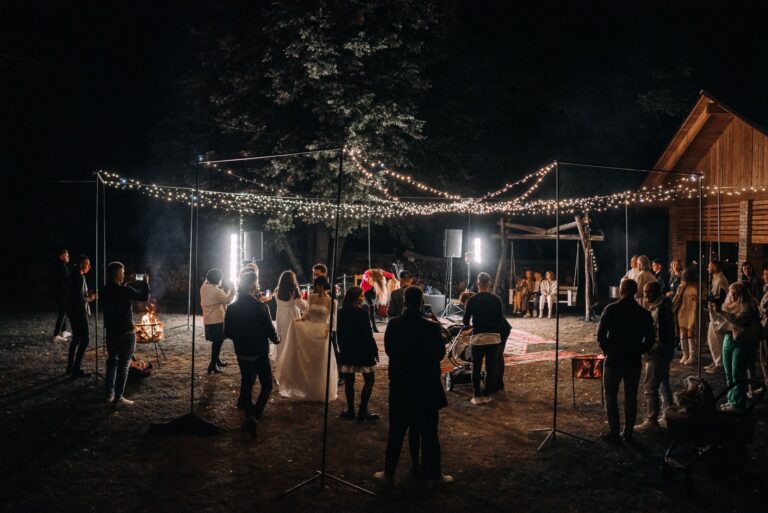
Three hours before my son’s wedding, I stood behind a stack of folding chairs in the back corner of a barn I built with my own two hands, listening to my future daughter-in-law explain to my son exactly how much glue it would take to keep his mother from ever standing up again.
I did not walk out from behind those chairs. I did not shout, and I did not cancel one single thing scheduled for that day. I picked up a pen instead, and I switched two place cards.
My name is Halloway Sedgemoor. I am sixty-six years old, I have lived within twelve miles of Bramwell, Missouri my whole life, and for forty-one years I have run a small contracting outfit out of the same two-bay garage my father used before me. Nobody in Bramwell will ever mistake me for the kind of builder who puts his name on a downtown high-rise. I fix porches, I hang gutters, I frame additions for young families who cannot afford a bigger outfit out of Springfield, and eleven years back I took a falling-down dairy barn on the old Route 9 fairgrounds land and turned it into the event barn half this county has gotten married in since. That is exactly why I was standing in the back of that barn on my own son’s wedding day, running my hand along a beam I had hung myself, checking the chairs were square and the string lights were tight, the way I check every job before I hand it over. I was not spying on anyone. I was only doing what I always do.
My wife Idabelle and I raised one son. Merrick came along late, after two losses I still do not talk about much, and maybe that is part of why we held onto him the way we did. He grew up in the cab of my truck, handing me nails before he could tie his shoes, and for most of his life he was the kind of boy who noticed when his mother was tired and brought her a glass of water without being asked. I am not saying that to build him up before I tell you what he did. I am saying it because it matters, later, that the boy I am describing to you is real, and that the man he almost let himself become was not the only version of him that ever existed.
Four months before the wedding, Idabelle went down on a patch of black ice in the church parking lot after the early service. I was twenty feet behind her, walking slow because my knees had been bothering me, and I heard the sound before I understood what I was looking at. A hip does not break quietly. The doctor in Springfield used the word “fragile” more than once during that first appointment, and he told us both, looking mostly at me, that a second fall in the next six months could mean a hip that never fully heals, could mean a wheelchair, could mean worse. No sudden jolts. No falls. Nothing that jars the joint before the bone has finished knitting itself back together. Idabelle nodded along in the exam room like a woman taking notes at a job orientation, and then she cried the whole way home, not from pain, but because she had already done the math on what that meant for a wedding four months out. She loved that boy more than her own comfort. She was not going to miss his wedding for a cracked hip, and she told me so before I even asked.
Bramwell is not a big place. We have one stoplight, a feed store, a diner that still does not take cards, and a Baptist church where three generations of Sedgemoors have been baptized, married, and buried. Idabelle grew up two farms over from mine, and I have known her face longer than I have known my own signature. She taught fourth grade at the elementary school for thirty-one years before she retired, and there is not a person under the age of forty in this county who did not sit in her classroom at some point and learn their multiplication tables from a woman who never once raised her voice to do it. She is patient in a way I have never managed to be. She is also, and I mean this with the deepest respect a husband can have for his wife, stubborn enough to argue with a fence post and win. When the doctor told her no falls, no jolts, nothing sudden, she nodded and said “of course,” and then she spent the next four months walking the length of our driveway twice a day with a cane she despised, because she had decided, on her own, that she was going to walk her son down the aisle beside me if it killed her, and she was not going to let a hip get the final say on that.
I want to be honest about something, because this story only works if I am. Fennimore Cray was not cruel to my wife in front of witnesses. She was too careful for that. What she did, from the very first month Merrick brought her around, was smaller and harder to point at, which is exactly what made it work as long as it did.
She met Merrick at a farm equipment auction two counties over, of all places, where her father was selling off a combine and Merrick was there pricing parts. She grew up outside Joplin, the only daughter in a family that had done well for itself in commercial real estate, and from the very first Sunday dinner she brought with her a way of looking at our kitchen table, our mismatched chairs, my wife’s hip cane leaned against the wall, that told you exactly what she thought of where she had landed. Nothing she ever said out loud could have been repeated back to her as an insult. It was all delivered soft, always with a smile attached, which is its own kind of weapon when you are on the receiving end of it for months at a time.
At the engagement dinner, held at a restaurant Fennimore picked in Springfield, she leaned across the table while Idabelle was in the ladies’ room and told Merrick, loud enough for me to hear from two seats down, that she just wanted to make sure “your mom’s situation” would not turn into “a whole production” at the wedding. Merrick laughed it off. I did not.
At the dress fitting, which Idabelle was invited to almost as an afterthought, Fennimore spent twenty minutes discussing sightlines for the photographer, and somewhere in the middle of it she mentioned, still smiling, that they might want to seat “certain guests” toward the back so the head table photos looked clean. Idabelle came home that night and told me, quietly, in the dark, that she thought Fennimore might have meant her. I told her she was imagining things, because that is what you tell the person you love when you are not ready to admit what you already suspect yourself.
At the rehearsal dinner, two nights before the wedding, Fennimore made a toast about family that never once used my wife’s name, though she found time to thank three separate members of her own extended family by name, including a second cousin who had flown in from Denver. Idabelle smiled through the whole thing with her hands folded in her lap, the way a woman smiles when she has decided, out loud to no one, that she is not going to let a girl thirty years younger ruin her son’s happiness by making a scene of her own.
At the bridal shower, three weeks before the wedding, Idabelle spent two evenings hand-stitching a quilt from scraps of Merrick’s old baby clothes, the kind of gift that takes a woman with a hip cane far longer than it should. Fennimore opened it in front of thirty guests, said “oh, how homemade,” in a tone that managed to make the word sound like an insult, and set it aside on the gift table under three unopened boxes still wrapped in store paper. She never once used it, not that day, not in the weeks after. Idabelle noticed. Idabelle noticed everything. She simply chose, every single time, to let it pass rather than hand her son a reason to feel caught between the two women he loved.
I noticed all of it too. I filed it away the way I file away a hairline crack in a foundation, the kind that does not mean the house is falling down today, but the kind you keep your eye on, because you know exactly what it can turn into if the weight above it ever shifts wrong.
Get a new story in your inbox every morning.
Facebook doesn’t show you every story we post. Our free newsletter does. Join 2,500+ readers.
The morning of the wedding, I left the house before Idabelle was even out of the shower, because eleven years of running that barn had taught me things go sideways if nobody with a level eye checks the room before the caterer, the florist, and two hundred folding chairs all show up inside of an hour of each other. I walked the barn floor the same way I walk every job before I sign off on it. I checked the string lights along the loft beams. I checked the head table, set up on the small raised platform I had built for exactly this purpose, facing the barn doors so the afternoon light would come in gold across the guests around four in the afternoon, the exact hour the ceremony was timed for. I checked the chairs, twelve at the head table, one hundred and eighty folding chairs in rows below it, every leg level on the concrete I had poured myself back when Merrick was still in high school and thought helping his old man mix cement on a Saturday was the worst kind of punishment a father could invent. The barn smelled like it always does in the morning before an event, cut hay and fresh coffee from the thermos I keep in my truck, and somewhere overhead a barn swallow that had gotten in through the loft door was working its way along the rafters, unbothered by a wedding it had no idea it was about to witness.
The caterer’s van was not due for another hour. The florist would be another thirty minutes behind that. For those first sixty minutes, the barn belonged to nobody but me and whatever last details needed a level eye before two hundred people filled the room and stopped noticing the floor entirely.
I was behind the stacked extra chairs in the back corner, counting linens for the caterer, when I heard the barn door roll open and two sets of footsteps cross toward the head table.
“Right here,” Fennimore said. “This one. Make sure it’s dry before anybody sits.”
I looked up through a gap in the stacked chairs. She was crouched at the head table, at the seat second from the center, working a caulking gun of industrial adhesive in slow, careful lines across the seat of a white folding chair, the same brand and finish as every other chair in that barn, indistinguishable once the cushion cover went back over it.
“Babe, that’s a lot,” Merrick said. He was standing over her with his phone up, filming, laughing the low laugh of a man enjoying himself.
“I want it to hold,” Fennimore said. “I don’t want her getting up easy. I want everybody watching when she can’t.”
“She’s gonna think she’s losing her mind,” Merrick said.
“She’s gonna think exactly what she should think,” Fennimore said. “That she’s too old and too broken to be trusted at a nice event. Maybe next time your family remembers who’s actually running things.”
I stood behind those chairs with a stack of linens in my hands and felt something in my chest come apart clean down the middle, the same way a beam splits when the load on it finally exceeds what it was ever built to carry. My wife had a broken hip healing four months into a process the doctor said could take a year. A second fall, a hard jolt, a chair giving out from under her in front of two hundred people, any one of those things could put her in a wheelchair for good, and my son was standing there filming his fiancee glue that exact outcome into place, laughing about it.
I want to tell you I felt rage first. I did not. I felt something closer to grief, the specific grief of watching a boy you raised to notice a tired woman’s need for a glass of water become a man who films his own mother’s humiliation for the joke of it. The rage came a few seconds after, and it came in fast, and for one long moment I had my hand on the edge of that chair stack ready to walk around it and say something neither of them would have forgotten for the rest of their lives.
I thought, standing there with linens still folded over my arm, about every framing job I had ever walked away from rather than rush. A man who builds things for a living learns early that the worst mistakes are not the ones made in anger. They are the ones made in a hurry, when you nail something down before you have measured it twice, and you spend the next ten years living with a wall that is a half inch out of square because you could not stand to wait one more hour to get it right. I made myself wait. Not because the anger left me. Because I needed the half inch of patience it would take to get this right.
I did not do it. Not because I forgave what I had just heard. Because I understood, standing there, that walking out from behind those chairs three hours before the wedding would blow the day apart in a way that put my wife directly at the center of the wreckage, in front of a caterer, a florist, and eventually two hundred guests who would spend the next decade telling the story of the wedding where the groom’s father tackled the bride. Idabelle did not want a scene. She had told me that herself, more than once, in the dark, in that exact careful voice she used when she was protecting somebody else’s day at the cost of her own dignity. I decided, standing behind those chairs, that if nobody was going to get hurt on my watch, it was not going to be the woman who had already given up a comfortable pace of life to make sure her son’s wedding went off without a single complaint out of her.
I waited until the barn door rolled shut behind them and their voices faded out toward the parking lot before I moved.
The place cards sat in a small wooden box near the guest book table, alphabetized, waiting for the coordinator to set them at each seat closer to the ceremony. I did not need to search long. Idabelle Sedgemoor, seat two, head table, dead center of the row Fennimore had just doctored. Fennimore Cray Sedgemoor, seat six, the same row, four chairs down, a seat that had been sitting dry and untouched the entire time I watched.
I switched them. I picked up my wife’s card and set it at seat six. I picked up the bride’s card and set it at seat two. I straightened both cards so the coordinator would never look twice, and then I stepped back, checked the row the way I check every finished job, and walked out to move my truck before anybody wondered why it was parked where it was.
I did not tell Idabelle. I did not tell anyone. I put on my one good suit, I walked my wife down to her seat myself, my hand under her elbow the entire way across that barn floor, easing her down slow into a chair I had personally confirmed was nothing but dry, honest wood, and I sat down beside her and watched my son marry a woman I already knew the truth about, in a barn I had built with hands that were, at that exact moment, still faintly smelling of somebody else’s glue.
The ceremony itself was short, the way barn weddings tend to be when the officiant knows the room will get warm once two hundred bodies fill it. Merrick said his vows in a voice that cracked once, in the place where a man’s voice is supposed to crack, and for one unguarded second I saw the boy who used to hand me nails from the bed of my truck, and I let myself hope, the way a father does even when he knows better, that the boy was still in there somewhere, buried under whatever version of himself he had let Fennimore build around him.
The reception moved fast after that, the way they do. Caterers came through with trays of the pulled pork and green beans Fennimore had fought her own mother over for weeks, insisting on something more “elevated” before Merrick quietly overruled her and ordered the food half of Bramwell actually eats at a wedding. The band the couple hired out of Joplin worked through a set of songs Idabelle and I did not recognize, and folks who did know the words filled the small dance floor two and three songs at a stretch. I watched Fennimore work the room in her white dress, laughing at exactly the right volume for each cluster of guests, thanking her cousin from Denver a second time, posing for photographs with her chin tilted just so, glancing once, briefly, toward the head table where my wife sat safely two seats to the left of where Fennimore had planned for her to be. If she noticed the switch at all in that moment, she gave no sign of it. She had no reason to look twice at a place card she had set the trap around herself.
Idabelle leaned over to me at one point, midway through a plate of green beans, and whispered that she had a strange feeling all evening, the kind she used to get standing in front of a classroom on a day when a lesson was about to go sideways before she could name why. I told her to eat her dinner. I did not tell her what I already knew was coming.
The toastmaster, a cousin of Fennimore’s with a microphone and a clip-on tie, called the room to order about forty minutes into the reception. He asked the wedding party and the immediate family to please stand for the first toast, the traditional one, the one where everybody raises a glass and the whole room watches the head table rise together.
I stood. Idabelle stood, slow and careful, her hand finding the back of her chair for balance the way the doctor had taught her, and I felt something in me exhale for the first time since that morning.
Fennimore did not stand.
She pushed her hands flat against the table and pushed up, the way anybody pushes up out of a chair, and her body came up maybe four inches before something stopped it hard, the fabric of her dress and the seat of that chair fused together in one motion, and she dropped back down into the seat with a sound the whole front three rows heard clearly over the band.
“What,” she said, and pushed again, harder, both hands flat on the table now, her face going from confused to something closer to panic in about two seconds. The chair came up an inch off the platform floor with her, still attached, before she let go and it clattered back down.
Two hundred people do not stay quiet in a moment like that. A ripple of laughter started somewhere near the back and rolled forward before anyone could stop it. Merrick, standing right beside her, reached down to help pull her up, and I watched him get his hands under her arms and pull, and I watched the chair come with her a second time, six inches off the ground now, both of them frozen in the world’s worst photograph, before he set her back down, red in the face, and someone finally thought to go find scissors.
“Get me out of this,” Fennimore said, not quiet at all now, her voice climbing toward the kind of pitch that carries to the back row of any barn. “Somebody get me out of this right now.”
The coordinator came running. Somebody’s teenage cousin filmed the entire thing on a phone held up over the crowd, the way teenagers do at every wedding now whether you want them to or not. And Fennimore, stuck in a folding chair on a stage in front of everyone she had ever wanted to impress, did the one thing that finished the job I had started that morning without ever raising my voice. She looked straight down the head table at my wife, sitting safely two seats away, and she screamed at her.
“This is not funny,” she said, loud enough that the band actually stopped playing mid-song. “Whoever did this, this is disgusting, this is exactly the kind of thing a bitter old woman does when she can’t stand watching somebody else be happy.”
The barn went dead silent except for the sound of her own breathing.
Merrick’s face changed in front of two hundred witnesses. I watched it happen in real time, the same way you watch a wall finally give under a load it was never rated for. He looked at his new wife, screaming at his mother, his sick mother, his mother who had smiled through every soft insult for eight straight months without one word of complaint, and something in him that had been asleep since the moment he picked up that phone to film her humiliation woke back up all at once.
“She didn’t do anything,” he said, and his voice carried the way mine used to carry across a job site. “Nobody touched your chair, Fennimore. Nobody but you.”
The room, which had been laughing thirty seconds earlier, went still in a different way now, the way a crowd goes still when it senses the real story is only just now arriving.
“What is that supposed to mean,” Fennimore said, still half stuck to the chair, scissors finally arriving in the coordinator’s shaking hands.
Merrick did not answer her in front of two hundred guests. He looked at me instead, one long look down the head table, and I met it and did not look away, and something passed between us in that silence that I do not think either of us could have said out loud even if we had wanted to. He knew. Maybe he had known the whole time, some part of him, the part that used to notice a tired woman’s need for a glass of water, and he had been waiting for a reason strong enough to let that part of himself back out into the light.
The coordinator cut Fennimore free of the chair and the fabric of her own dress tore in the process, a long ugly rip up the back seam that no amount of careful posing could hide for the rest of the night. She did not thank anyone. She stood there in a torn dress in front of two hundred people who had just heard her scream at a sixty-four-year-old woman with a cane, and she understood, I think, in that exact moment, that whatever image she had spent eight months constructing was never coming back.
They did not leave for their honeymoon that week. They did not leave for it at all, as it turned out. Merrick came to our house four days later, alone, and sat at our kitchen table, the same table Fennimore had once looked at like it belonged in a museum of things she was too good for, and he told his mother he was sorry in a voice that finally sounded like the boy I remembered rather than the man I had watched laugh behind a phone camera three hours before his own wedding.
He told us what happened after the reception, once the guests had gone home and it was just the two of them in a rented honeymoon suite neither of them ended up using. Fennimore had not apologized. She had told him, straight out, no longer bothering to soften it with a smile, that his mother was an embarrassment she had been managing for eight months and that the wedding humiliation was, in her words, “overdue.” Merrick told her, in return, that he had been the one filming the glue going onto that chair that morning, that he had laughed while she did it, and that watching her scream at his sick mother in front of everyone he loved had shown him, all at once, exactly what kind of man he had let himself become to keep a woman like that happy. He filed for an annulment inside of three weeks. Idabelle never once said “I told you so,” though she had earned the right to plenty of times over. She just poured him a second cup of coffee, the way she had poured him coffee at that same table since he was seventeen, and told him the only thing that mattered now was what kind of man he chose to be from that day forward.
News like that does not stay contained in a town with one stoplight. By the following Sunday, half the pews at church already had some version of the story, most of them close enough to true, and I never once had to explain myself to a single person who stopped me outside the feed store to ask. Fennimore’s parents drove up from Joplin twice that month, the second time without her, and sat in our living room long enough to apologize for a wedding they had also, in their own quieter way, watched go wrong for months without saying anything. I did not need the apology. I had built what I needed to build the morning of the wedding, with a pen and two place cards, and everything that came after was simply the world finishing the job on its own.
I will tell you honestly that I do not know what would have happened if I had walked out from behind those stacked chairs that morning and confronted them both on the spot. Maybe it would have blown up into the exact scene Idabelle was so determined to avoid, with me as the villain of a story Fennimore would have controlled from the first telling. Maybe nothing would have changed at all, and Merrick would have spent the rest of his life married to a woman who measured love in what other people were worth to her image. I only know what actually happened, which is that a woman who spent eight months trying to make my sick wife look fragile and foolish in front of two hundred witnesses ended up doing that job to herself, in the one chair in that entire barn she had personally chosen, sight unseen, out of a wooden box of place cards she never thought to check twice.
Idabelle’s hip finished healing that autumn, slow and stubborn the way the doctor warned us it would, and by the following spring she was steady enough on her feet to dance one full song at a cousin’s wedding two towns over, my hand at her waist the whole time, no cane in sight for those four minutes. Merrick still comes by the garage most Saturdays to help me load a truck, the way he did as a boy, and neither of us has ever needed to say much more about that day than we already have. Some lessons do not need repeating out loud once a man has lived through the consequences in front of two hundred people and a torn wedding dress.
I built that barn to hold weddings, christenings, retirement parties, the good and ordinary occasions of people’s lives in a small town that does not get many surprises. I never once, in eleven years of running it, expected the most important thing I ever built into that floor would be a level, honest, ordinary folding chair, exactly where a woman’s own cruelty was waiting to meet her.
This story is a dramatization. Names, characters, and details are invented, and any resemblance to real people or events is coincidental.