The Medals My Brother Pawned
My brother Lonnie stood in my kitchen, chewing a toothpick, and told me he sold our dead father’s Purple Heart because “it was just old junk sitting in a drawer.”
I remember the toothpick because I could not stop staring at it. The way it rolled from one corner of his mouth to the other while he said the words. Our father had been in the ground for six weeks. The recliner where Daddy died still had the dent of him in the cushion. And Lonnie was standing there in his windbreaker with a toothpick and a story about how he needed some quick cash and the drawer in the hall table had “a bunch of old metal stuff” in it that nobody was ever going to use.
I did not hit him. I want that on the record because for a long time afterward I wished I had, and then for a longer time I was glad I did not. But in that first minute I just held onto the edge of the counter and asked him, very quietly, to tell me exactly what he had done.
He shrugged. That shrug. I had watched Lonnie shrug his way out of trouble our whole lives. A broken window, a wrecked car, a girl crying on the porch, a job he walked off. The shrug came before all of it. “It was junk, Odell,” he said. “Old ribbons and a couple of medals. Some paper. I got two hundred for the lot. Man at the pawn shop barely wanted it.”
Two hundred dollars. That is what my brother thought our father was worth.
Let me tell you about our father, because you cannot understand the size of what Lonnie did until you understand the size of the man he did it to.
The man in the recliner
Marcus Ramsey was born in 1946 in a part of the country that did not have much use for a Black boy with ideas. He grew up hard and quiet in a town that is not much bigger now than it was then. He was drafted in 1966 and he went, the way men in our family went, without a lot of speeches about it. He served with the United States Army in Vietnam. He was a Sergeant. He came home in 1969 with a scar that ran along the inside of his left forearm, a limp that got worse in the cold, and a wooden box he kept on the top shelf of his closet where none of us were allowed to touch it.
I touched it exactly once, when I was nine. I climbed the shelf when he was at work and I opened the box and I saw the medals lying on the blue cloth. The Purple Heart with its purple ribbon and the gold heart and the profile of a man in the center. A bronze star. Some ribbons whose names I did not know yet. A folded paper gone soft at the creases. I did not understand any of it. I understood only that it was the most serious thing I had ever held, and I put it back exactly the way I found it, and I never told anybody.
Daddy did not talk about the war. What I know, I learned in pieces, over sixty-five years, in the small hours when he could not sleep and I happened to be awake. I know he carried a man named Doyle out of a rice paddy on his back and that Doyle lived. I know he got the wound in his arm pulling a second man to cover. I know that when he got home there was no parade and no thank-you and a lot of people crossing the street, and that he went to work at the rail yard the following Monday because a man provides for his family whether the country claps for him or not.
He raised two boys mostly alone after our mother passed. He raised us on double shifts and church on Sunday and a belt when we earned it and a hand on the back of the neck when we needed steadying. He never once told us he was a hero. I do not think the word would have fit in his mouth. But I saw the box on the shelf, and I knew.
When his health went, I took him in. That is just what you do, or it is what I believed you do. For the last three years of his life my father slept in a hospital bed we set up in my front room, and I slept in the recliner beside it, and I learned the whole ugly geography of a body shutting down. I learned which pills went with which meals. I learned to lift a grown man who used to lift me. I learned the particular sound a person makes at three in the morning when the pain gets ahead of the medicine.
There was one night I go back to more than the others. It was deep winter and his leg, the one with the limp, had seized up on him bad, the old cold-weather ache the war left behind. He could not get comfortable and neither of us had slept in two days. Around four in the morning he asked me to bring him the box. I brought it down and set it in his lap and turned on the little lamp, and he opened it with his shaking hands and he took out the Purple Heart and he held it up to the light and looked at it for a long time. I asked him, careful, because he almost never let me in on any of it, I asked him if it was worth all that. All the pain he still carried in that leg, fifty years on. He was quiet a while. Then he said, “It was never for me, son. A man does the thing, and then he spends the rest of his life finding out whether he was the kind of man who’d do it. This here is just the proof I was.” He put it back in the box and closed the lid and asked me to put it where he could reach it. I did not understand him fully that night. I filed it away with all the other pieces. It is only now, with everything I know, that his words land on me like a hand on the shoulder.
I learned, in those three years, that the dying do not ask for much. My father asked for very little. He asked for his coffee weak, his window cracked even in January, the ballgame on low, and that box within reach of his good hand. That was the whole list. And my brother reached into that short list, into the one object on it that mattered more than the man’s own life had, and he sold it for a card game.
Lonnie came by twice in those three years. Once at Christmas, for about forty minutes, and he spent thirty of them on his phone. Once when he needed to borrow four hundred dollars, which he got, and which he never mentioned again.
I am not telling you this to make myself the saint. I am telling you so you understand that when our father died, there were two sons, and only one of them had earned the right to be in that house going through that drawer. And it was not the one who did it.
The drawer
Daddy died on a Tuesday in the spring. It was quiet at the end, which is a mercy I do not take for granted. I was holding his hand. His last clear words to me, two days before, were about the box. “It goes to you,” he said. “You know why.” I said I knew. I did not entirely know. I do now.
The funeral was small and it was right. Men I had never met came in old caps that said things like 1st Cav and Vietnam Veteran and they stood at the back and they did not say much because they did not need to. One of them, a heavyset white man with an oxygen line under his nose, gripped my hand at the end and said, “Your daddy was the reason I came home.” Then he walked out before I could ask his name. I have thought about that man a hundred times since.
Lonnie showed up to the funeral in a suit I am fairly sure he rented, cried the loudest of anyone in the room, and left before the meal. I noticed he lingered by the hall table on his way out. I did not think anything of it at the time. Grief makes you slow.
Two weeks later I went to get the box.
It lives, or it lived, in the bottom drawer of the hall table, because after Daddy came to live with me I brought it down from the closet shelf and put it somewhere he could reach it. Some nights he would take it out and hold the medals in his lap and not say anything and I would leave him be. So I knew exactly where it was. I opened the drawer and the box was there.
The box was empty.
I want to describe that feeling precisely because I think a lot of people are going to read this who have had a drawer like mine. You open it expecting the shape of a thing that has always been there, and the shape is gone, and for a second your mind refuses it. I ran my hand over the blue cloth like the medals might be hiding under it. I checked the other drawers. I checked the closet shelf out of some animal instinct that maybe I had dreamed bringing the box down. I stood in my hallway holding an empty wooden box and I felt the floor of my life tilt.
Then I remembered Lonnie lingering by that table at the funeral, and I knew. I knew the way you know a bruise before it colors.
“Just old junk”
I called him. He did not pick up the first four times. When he finally answered he was chewing something and there was a television going in the background and I could hear a woman’s voice I did not recognize.
I asked him if he had taken anything out of Daddy’s drawer.
There was a pause, and in the pause I heard him decide to just say it, because Lonnie has never in his life been able to hold a lie longer than it takes to see if he needs to. “Oh, that stuff,” he said. “Yeah. I took the old medals down to Ray’s. Needed to cover something. Why, you want the box? You can have the box.”
I told him to come to my house.
He came the next afternoon, and that is when he stood in my kitchen with the toothpick and said the words I will carry to my own grave. Just old junk in a drawer. Old ribbons and a couple of medals. Got two hundred for the lot.
I asked him if he knew what the Purple Heart was.
He said, “It’s a medal, Odell. They give a lot of them out.”
I asked him if he knew what our father did to get it.
He shrugged. The shrug. “Some war thing. That was a hundred years ago. The man’s dead. He’s not gonna miss it.” And then, God help him, he said the part that unlocked something in me that I did not know was locked. He said, “It’s not like it’s worth anything. Ray barely gave me anything for it. If it was worth real money I’d have got more.”
That is when I understood that my brother and I are not made of the same material, and never were. To Lonnie, the medal was only ever going to be worth what a stranger would pay for it across a pawn counter. Two hundred dollars. He held our father’s blood in his hand and he weighed it against a card game, and the card game won, because to him the blood was not real. It was old metal. It was junk in a drawer.
I told him to get out of my house. He acted wounded, which is a thing Lonnie does, turns the person he robbed into the person who wronged him. “It’s just stuff, man,” he said from the door. “I don’t know why you’re making it a thing.” And then he left, and I sat down in Daddy’s recliner in the front room, and I did something I had not done at the funeral. I put my face in my hands and I broke.
Ray’s
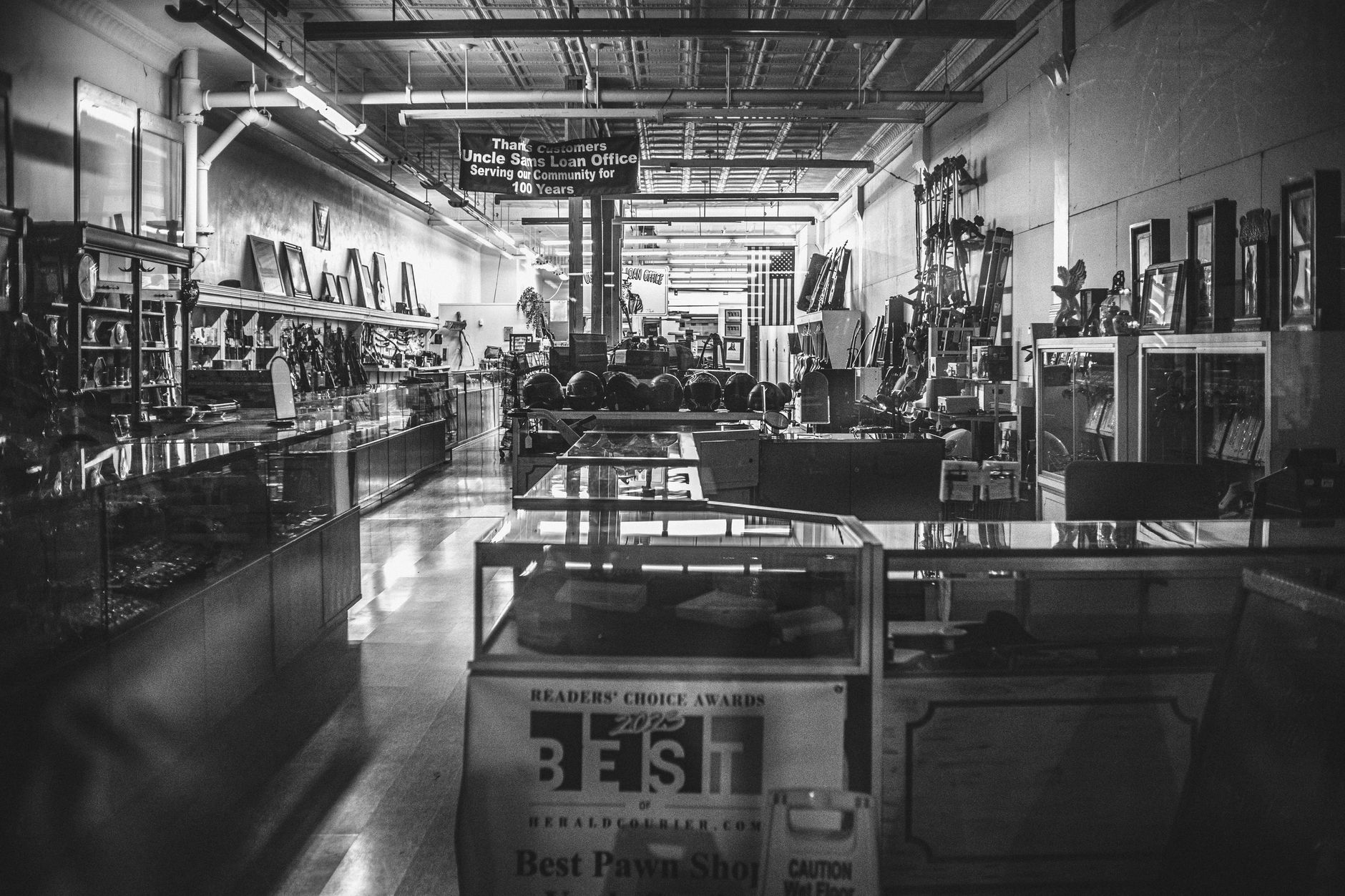
The next morning I drove to Ray’s Pawn and Loan on the highway at the edge of town. I had passed that place ten thousand times and never once gone in. It smells like every pawn shop smells, like dust and metal and other people’s bad months. There were guitars on the wall and power tools in a case and a glass counter full of rings that used to mean something to somebody.
Ray was a tired man about my age with reading glasses pushed up on his forehead. I told him my brother had brought in some military medals about three weeks back. A Purple Heart. A bronze star. Some ribbons and a folded paper. I told him they were my father’s, and my father was dead, and I wanted them back and I would pay whatever it took.
He remembered them right away. You could see it cross his face. “The Vietnam lot,” he said. “Army. Sergeant’s papers with it.” He took off the glasses and rubbed his eyes and I could tell whatever he was about to say was not going to be what I wanted. “I’m sorry, friend. Those sold. Sold the same week they came in.”
I asked to whom.
“Fella who comes through now and then. Collects that kind of thing. Pays cash, doesn’t leave a name.” Ray spread his hands. “I don’t keep records on cash walk-outs. I wish I did, for you. That’s a hard one.” He looked at me a moment longer and then he said something I did not expect. He said, “For what it’s worth, I tried to get your brother to hold off. Told him a Purple Heart with the papers, a family usually wants that back and regrets it. He said the family didn’t care.” Ray shook his head. “I’ve been doing this thirty years. I can usually tell junk from something a man should not be selling. That was not junk.”
I stood in that pawn shop and I understood that my father’s medals were gone into the world, sold twice over now, in the hands of a stranger with no name, and that I had almost certainly lost them forever. I thanked Ray, because it was not his fault, and I drove home, and I did not tell anyone. Who was there to tell. My father was dead and my brother was the reason.
I want to be honest about the weeks that followed, because if you have lost something like this you already know that the loss does not stay one size. It grows. It was not only the medals. It was every night in that recliner. It was the box on the shelf when I was nine. It was the heavyset man at the funeral saying your daddy was the reason I came home. All of it seemed to have been sold across a pawn counter for two hundred dollars by a man chewing a toothpick. I stopped sleeping right. I would open the drawer sometimes just to look at the empty box, the way you press a bruise to see if it still hurts. It always still hurt.
I did not speak to Lonnie. He called twice, both times to ask, in a roundabout way, whether we were “good,” which is Lonnie for whether he was going to have to feel anything about this. I did not answer. I had nothing to say to my brother, and I have to tell you, sitting here now, I did not know if I ever would again.
Then, in the middle of the summer, on an ordinary Thursday, a stranger knocked on my door.
The stranger
He was a young man, maybe thirty-five, in a plain button shirt with the sleeves rolled. He had a canvas bag over his shoulder and a careful look on his face, the look of a person who has practiced what he is about to say and is still not sure it will come out right. He asked if I was Odell Ramsey, son of Marcus Ramsey. I said I was, and my whole body went tight, because I could not imagine what a stranger wanted with my father’s name.
He said his name was David. He said, “I think I have something that belongs to you,” and he set the canvas bag on my porch rail and drew out, one at a time, the Purple Heart, the bronze star, the ribbons, and the soft folded paper with my father’s name and rank typed across the top. Sergeant Marcus Ramsey. United States Army.
I could not speak. I reached out and I took the Purple Heart in my hand and it was the same weight it had been when I was nine years old on my father’s closet shelf, and I stood on my own porch and I wept in front of a man I had never met, and he had the grace to let me.
When I could talk again I asked him how. How on earth. He had bought them from Ray’s, he said. He collects and preserves Vietnam-era service medals, has for years, ever since his own grandfather came home from that war and never got right. He does not sell them. He tracks down the families and he gives them back, when he can, at his own cost and on his own time. Most of the time he cannot find the family. This time he could.
“The papers had his full name and his unit,” David said. “That gave me somewhere to start. And there was something else in the lot the pawn shop didn’t think was worth anything. That’s actually why I drove out here myself instead of mailing them.” He reached into the bag one more time and took out a small envelope, brittle and yellowed, that I had never seen in my life. My father had kept it, and Lonnie had sold it without ever opening it, because to Lonnie it was more junk. Old paper.
David handed it to me. “I read it, trying to find you,” he said. “I hope that’s all right. I think you need to see it. I think it’s the reason your father kept all of this in a box he wouldn’t let anybody touch.”
What the letter said
I sat down on my porch step with the envelope in my hands. Inside was a single sheet, typed and then signed by hand, dated 1971, two years after my father came home. It was from a man named Robert Doyle.
I told you, way back at the start, that I knew my father carried a man named Doyle out of a rice paddy on his back. That was one of the pieces I had, from the small hours when Daddy could not sleep. What I did not know, what nobody in our family knew, was the rest of it, and the letter told me the rest of it.
Doyle wrote to say that he had spent two years trying to find the courage to write. He wrote that on the day my father carried him out, he had already given up. He had a wife back home and a baby he had never met, and lying in that paddy with his leg gone he had made his peace with never meeting the child. And then a Sergeant he barely knew, a man from a different squad who had no reason on this earth to come for him, came back through fire that everyone else was running from, and got him up onto his back, and carried him. Doyle wrote that my father was hit doing it, the wound in the left forearm, and did not stop, and did not put him down.
Doyle wrote that he went on to meet his baby. That the baby was a girl. That she was, at the time of the letter, learning to walk. He wrote that he named her after nobody in particular, but that he had told her, and would keep telling her every year for the rest of his life, that she existed because a man named Marcus Ramsey decided her father was worth going back for. He wrote, and I am going to give you his exact words because they have not left me since, “I have no way to pay a debt like this. All I can do is tell you that as long as my family exists, your name is in it. My children will know it. Their children will know it. You gave us all of them.”
My father kept that letter in a box for over fifty years and never showed it to a living soul. Not to me, who slept in the recliner beside his bed for three years. Not to Lonnie, who would not have understood it if he had. He kept it because he was a man who did not need the country to clap for him, but he needed, somewhere private, to hold the proof that it had mattered. That the worst day of his life had also been the best thing he ever did.
And my brother sold it for two hundred dollars because he thought it was junk.
What the stranger gave back, and what he took away
David stayed on my porch for two hours. I made coffee and we sat and he told me about the others he has found and the families that fell apart the same way mine did, over medals a careless relative sold, and how the ones who get them back never care about the money, they care about exactly what I cared about, which is the proof that the man was real and what he did was real. He told me the medals themselves are worth very little on the market, which is the cruel joke of the whole thing. Lonnie could not even rob us efficiently. The Purple Heart is not valuable to anyone except the family it belongs to, and to that family it is the most valuable object in the world.
Before he left, David did something I did not ask him to do and will never forget. He took the small envelope, the letter from Doyle, and he had made a clean copy of it, and he asked if he could keep the copy for the archive he keeps, so that even if something ever happened to the original again, my father’s name and what he did would exist in one more place in the world where nobody could pawn it. I said yes. My father’s name is now in a stranger’s careful records, safe, alongside the names of other men who carried other men out of other paddies, and I find that I cannot think about it without my throat closing up.
He would not take a dollar from me. Not for the medals, not for the drive, not for anything. I pressed. He would not. All he asked, and he asked it quietly, standing on my step with his empty canvas bag, was that I do one thing. He said, “Tell people your father’s story. That’s the only payment I take. These men spent their lives being told what they did didn’t matter. Make sure his mattered out loud.”
So this is me, making it matter out loud.
Lonnie, again
I have to tell you the last part, because you are wondering, and because the truth is not tidy.
I called Lonnie. I had not spoken to him in over two months. I told him to come to the house. He came, wary, that wounded look already loaded on his face. I sat him down at the kitchen table where he had once chewed a toothpick and called our father junk, and I put the medals on the table in front of him, and I put the letter in his hands, and I made him read it.
I watched my brother read the words of a man whose life our father saved. I watched him get to the part about the daughter learning to walk. I watched the color leave his face. And for the first time in the fifty-eight years I have known Lonnie Ramsey, I watched the shrug fail him. There was nowhere for it to go. He read it twice. He put it down. He did not say it was junk. He did not say I was making it a thing. He put his head down on our father’s kitchen table and he cried like something inside him had finally cracked all the way through, and he said, over and over, the only true thing I have ever heard him say. “I didn’t know. Odell, I swear to God, I didn’t know.”
And here is the part I have wrestled with, the part I am still wrestling with. He did not know. That is true. But he did not know because he never once bothered to find out. He had sixty-five years to ask our father a single question about that box on the shelf and he never asked, because he did not care, because the man in the recliner had never been quite real to him. The not-knowing was not innocence. The not-knowing was the whole crime.
I did not forgive him that afternoon. I am not going to sit here and lie to you and tell you it all healed over the kitchen table because a stranger knocked on my door. It did not. My brother pawned our father’s heart for a card game and no letter changes that he was capable of it. But I will tell you this. When David gave those medals back, he gave me something bigger than the medals. He gave me back the proof, and once I had the proof, I found I did not have to keep it locked in a box the way my father did. I could take it out. I could show it to the one person who most needed to be broken open by it, and I could watch it do its work.
The medals live on my mantel now, in a case with glass, where you can see them, where nobody has to climb a closet shelf, where no drawer can hide them and no careless hand can call them junk. The letter from Doyle is framed beside them. On Memorial Day this year I took my grandchildren to the mantel and I read them the letter out loud, the way Doyle read it to his own daughter, and I told them the name Marcus Ramsey, and I told them what a Sergeant did in a rice paddy in 1968, and I made them say it back to me. Their name is in it now. Their children’s names will be in it.
My father did not need the country to clap for him. But he is going to be remembered anyway, out loud, in this family, for as long as there is a family. A stranger with an empty canvas bag saw to that. My brother nearly took it from us for two hundred dollars, and a man I had never met drove it back across the state and would not take a dime.
I think about that trade every single day. What was almost lost, and what came home. And I think about the man who carried it home to me, and I understand now the thing my father understood and could never say. It was never about the metal. It was about the going back. My father went back into the fire for a man he barely knew. And fifty years later, a stranger did the same for him.
Some debts you cannot pay. All you can do is carry the next man out. My father knew that. The stranger knew that. And now, God willing, so do I.
This story is a dramatization. Names, characters, and details are invented, and any resemblance to real people or events is coincidental.