
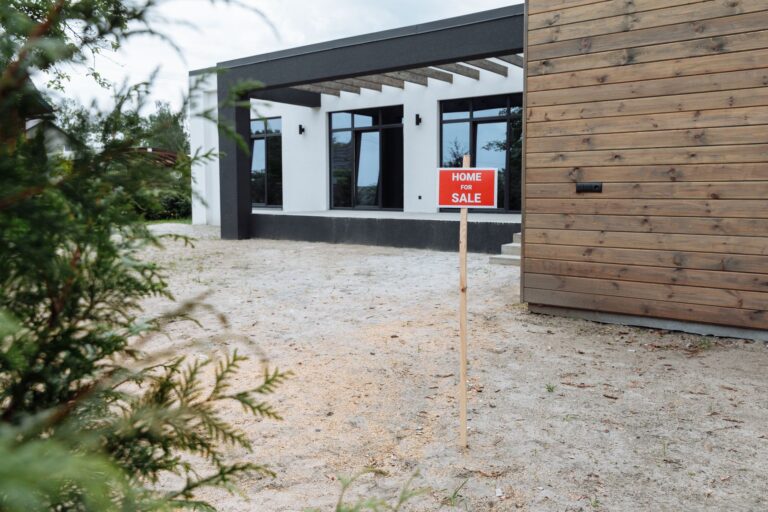
My daughter Kayla put my paid-off house up for sale on a Tuesday, drove out to tell me herself, and when I said no she smiled and said, “It’s already done, Mom. This is for your own good.”
She said it the way you’d tell a child the shot won’t hurt. Calm. A little sad, like she was the one being brave. She was standing in my kitchen in Milford, Indiana, the kitchen where I raised her, with her car keys still in her hand because she wasn’t planning to stay long. She had a folder under her arm. She set it on the counter next to the sugar jar and slid it toward me like a woman closing a deal, and inside that folder was the end of everything I thought I owned.
I need to back all the way up, because if I just start here you’ll think I was a foolish old woman who signed away her life. I wasn’t. Or maybe I was, but not the way you’re picturing. Let me tell it from the beginning, and you can decide.
My name is Sandra Poole. I’m sixty-four years old. I was married to a good man named Dennis for thirty-one years, and I have been a widow for four of them. We lived our whole married life in one house on Catherine Street in Milford, a little town in the top corner of Indiana where the roads run straight and everybody’s grandfather knew everybody else’s. It is not a fancy house. It is a two-story with white siding that Dennis painted himself the summer his knees still let him, a front porch we screened in ourselves, a maple in the yard that was a stick when we planted it and is taller than the roof now. Three bedrooms. One and a half baths. A basement that flooded once in 1998 and never again after Dennis fixed the grade himself with a rented Bobcat and a case of his own stubbornness.
We paid that house off. I want you to sit with that a second, because I think people my age understand it in their bones and younger people sometimes don’t. We paid it off. Thirty years of payments, and then some extra years of Dennis throwing whatever we had left at the principal every December instead of buying himself anything, and one day in the spring of 2016 the bank sent us a letter that said the loan was satisfied and the lien was released. Dennis framed that letter. It hung in the downstairs hallway between our wedding picture and a cross-stitch his mother made. Paid in full. We owned the ground we stood on and the roof over our heads and not one soul on this earth could put us out of it. For a man who grew up poor in a rented farmhouse with a landlord who came around drunk on the first of the month, that framed letter was the proudest thing he owned. Prouder than his truck. Prouder, I think some days, than of me.
Then Dennis got sick, and then Dennis died, and the house was mine.
Kayla is my only child. I need to be honest about her, and it is a hard kind of honest, because she is my daughter and I love her and I would still, God help me, take a bullet for her tomorrow. But loving somebody and trusting them are two different things, and it took me sixty-four years and the loss of my home to finally learn the difference.
Kayla was a beautiful baby and a sharp little girl. Straight A’s. The kind of child teachers used the word “gifted” about. She got out of Milford the first chance she got, which I never held against her, because we raised her to want more than a straight road and a grain elevator. She went to Indianapolis for college and stayed there. Married a man named Brett who sells commercial real estate and talks about “the market” the way other men talk about the weather. They have a big house in a subdivision with a fountain at the entrance. Two little boys, my grandsons, whom I see maybe six times a year, which is its own kind of grief I won’t get into here.
After Dennis died, Kayla started coming around more. At first I was grateful. I was drowning. You don’t know what it is to lose a husband of thirty-one years until the house goes so quiet you can hear the refrigerator hum, and you set two places at the table out of pure habit and then have to put one back. Kayla would drive up on a Saturday, sit at my kitchen table, and help me with “the paperwork.” That’s what she called it. There was a lot of it, that first year. Dennis had handled the money our whole marriage. I could balance a checkbook, but he did the taxes and the insurance and the accounts, and when he died it all landed on me at once like a barn falling.
Kayla was good at it. Brett was in real estate, and she’d picked things up, and she’d sit there with my bank statements spread out and my glasses on her nose and explain things to me slow and patient. I leaned on her. Of course I leaned on her. She was my daughter, and she was competent, and I was sixty and heartbroken and I did not want to think about escrow.
And then one Saturday, maybe eight months after the funeral, she brought up the deed.
“Mom,” she said, “if anything ever happens to you, this house has to go through probate, and probate is a nightmare. It can take a year. It costs thousands. You don’t want to leave me with that.” She had a pamphlet. I remember the pamphlet. It had a picture of a happy gray-haired couple on the front. “If you just add me to the title, it passes straight to me. No probate. No court. It’s the smart thing. Everybody’s doing it now.”
Everybody’s doing it now. I’ve thought about that line ten thousand times since.
Get a new story in your inbox every morning.
Facebook doesn’t show you every story we post. Our free newsletter does. Join 2,500+ readers.
I want to tell you I hesitated. I did, a little. Something in the back of my neck went cold when she said it, some animal part of me that Dennis would have listened to. But I was tired, and she was my daughter, and the way she framed it, adding her to the title was a gift I was giving her, a kindness, sparing her some future misery. What kind of mother wouldn’t? What was I protecting the house from, my own child?
So we drove down to the courthouse in Warsaw, and a notary I’d known since high school stamped a quitclaim deed, and just like that Kayla Poole became a joint owner of the house on Catherine Street. Joint tenants with right of survivorship, the paper said. I didn’t fully understand what those words meant. I understood “so it skips probate.” That was the only part she explained, and the only part I heard.
For your own good. For my convenience. I have learned that when someone is about to take something from you, they will very often hand you a reason that sounds like a gift.
For a couple of years, nothing happened. Life went on. I got a little steadier. I went back to my church, Faith United, and my Tuesday quilting group, and the ladies there pulled me back into the world the slow way, one covered dish at a time. I planted tomatoes again. I learned to be a widow, which is a thing you learn like a language, badly and with an accent, but you learn it. The deed sat in a drawer in my mind and I forgot about it.
Then Brett’s business went sideways.
I didn’t get the details until much later, and I got them in pieces, but here is the shape of it. Commercial real estate went soft. Brett had leveraged himself into a couple of projects that stalled. The big house with the fountain out front had a big mortgage under it, and the payments got hard, and then they got very hard. Kayla stopped mentioning Brett’s work. She got a tightness around her eyes. When she came up to visit, which was less often now, she was distracted, on her phone, snappish with the boys.
I offered to help. I want that on the record too. I said, Kayla, I don’t have much, but I have some of your father’s life insurance left, and if you’re in a tight spot, it’s yours. She waved me off. “We’re fine, Mom.” Tight around the eyes. “We’re fine.”
They were not fine.
Here is what I know now that I didn’t know then. In the fall, without a single word to me, Kayla took the deed to that house, the house I lived in, the house with my dead husband’s paid-in-full letter framed in the hallway, and she used her name on the title to take out a mortgage against it. A cash-out refinance, the bank called it. Because she was a joint owner, and because of the way that quitclaim deed was written, she could borrow against her share, and a certain kind of lender was willing to write that loan. Sixty-some thousand dollars, pulled out of the house Dennis died believing no one could ever touch. Money that went, I would find out later, straight into the hole under Brett’s business.
I didn’t know. I lived in that house and slept in that house and paid the property taxes on that house and I did not know that there was now a lien against it, a new loan, a monthly payment I’d never agreed to and never signed for, because she hadn’t needed my signature. She’d needed her own. And her name was on the title, right there next to mine, because two years earlier at a courthouse in Warsaw I had given it to her. For convenience.
The first I heard of any of it was the Tuesday she drove up with the folder.
She came in without knocking, the way she always did, calling “Mom?” down the hall. I was in the kitchen shelling peas into a colander with the radio on. She looked terrible, honestly. Thin. Gray under the eyes. I got up to hug her and she stepped back from me, just half a step, but I felt it. And she set that folder on the counter.
“Mom, sit down. I have to talk to you about something and I need you to not get upset.”
Nothing good in the history of the world has ever followed those words.
She told me the house had to be sold. She said it fast, like ripping off a bandage. She said the market was actually good right now, that we’d get a nice price, that she’d already talked to a realtor, a friend of Brett’s, and that it made sense financially for everyone. She said I’d been “rattling around in this big house alone” for four years and that it “wasn’t safe,” me on the stairs at my age, me so far from her, and that there was a lovely senior apartment complex down in Fishers, close to her and the boys, one level, no stairs, a little patio, and wouldn’t that be so much easier, wouldn’t that be so much better, and didn’t I want to be closer to my grandsons.
I stood there with pea shells in my hand and I said, “Kayla. I’m not selling my house.”
And she smiled. That’s the part I’ll take to my grave. She smiled at me the way you’d smile at a stubborn toddler, and she said, “Mom. It’s already done. This is for your own good.”
Then she opened the folder and showed me the papers, and slowly, slowly, standing in my own kitchen, I began to understand that my daughter had put a mortgage on my house without telling me and now needed it sold to cover the loan she’d taken, and that legally, because of one afternoon at a courthouse and one little word, “convenience,” she might just be able to do it.
I will tell you what my whole body did. It went cold and then it went very, very still. The same stillness I’d felt in the funeral home four years earlier. The stillness of a person watching the floor of her life open up.
“Get out,” I said. Quietly. I didn’t yell. I have never once in this whole thing yelled. “Take your folder and get out of my house.”
“Mom, it’s not your house, that’s what I’m trying to explain to you, it’s our house, and I can’t just let you throw away this kind of money.”
“Out.”
She went. She left the folder on the counter, on purpose I think, so it would sit there and wear me down. I put it in the trash. Then I took it out of the trash and put it in a drawer, because even then, even furious and shaking, some part of me knew I was going to need to see exactly what she’d done.
That night I did not sleep. I sat in the front room in Dennis’s chair, in the dark, and I looked at that framed letter in the hallway that I could just make out by the streetlight. Paid in full. And I talked to my dead husband out loud like a crazy woman. I said, Dennis, what did I do. I said, Dennis, tell me what to do. And Dennis, being dead, did not answer, but somewhere around three in the morning I heard his voice in my memory anyway, from some argument thirty years gone, saying the thing he always said when a salesman or a banker tried to hurry him: “Nobody signs my name but me. Nobody puts a lien on my ground but me. You read every line, Sandy. Every single line.”
Every single line. In the morning I called a lawyer.
Not Brett’s realtor friend. Not anybody Kayla knew. I called the one lawyer in Milford I trusted, a man named Owen Kessler who’d done Dennis’s will and who’d known my husband from the Lions Club for thirty years. I told his secretary it was an emergency, and something in my voice must have carried, because he saw me that same afternoon.
I put the folder on his desk. I told him the whole thing, from the quitclaim deed to the smile in my kitchen. Owen listened without saying a word, which is a rare and valuable thing in a man, and he put on his reading glasses and he went through those papers line by line, the way Dennis would have. And after a while he took the glasses off and rubbed the bridge of his nose and he said something I have held onto ever since.
He said, “Sandra, your daughter did something to you. But she also, I think, did something for herself in a hurry, and people in a hurry make mistakes. Let me look.”
And he looked. He looked for two weeks. And what he found is the reason I am writing this from my own kitchen table on Catherine Street, and not from a one-level apartment in Fishers, Indiana.
The first thing Owen did was pull the actual recorded documents from the county, not the copies in Kayla’s folder. And he laid the original quitclaim deed next to the mortgage Kayla had taken out, and he found the first thread.
The quitclaim deed from 2018, the one I’d signed at the courthouse in Warsaw, said “joint tenants with right of survivorship.” That was what Kayla wanted, because that’s what skips probate: when one joint tenant dies, the other automatically owns the whole thing. Fine. But here is the thing about that kind of ownership that Kayla, for all her competence, for all Brett’s real estate savvy, either didn’t understand or didn’t think would matter. In Indiana, a joint tenant can borrow against her own interest, yes. But when Kayla took out that cash-out refinance, the lender’s title work, and the loan documents themselves, treated the whole property as collateral, not just her half. The loan was written against the entire house. And a loan written against the entire house needs the signature of every owner on the title.
My signature was not on that loan.
It was forged.
Owen laid the mortgage closing documents in front of me and pointed to a line near the bottom, and there was my name, Sandra Poole, in a looping hand that was almost mine but not quite, dotted and crossed by somebody who had seen my signature a thousand times on birthday cards and knew the shape of it but not the muscle of it. Kayla, or someone Kayla brought in, had signed my name to a sixty-thousand-dollar loan, in front of a notary, and that notary had stamped it as if I’d been sitting right there.
I looked at that forged signature for a long time. I want to be honest about what I felt, because it wasn’t triumph. It was the deepest grief I’d felt since the funeral. Because up until that moment I’d been telling myself Kayla had done something reckless and selfish but not, you know, criminal. Not evil. And that fake signature took that comfort away from me. My daughter had forged my name. There was a line, and she had walked right over it, and there was no walking back.
But grief and a lawyer are two different tools, and Owen was holding the second one.
“Sandra,” he said, “this changes everything. A loan closed on a forged signature, against a homestead, with a notary who either didn’t verify the signer or looked the other way, that loan is defective. That’s not a family disagreement anymore. That’s fraud. And the sale they’re trying to push through is built on top of it. You pull the bottom card, the whole thing comes down.”
What followed was not a courtroom scene like on television. It was slower and quieter and, in its way, more powerful. Owen did three things, and I want to lay them out plain, because if there is one other woman my age reading this who has “added her daughter to the title for convenience,” I want her to know exactly what a good lawyer can do.
First, he sent a letter to the lender, the bank that had written the refinance, laying out the forgery with a copy of my real signature next to the fake one, and a demand that they investigate their own notary and their own closing. Banks do not like the word “forgery” in a letter from a lawyer, because a forged homestead loan is a loss for them, not just for me. Within ten days the bank had frozen any action on the property and opened its own fraud investigation, and the notary who’d stamped that document, it turned out, was a friend of Brett’s who had notarized a signature for a person who was not present, which is the one thing a notary is sworn on penalty of law never, ever to do.
Second, Owen filed to put the sale on ice. The realtor, Brett’s friend, had already put a sign in my yard, a red-and-white FOR SALE sign staked right into the grass where my tomatoes grow, forty feet from the porch Dennis screened with his own hands. I’d been walking past it every morning to get the paper with my jaw set like iron. Owen got a filing recorded at the county that clouded the title so thoroughly that no buyer’s lawyer in his right mind would touch the place, and no title company would insure it. That sign stood in my yard for three more weeks, and then one morning the realtor came and pulled it out of the ground himself, and I stood at my kitchen window and watched him do it, and I did not smile, but something in my chest finally unclenched for the first time since the Tuesday with the folder.
Third, and this is the part that mattered most to me, Owen did not send my daughter to prison. He could have. What Kayla did was a felony, plain and simple, and the county prosecutor, once the bank’s fraud investigation was done, absolutely could have charged her. There were days I wanted him to. I won’t pretend otherwise. There were nights I lay in Dennis’s chair and thought about my grandsons visiting their mother through glass and I could not tell, in the dark, whether I wanted that or whether it would kill me.
But Owen, who is a wiser man than I am, gave me the choice, and he framed it the way only a country lawyer can. He said, “Sandra, you can burn it all down, and you’d be within your rights. Or you can use everything I’ve got as leverage to get your house back clean, unwind that loan, get your name off a debt you never took, and make her sign a paper that says she will never, ever have a claim on your property again. You can get everything back and keep your daughter out of a cell. But only if you want that. It’s your house and it’s your family. It’s your call, not mine.”
I thought about it for four days. I prayed about it more than I’ve prayed about anything since Dennis’s diagnosis. And then I told Owen to draw up the papers.
We met at Owen’s office, not my kitchen, because I was not going to let her back into that kitchen. Kayla came with Brett, and Brett looked like a man who hadn’t slept in a month, which he probably hadn’t, and Kayla looked at me across that conference table with an expression I had never seen on her before, and it took me a moment to name it. It was fear. My daughter was afraid of me. Or afraid of what I was holding. Owen laid it out flat: the bank was unwinding the loan as fraudulent, the notary was facing the loss of her commission and worse, the sale was dead, and the prosecutor had a file. And then he laid a second stack of papers on the table.
The deal was this. Kayla would sign a quitclaim deed transferring her interest in the house back to me, fully and forever. Her name would come off the title entirely. She would sign a sworn statement acknowledging that the refinance was taken without my knowledge or consent and that my signature on it was not mine. And in exchange, I would not press for criminal charges beyond what the bank’s own investigation required, and I would help, quietly, to the extent my late husband’s remaining life insurance allowed, to keep my grandsons in their schools while Brett sorted out his mess. Not to bail out Brett. To protect two little boys who did nothing wrong.
Kayla read it. Then she started to cry. And she said, “Mom, I never meant for it to go this far. Brett was drowning, and I panicked, and I told myself I’d put it all back before you ever knew, and it just kept getting worse.” And I believe that’s even true. I believe she meant to fix it before I found out. I believe she told herself the whole way down that she was still a good daughter. That’s the terrible thing about “for your own good.” People say it to you, and then they say it to themselves, and by the time they’re forging your name they’ve got a whole story built about how it’s really an act of love.
I did not forgive her that day. I want to be honest, because I think the internet loves a scene where the mother weeps and forgives and everybody hugs, and that is not what happened. What happened is she signed the papers. Her hand shook. My name came off that fraudulent loan and her name came off my title, and the house on Catherine Street became mine alone, free and clear, the way it was the day Dennis framed that letter. I watched her sign it, and then I stood up, and I did not hug her, and I drove home to my own house that no one could take from me anymore.
The forgiveness came later. It came slow, in pieces, the way the widowhood came, badly and with an accent. It’s still coming. She calls now. We talk, carefully, like two people carrying something heavy down a narrow stair. I see my grandsons a little more. Brett sold the big house with the fountain and they live in something smaller now, and I have never once said “I told you so,” because my mother raised me better than that and because I remember being young and scared and certain the walls were closing in.
But there is a boundary now that will never come down, and Kayla knows it, and I think in some strange way she respects it. She will never be on my title again. When I die, that house will go to my grandsons in a trust that Owen wrote so tight a cat couldn’t get through it, held for them until they’re grown, not touchable by Brett or by Kayla or by any market that goes soft. I learned my lesson at sixty-four and I paid for it in a currency I never want to spend again, but I learned it, and I made sure it dies with me.
Here is what I want you to take from this, whoever you are, reading this on your phone in your own kitchen. Your house being paid off does not mean it’s safe. A deed is a legal document, not a love letter, and the moment you put another name on it, even a name you would die for, you have handed that person a key to the one thing that was truly, wholly yours. “For convenience.” “For your own good.” “So it skips probate.” “Everybody’s doing it now.” I am not telling you never to trust your children. I am telling you to do what my husband did with every banker who ever tried to hurry him.
Read every single line. Sign nothing you don’t understand. And keep your name, your good name, the one your husband loved and your father gave you, off of every document but the ones you put it there yourself.
The maple in my yard is taller than the roof now. The FOR SALE sign is gone. Dennis’s letter still hangs in the hallway, paid in full, and I dusted the frame this morning like I do every morning. It’s my house. It was always my house. And it took a forged signature and a good country lawyer and the longest year of my life to make it my house again.
I sleep upstairs now. No stairs are too many for me. I’ll take those stairs until they carry me out feet first, and not one day before, and no one, not a bank, not a market, not even my own beloved daughter with a folder and a smile, will ever tell me again that losing my home is for my own good.
This story is a dramatization. Names, characters, and details are invented, and any resemblance to real people or events is coincidental.