
Wendell Pyle stood up in the middle of the fellowship hall, pointed one finger down the length of the table at me, and said, “The building fund is gone, and everybody in this room knows Deacon Means is the only man with a key to that box.”
I had held a key to that box for forty years. I had counted the offering on Sunday nights with my reading glasses sliding down my nose while my wife Ophelia dozed in the folding chair beside me. I had carried the deposit bag to the Farmers and Merchants in Cordele on Monday mornings, first in a green Chevy pickup and later in a gray one, and every single dollar had gone where it was supposed to go. Forty years. And the thing I remember most about that night is not what Wendell said. It is what happened after he said it.
Nothing.
Nobody stood up for me. Nobody said, “Now hold on, Wendell, this is Cornelius we are talking about.” Sister Delphine, who I had driven to dialysis every Tuesday and Thursday for three years after her husband passed, looked down at the table. Brother Amos, whose boy I had taught to drive a nail straight when we reroofed the parsonage, studied his own hands like he had never seen them before. Reverend Hollis stood at the front with his mouth half open and then closed it again. The whole room went so quiet I could hear the window unit rattling in its frame and the tick of the wall clock over the coffee urn.
That silence. I have been alive seventy-two years and I have buried a wife and I have stood at the graves of both my parents and I have heard some hard silences in my life. None of them cut me the way that one did. Because a hard silence at a graveside is grief. This was something else. This was a whole roomful of people I had loved and served for four decades deciding, in the space of about ten seconds, that they were not going to defend me. That it was easier to look at the floor.
Let me back up. Let me tell you who I am and where this happened, so you understand what was taken from me that night, and it was not the money.
The church on Sweetwater Road
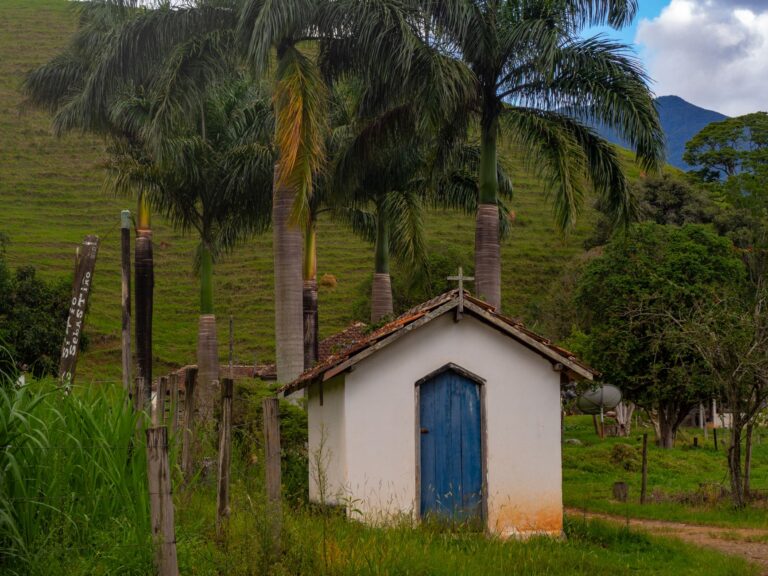
I have belonged to Mount Pisgah Missionary Baptist Church my whole life. It sits on Sweetwater Road about six miles outside of a town in south Georgia that you have never heard of and I am not going to name, because the people there are still my people and I will not embarrass them. It is a white clapboard building with a little steeple that my own daddy helped raise in 1961, and a fellowship hall out back that we added on in the eighties, cinder block, painted the color of weak coffee. There is a gravel lot that turns to red soup when it rains and a stand of pecan trees along the fence line that drop so heavy in October that the children fill grocery sacks after service.
My mother put me on the cradle roll before I could walk. I was baptized in a creek off the Flint River when I was nine years old, in water so cold it stopped my breath, and Reverend Timmons, who is long gone to glory now, held my head under and brought me up and the whole congregation on the bank sang “Take Me to the Water” while I shivered and grinned. I have not missed many Sundays since. I sang in the junior choir and then the men’s chorus. I ushered. I served on the trustee board. And in 1985, when I was thirty-one years old, the church laid hands on me and ordained me a deacon.
Do you know what a deacon is, in a church like ours? It is not a title you wear. It is a job you do. A deacon is the one who shows up. When Sister Rayford’s roof caved in under a limb, I was on it with a tarp before the rain let up. When the Hutto family lost their daddy and could not afford the plot, the deacons quietly covered it and never said a word to a living soul. When a young couple was fighting and about to come apart, it was the deacons who sat in the kitchen with them at midnight. When the church van broke down, I was under it with a wrench. When a widow needed her gutters cleaned, I climbed the ladder. For forty years I was the man they called. Not because I was better than anybody. Because I was there, and I did not stop.
And I was the treasurer, too, more or less, though we never used that fancy a word. I counted the money and I banked the money and I kept the ledger. A green cloth ledger with the church’s name on a strip of masking tape on the spine, and inside it my own handwriting going back decades, every tithe and every love offering and every dollar toward the roof and the van and, in these last two years, toward the thing we all wanted more than anything.
The new sanctuary.
The building fund
Mount Pisgah had needed a bigger sanctuary for twenty years. On Easter and homecoming we packed people into the aisles and set up chairs in the vestibule and propped the doors so the folks who could not fit inside could hear from the steps. The old building held maybe a hundred and twenty souls if you squeezed, and on a good Sunday we had more than that and were turning young families away because there was no place to sit with a baby.
So four years ago we started the building fund in earnest. And a church like ours does not raise money the way a big city church does. We raised it a fish fry at a time. We sold plates on Saturdays under a canopy in that gravel lot, fried whiting and white bread and hot sauce, three dollars a plate, and the men stood over the grease all day in the July heat. The women’s auxiliary sold sweet potato pies at Thanksgiving and quilts at the spring bazaar. The children brought their nickels in little offering envelopes with the corners chewed. Old Sister Bunnie, ninety years old and on a fixed income, put in ten dollars every single month and would not be talked out of it. Brother Amos gave the bonus from his first good year at the plant, eight hundred dollars, and cried when he laid it on the table.
Four years of that. Fish fries and pie sales and nickels and one old woman’s ten dollars a month and a working man’s whole bonus. By that spring the building fund had reached a little over forty-one thousand dollars, and to us that was a fortune. That was the walls going up. That was every young mother finally having a pew to sit in. That money was not money. It was faith you could count. It was four years of a poor country church believing that if we all put our little bit in the box, God would meet us at the foundation.
And I was the man with the key to the box.
I want you to understand that I never once thought of that money as anything but sacred. I balanced it to the penny. When we were off by forty cents one month I stayed up until one in the morning going back through the envelopes until I found it, forty cents, a miscount on a roll of quarters. I could not sleep with the ledger forty cents off. That is the kind of trust I carried, and I carried it gladly, because these were my people and this was God’s house and it was a joy.
Get a new story in your inbox every morning.
Facebook doesn’t show you every story we post. Our free newsletter does. Join 2,500+ readers.
Then Wendell Pyle came home.
Wendell
Wendell Pyle grew up at Mount Pisgah. I knew his people. His grandmother was a saint and his mother sang alto for thirty years. Wendell was a bright boy, quick with numbers, quick with a smile, and he went off to Atlanta to make something of himself and for a good while we did not see much of him. Then about two years ago he came back. Said the city had chewed him up. Said he wanted to come home and be part of building something. And the church, which loves nothing better than a prodigal come home, opened its arms.
He was charming. I will give the devil that. He was maybe forty, dressed better than any of us, drove a nice car, and he had a way of making an old man feel listened to. He would find me after service and put his hand on my shoulder and ask my advice about this and that, and I am ashamed now to say how much I liked it. He talked a big game about the new sanctuary. He had ideas, blueprints he printed off the internet, a vision. He said the fish fries were fine but the church needed to think bigger, needed real financial management, needed to modernize.
And here is where I made my mistake, and I have gone over it a thousand times. Wendell offered to help with the fund. Said a man my age should not have to carry the whole burden alone, said he had a background in finance from his Atlanta days, said he could help me set up a proper account, maybe move it somewhere it could earn a little interest instead of sitting in a plain checking. The finance committee, such as it was, thought it was a fine idea. Fresh blood. Younger hands. So I let him in. I gave Wendell Pyle co-signing authority on the building fund account.
I trusted him because I trusted the church, and he was of the church. That is the whole story of how it happened. It was not stupidity, though it felt like stupidity for a long time. It was that I had spent forty years in a place where you did not lock your door against your brother, and I could not imagine a brother who would rob the widow’s mite out of the offering box. I had never met a man like that in my life. So I did not see him even when he was standing right in front of me with his hand on my shoulder.
The night it fell
It came out at the quarterly business meeting in April. We met in the fellowship hall after a Wednesday service, maybe forty people, folding chairs and a table of coffee and a plate of somebody’s leftover pound cake. Routine. We were going to review the fund and set a date to break ground in the fall.
Reverend Hollis called on Wendell to give the financial report, because in the last few months Wendell had eased himself into giving the reports, and I had let him, because he made a nice presentation with a laptop and a little projector and it made the young folks feel like we were a real church with a real future.
Wendell stood up. He did not have his laptop that night. He had a manila folder and a grave expression, and I knew before he opened his mouth that something was wrong. He said he had bad news. He said that in reviewing the accounts he had discovered a serious problem. He said the building fund was almost entirely gone. Withdrawals over the past several months. Thousands of dollars. He said the numbers did not add up and he had been sick about it for weeks trying to figure out how to bring it to the church.
The room made a sound like the air going out of a tire.
And then Wendell Pyle looked down the table at me, and his voice got soft and sorrowful, which was worse than if he had shouted it, and he said, “The building fund is gone, and everybody in this room knows Deacon Means is the only man with a key to that box.”
I have tried many times to describe what that felt like and I do not have the words for it even now. It was not like being hit. It was like the floor of the world tilting. I sat there in my good Wednesday shirt with the pound cake going dry on a paper plate in front of me and I heard forty years of my life get erased in one sentence by a man I had welcomed home and mentored and trusted with the widow’s ten dollars.
I stood up. My knees are not good and I stood up slow, and I said, “Wendell. That is not true. I never took a penny. You know I never took a penny. You have the other signature on that account. You know where that money went.”
And Wendell shook his head, slow and sad, like he pitied me. He said maybe I had gotten confused. He said no one wanted to accuse a man who had given so many years. He said it real gentle, and every gentle word was a nail, because gentle made it sound like the truth, made it sound like he was protecting me, made it sound like the theft of an old man’s mind and not the theft of a church’s money.
The silence
Here is the part I have to make you understand, because this is the part that broke me, and it was not Wendell.
I stood there in that fellowship hall and I turned and I looked at them. My people. Forty years of them. I looked at Sister Delphine, whom I had driven to dialysis. I looked at Brother Amos, whose boy I taught. I looked at Sister Rayford, whose roof I tarped in the storm. I looked at the deacons I had served beside and the choir I had sung with and the reverend I had prayed beside at more deathbeds than I can count.
And every one of them looked away.
Not one soul in that room stood up and said, “This is Cornelius. This is not possible.” Not one. They studied the floor and the ceiling and the coffee urn and their own folded hands. Sister Bunnie, ninety years old, who had put in her ten dollars every month, started to cry, and even she did not look at me, and I understood that she was not crying for me. She was crying for the money.
I want to be fair to them, even now, even after everything, because bitterness is a poison and I have worked hard not to drink it. They were poor and frightened people who had just been told that the thing they had bled for over four years was gone. When people are frightened they look for a door to walk out of the fear, and Wendell had handed them a door with my name on it. It is easier to believe one old man is a thief than to believe that faith you can count can vanish and no one is to blame. I understand that now. I did not understand it that night. That night I only knew that I had loved these people and served these people and they would not lift their eyes to me.
I gathered my hat. My hands were shaking and I could not make them stop. And Reverend Hollis, God bless him and God forgive him, said the one thing that put me all the way out the door. He said, gentle as Wendell, “Deacon Means, maybe it would be best, until this is sorted out, if you stepped back from your duties. For everyone’s peace.”
Stepped back. Forty years, and I was to step back for everyone’s peace.
I did not say anything. There was nothing to say that would not sound like the words of a guilty man, because a guilty man and an innocent man both say I did not do it, and I had just learned that in a frightened room they sound exactly alike. I put on my hat and I walked out through the gravel lot in the dark with the pecan trees black against the sky, and I got in my gray Chevy, and I sat there for a long time before I could trust my hands to drive.
The wilderness
I did not go back for eleven weeks.
Ophelia had been gone three years by then, and I will tell you, those were the worst weeks of my life, worse than when I lost her, and I did not think anything could be worse than that. Because when Ophelia died I still had my church and I still had my name. Now I sat in that quiet house with her chair still by the window and I had neither.
The talk got around. It always does, in a place like ours. I would go into the Piggly Wiggly and folks I had known my whole life would find something very interesting on the far shelf. A man at the gas station, a man whose daddy I had helped bury, gave me a look I will not forget. The story hardened into fact the way stories do when nobody stands up to soften them. Cornelius Means stole the church building fund. Forty years, and that was to be the sentence they carved on me.
I prayed a great deal in those weeks. I am not going to pretend I prayed like a saint. I prayed angry. I sat at my kitchen table and I asked God why. I had given Him my whole life. I had counted His money to the penny at one in the morning over forty cents. I had climbed the widow’s ladder and tarped the storm roof and driven the sick woman to dialysis when I would rather have been anywhere else, and I had done it for Him, and this was the return. My name in the mud and my brothers looking at the floor. I asked Him where He was in that fellowship hall when Wendell pointed his finger, and why He had let a whole room of His people look away from a man who had never done anything but serve them.
I did not get an answer. Not the kind you can put in your pocket. But somewhere in the third or fourth week, sitting there in the dark with Ophelia’s chair empty beside me, a thing came to me that I have held onto ever since. I could not make them believe me. That was not in my power. All I had left in this world that no man could take was whether I would let their sin make me into something ugly. Wendell had taken the money. The church had taken my name. But whether I stayed a man of grace or turned into a bitter old ruin, hollering my innocence at people who would not hear it, that was still mine to decide. That was the one thing left in my hand.
So I decided. I would not go begging. I would not fight them. I would not spread my own story around town to answer theirs. I would let it be. If God wanted my name cleared, God would clear it. If He did not, then I would go to my grave with it dirty, and I would go there clean on the inside, and that would have to be enough. It did not feel like enough. I want to be honest with you. It felt like defeat. But it was the only ground I could stand on, so I stood on it.
I did not know it then, but forty miles away and a few weeks later, Wendell Pyle was about to make a mistake.
The confession
It was a Tuesday evening in July when the knock came on my door.
I was not expecting anybody. Nobody came to my door anymore. I turned on the porch light and looked out and there was Brother Amos, and behind him Sister Delphine, and behind her Reverend Hollis, and two of the other deacons, standing on my steps in the July dark with the moths battering the bulb, and every one of them had a face like a funeral.
My first thought, God help me, was that they had come to make it official. To tell me I was put out of the church for good. I almost did not open the screen door. But forty years of habit is strong, and you do not leave your brothers on the porch, even the ones who looked away, so I opened it.
And Reverend Hollis, that big man, took off his hat and held it against his chest, and his eyes were wet, and he said, “Cornelius. We have come to ask your forgiveness.”
I did not understand. And then Brother Amos told me the rest, standing right there on my porch because none of them, I think, could bear to wait until they got inside.
Wendell Pyle had confessed.
It had come apart on him the way these things do. He had a woman in Cordele, and a car note he could not carry, and debts from Atlanta that had followed him home, the real reason the city chewed him up, and he had taken the building fund a piece at a time to stay ahead of them, always meaning to put it back before anyone noticed, the way a drowning man always means to. And when the hole got too big to hide, he had done the oldest thing in the book. He had pointed at the old man with the key. He had counted on my age and my silence and the church’s fear, and for eleven weeks it had worked.
But guilt is a patient creditor. Sister Delphine’s grown daughter worked at the bank in Cordele, and she had gotten to wondering, quietly, about those withdrawals, because they did not look like an old country deacon’s careful hand at all. And she had pulled the record of who actually walked into that branch and signed for the cash. And it was not me. It was never me. Every withdrawal, over all those months, carried one signature, and it was Wendell Pyle’s.
They had gone to Wendell with it two days before. And Wendell, cornered, with the paper in front of him in his own hand, had broken all the way down. He had wept and confessed the whole thing in Reverend Hollis’s study. Not just the money. The lie. He had looked down that table and named an innocent man to save himself, and he confessed that too, out loud, with words, and there is a mercy in that I did not expect, because a paper trail proves what a man did but only a confession proves what he meant, and Wendell said it plain: he had known I was innocent when he pointed his finger. He had chosen me because I was the one they would believe it of least, and so the one it would stick to hardest.
I stood in my own doorway and I heard all of this, and I want to tell you I felt vindicated, but that is not the word. What I felt first, before anything else, was a great and terrible relief, so heavy it nearly put me on the floor, the relief of a man who has been holding his breath for eleven weeks without knowing it and is finally, suddenly, allowed to let it out.
Grace
Reverend Hollis was weeping openly now. He said, “Cornelius, we failed you. Every one of us in that room failed you. We looked away from a righteous man because we were afraid, and there is no excuse for it, and I am not going to offer you one. I let you walk out that door. I asked you to step back. I am so ashamed I can hardly stand on your steps.”
Now here is where the story could go two ways, and I had eleven weeks in the wilderness to decide which way I would go if this moment ever came, though I never truly believed it would.
I could have kept them on the porch. I had earned that. I could have made them stand there in the dark and feel every ounce of what they had done, could have reminded Sister Delphine of every Tuesday and Thursday I drove her, could have named Brother Amos’s boy and the roof and the storm and the ladder and the deathbeds and the forty cents at one in the morning. I could have let them taste the silence they gave me. There is a justice in that, and no one on earth would have blamed me.
But I had already decided, back in the dark by Ophelia’s empty chair, that I would not let their sin make me ugly. I had decided it when I thought no one would ever come to my door at all. And a decision you make in the dark, when there is no reward for it, is the only kind that is worth anything when the light comes.
So I opened the screen door the rest of the way, and I stood back, and I said the only thing that was in my heart to say.
I said, “Y’all come in out of the dark. I will put on some coffee.”
And they came into my little house, my brothers and sisters who had looked at the floor, and they sat in my front room where Ophelia’s chair still stood by the window, and I made a pot of coffee with my hands that had finally stopped shaking, and I forgave them. Not because they had earned it. They had not, and I told them so, gently, the way Wendell had once been gentle with his lies, except my gentleness was the true kind. I forgave them because I had learned in that wilderness that forgiveness is not something you give the other man. It is something you take for yourself, so that his sin does not get to keep living in you, rent free, forever. I was not going to carry Wendell Pyle and that silent room around in my chest for whatever years I have left. I was too old and too tired and, by the grace of God, too free.
Sister Delphine cried and held my hand and could not speak. Brother Amos said he would never forgive himself, and I told him he had better, because I could not do all the forgiving in this room by myself. And that, finally, got a laugh out of them, a wet and broken laugh, and it was the first good sound I had heard in eleven weeks.
What was restored, and what was not
The money came back, most of it. Wendell had spent a good bit but his people, that saintly grandmother’s line, sold some land and made the church whole rather than see him prosecuted, and Mount Pisgah, being what it is, chose mercy over the law and did not press charges. I had a hard time with that, I will tell you plain. There is a part of me that thinks a man ought to answer to the law for what he did. But it was not my call, and Wendell left the county not long after, and I have not seen him since, and I have made my peace with not knowing what became of him. I hope he found his way to a real repentance, and not just a cornered man’s tears. That is between him and God now, and I am glad it is off my plate.
They asked me to come back as deacon. They stood in front of the whole church, Reverend Hollis did, and told the congregation the truth, the whole truth, that they had falsely accused a righteous man and that man had forgiven them, and he asked me to take up my duties again. And I did. Not because I needed the title. I told you, it was never a title. I came back because it was never really about them. It was about Him, and the work, and the widow’s ladder that still needed climbing whether or not anybody looked me in the eye while I climbed it.
The new sanctuary got built. We broke ground that fall, a year late, and it went up over the next two years, and it holds two hundred and forty souls now with room for the babies. There is a little brass plate by the front doors with the names of everyone who gave, and Sister Bunnie’s name is on it, and Brother Amos’s, and mine is on it too, and I look at it sometimes and I think about how close it came to never being built, and how close I came to walking out of that faith for good over a silence in a cinder block room.
I did not walk out. I am seventy-two years old and I still count the offering on Sunday nights, though I have a young man helping me now, and I have taught him to stay up until he finds the forty cents, because that is who we are. My name is clean. The people who dirtied it looked me in the eye every Sunday for the rest of their lives and I let them, and we were the better for it.
I will tell you the thing I know now that I did not know that night in the fellowship hall, and it is the only thing I really have to give you.
They can take your money and they can take your name and they can fill a whole room with people who will not defend you, and it will feel like the end of the world, and it is not. There is a thing further in than your name, further in than your reputation, further in even than the love of the people you served, and no man can reach it to steal it. Wendell Pyle got the building fund. The silent room got my name, for eleven weeks. But the man on the inside, the one God made and the one who decides in the dark whether to stay a man of grace, that one they never touched, because I would not let them, and neither must you.
I put the coffee on. That is the whole of it. When they finally came to my door in the dark, ashamed, I put the coffee on.
That is what forty years is for.
This story is a dramatization. Names, characters, and details are invented, and any resemblance to real people or events is coincidental.