
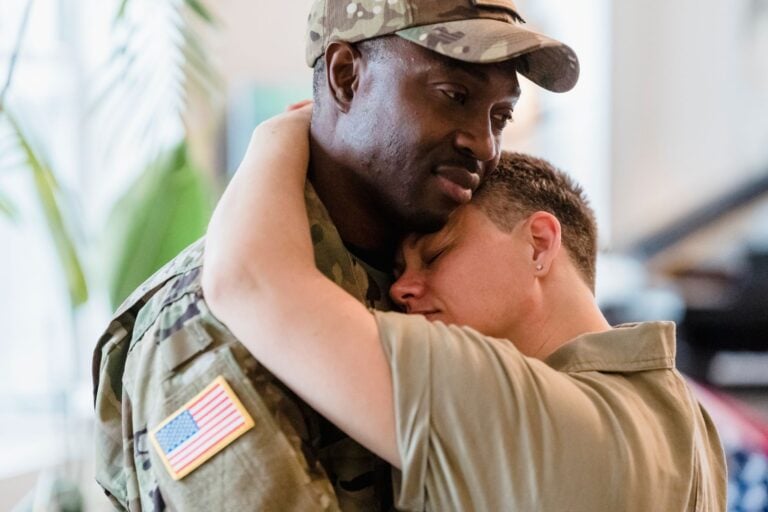
My father did not drive me to the recruiter’s office. I want to start there, because everything that came after lived inside that one small refusal.
I was eighteen the summer I signed the papers. I had asked him the night before, sitting at the kitchen table in our house on the edge of Mably, Ohio, the table he built himself out of barn oak the year before I was born. I asked him plainly. I said, Dad, will you drive me in the morning. And Cal Renner, who had driven me to every spelling bee and every softball game and every dentist appointment of my whole life, set down his coffee and looked at a spot on the wall about a foot to the left of my head and said, You can walk. It is only two miles. If you want to be a soldier you can start by getting yourself there.
So I walked. I walked the two miles down Route 9 in the gray light with my birth certificate and my high school diploma in a manila envelope pressed against my chest, and I did not cry, because I had already done that the night before in my room with the door shut and the fan on so nobody would hear me. I signed at a folding table in a strip mall next to a tax place. The recruiter, a staff sergeant named Ochoa, asked me if my family was proud. I said yes. It was the first lie I ever told in uniform, or close enough to a uniform, and it would not be the last small thing I would say to protect them from a truth they had chosen on purpose.
In Mably, a girl was supposed to do one of a few things. She married. She taught at the elementary school. She worked the register at Dell’s or the front desk at the clinic. She had babies and brought them to church and to the festival in July, and she grew old in the same six square miles she was born in, and that was not a small life, I want to be clear about that. My mother lived that life and there was nothing wrong with it. My aunt Carol lived that life. The women I loved most lived that life and they were not less for it. The problem was never the life. The problem was that it was the only door anybody would hold open for me, and when I tried to find another one, my own people put their bodies against it.
My mother, Rhoda, did not yell. That was not her way. Rhoda’s weapon was the silence she could make heavier than any shouting. The night I told her I had enlisted, she got up from the table and washed three dishes that were already clean and then she went to bed without saying goodnight, and the not saying goodnight, after eighteen years of always saying it, was the loudest thing she could have done. The next morning she had made my breakfast like always. She would have starved before she let me leave on an empty stomach. But she set the plate down without a word and she did not sit with me, and that became the shape of us for years. She loved me with food and clean laundry and she punished me with quiet, and I learned to read both at once until I could not tell where one ended.
My father was different. My father talked. He had opinions the way other men have weather, constant and out loud and impossible to ignore. And his opinion was that the Army was no place for a woman, and he said it to me, and he said it about me, and he said it to other men at the feed store as if I were a decision the town got to weigh in on. He would say, with that particular calm that hurt worse than anger, A woman in that world, she is going to get herself hurt, or she is going to get a good man hurt trying to protect her. That was the part that landed every time. The idea that I was not just at risk but a risk. That my presence anywhere serious would cost some better, steadier person his safety. He believed it the way he believed the sun came up. And I left for basic training carrying it.
I want to tell you what those years were so you understand what came home that July. I did not become a soldier to spite him, though I will admit spite was in the gas tank for the first year. I became a soldier and then somewhere in the becoming it stopped being about him at all. I qualified as a combat medic. The Army calls it 68W, healthcare specialist, but in the field you are just the medic, you are the person people scream for by your last name when the worst thing has already happened. I learned to start an IV in the dark. I learned to find a vein on a man whose blood pressure was dropping out from under him. I learned tourniquets until they were not a skill but a reflex, high and tight, two fingers above the wound, twist the windlass until the bright red stops and the man stops screaming because it hurts more than the injury, and you keep twisting anyway because the alternative is he bleeds out into the dirt while you are being gentle.
I deployed. I am not going to make this the part of the story where I list the things I saw, because the men I served with do not get to have those things turned into entertainment and neither do I. I will tell you only the relevant truth, which is this. I held pressure on a femoral artery in the back of a moving vehicle for nineteen minutes with both my hands and most of my body weight, and the man whose leg it was is alive today and has two daughters, and I have stood in his kitchen in Georgia and watched him flip pancakes, and so when my father said a woman would get a good man hurt, he was exactly, precisely wrong, and I had the proof in my hands every single day, and I could never show it to him, because the proof lived nine hundred miles and one closed door away.
I came home on leave that July for the first time in almost two years. I told myself I was coming for the festival, the Mably Summer Days, the same one we had gone to every year of my childhood, the carnival rides trucked in and set up in the church parking lot, the pie tent, the volunteer fire department selling sweet corn off a flatbed. I told myself I was coming for that. The truth was I was coming to see if anything had changed. I was twenty-four and I had medals in a drawer my parents had never asked to see, and some stubborn, stupid, hopeful part of me thought that maybe two years was long enough, that maybe my father had run out of the thing he kept feeling about me, the way a tank runs dry. I should have known better. Cal Renner never ran dry of anything.
Get a new story in your inbox every morning.
Facebook doesn’t show you every story we post. Our free newsletter does. Join 2,500+ readers.
He met me at the door of the house I grew up in and he looked at me in my civilian clothes, because I had not worn the uniform home, I had learned that much, and he said, Brynn. Just my name. And then he said, You look thin. Like the Army was a thing that had been done to me rather than a thing I had chosen and been good at. My mother hugged me hard and fast and let go before it could mean too much, and then she fed me, because of course she fed me, a plate the size of a hubcap, and I ate all of it to make her happy, and we did not talk about anything that mattered. We talked about my cousin’s wedding and the new stoplight on Route 9 and whether it would rain on the festival. We were good at this, the three of us. We could spend an entire evening building a wall out of small talk and never once mention the thing the wall was hiding.
The festival was the next afternoon. It was a perfect day, the kind of July day the whole town saves up for, blue and high and hot, the smell of fried dough and cut grass and diesel from the ride generators. I walked the rows with my mother. People I had known my whole life said, Brynn Renner, look at you, are you still in the service, and I said yes, and they said that is something, in the voice people use for things they do not understand and are not sure they approve of. My father stayed at the edge of it all, by the fire department’s flatbed, where the men were, talking the way men talk, and every so often I would catch him watching me and then not watching me, and I knew he was telling himself the same thing he always told himself. That I had thrown away a normal life. That I would learn.
I was standing by the lemonade stand when it happened.
The fire department had a flatbed truck parked across the lot, a big older diesel they used to haul the corn and the sound equipment, and they had been moving it to make room for the evening’s setup. I did not see the start of it. I heard it. There is a particular sound a heavy vehicle makes when it goes wrong, a sound underneath the engine, a groan in the metal, and then the festival noise changed all at once the way a flock of birds changes direction, everybody’s voice turning the same way at the same moment. The truck had pulled forward and the ground at the edge of the lot, soft from the week’s rain and never meant to hold that weight, had given way under the right wheels. The flatbed rolled. Not fast. That is the thing people who were there always say, that it happened slow, that there was time to see it and no time to stop it, and both of those are true. It tipped and went over onto its side with a sound like the end of the world, and a man went under it.
His name was Dale Pruitt. He was sixty-one years old, a volunteer fireman for thirty of those years, a man who had pulled other people’s children out of ditches and creeks his whole life. He had been guiding the truck back, walking alongside it the way you are told never to do, and when it went he did not get clear. The flatbed came down and pinned his right leg and the lower part of his body against the curb and the soft ground, and the world stopped.
I want you to understand what a crowd does in that first second. It does nothing. It freezes. Two hundred people at a summer festival and the sound that came out of all of them was a single held breath and then nothing, a terrible nothing, the nothing of people who have never in their lives been the person who has to move. I have heard that nothing before. I knew it the way you know your own name.
And then I was moving, and I did not decide to. That is the part nobody who has not trained for it will ever understand. There is no brave moment, no swelling music, no choice. The training is built into your body exactly so that the choice is already made before your fear can get to the table. My feet were carrying me across that lot before my mind had finished the thought, and I was already running through it, the order of things, the way I had run through it ten thousand times. Scene safety. Is the truck going to move again, is it going to roll further, is the ground still giving. Then the man. Then the bleeding.
I got to Dale and went down on my knees in the mud beside his head. His eyes were open and that was good, his eyes were open and finding me, and I said, Dale, my name is Brynn Renner, I am a combat medic in the United States Army, and I am not going anywhere, do you hear me, I have got you. And I will tell you that I have never in my life meant any sentence more than I meant those words to that man in the mud.
He was conscious. That was the first mercy and the first danger both. Conscious meant he could tell me things. Conscious also meant he was going to feel everything and his body was going to fight me. I ran my hands down him fast and flat, the way you do, and I found it almost at once. The truck had come down across his right thigh and there was blood, a lot of it, not pooling but pulsing, and that pulse is the worst word in my whole vocabulary, because pulsing means arterial, pulsing means a clock has started and the clock is very, very short. The femoral artery in the thigh is roughly the diameter of a drinking straw and it carries a river. A person can bleed to death from a femoral wound in minutes, not many of them, and there is no ambulance in any small town in America that arrives in minutes.
I yelled without looking up. I yelled the way I was trained to yell, in single words that leave no room for the panic in a bystander’s brain. I yelled, You. The man closest to me, a teenager in a Mably Baseball t-shirt, white as paper. I pointed at him so there could be no confusion about who I meant. I said, Call 911 right now, tell them vehicle rollover, one man pinned, severe bleeding, give them this address, go. And he went, because a clear instruction is a gift to a frightened person, it gives their hands something to do that is not shaking.
Then I needed a tourniquet and I did not have one, because I was at a county festival in a sundress, not in the field, and this is the part where the training stops being about the fancy equipment and starts being about whether you actually understand the why underneath the what. A tourniquet is just a band and a windlass. A band that compresses, and a stick to twist it tighter than hands can. I had a band. I was wearing it. I pulled the cloth belt off my own dress in one motion and I looped it high on Dale’s thigh, high and tight, above the wound, closer to the body than the bleed, two fingers’ width above where the blood was coming, and I cinched it down as hard as my hands could pull, and Dale screamed, and I did not stop, because his scream meant he was alive to scream and a quiet man at that moment would have terrified me far more.
The belt alone was not enough. A cloth belt has no windlass, no way to twist it past what your arms can manage, and a thigh is a big, muscled thing with a lot of tissue to compress before you reach the artery. The bleeding slowed but it did not stop, and slowed is not stopped, slowed is just a longer version of the same ending. I needed to twist it tighter than the belt would let me, and I needed a stick. I looked up for half a second, half a second is all you can spare, and I yelled into the crowd, I need something hard and straight, a stick, a wrench, a screwdriver, the length of my hand, now.
And a hand came over my shoulder holding a tire iron from the fire truck’s own kit. I did not look to see whose hand. I had no spare attention for faces. I took the tire iron and I worked it through the loop of the belt and I twisted, and now I had leverage, now I had the thing the windlass does, and I twisted it around once, twice, watching the wound, and on the third turn the pulsing stopped. The bright red stopped coming. It just stopped, the way it is supposed to, and the relief of it went through me like cold water, and I twisted it one more time past where I wanted to, because under-tight is a tourniquet that kills a man slowly and there is no prize for being gentle.
I held it. I knelt in the mud and held the tire iron in place with one hand and held Dale’s hand with the other and I talked to him, because a conscious man in shock needs your voice as much as he needs your hands. I said his name. I asked him about his kids. He had three. I asked him their names and made him tell me, made him keep telling me, because the talking kept him present and the talking let me watch his face, his lips, the color coming and going. I watched for the things that tell you a body is losing the fight even after you have stopped the obvious bleeding. I watched his breathing get fast and shallow and I knew his body was compensating, pulling blood from his skin to keep his heart and brain fed, and I kept his legs as flat as I could under that truck and I kept talking and I kept my hand on that tire iron and I did not let go.
It was nine minutes before the squad arrived. I know it was nine because I counted it in Dale’s pulse under my fingers, which is how a medic counts time when there are no clocks. Nine minutes is a very long time. Nine minutes is long enough for a whole town to remember it forever.
And here is the thing I did not know while it was happening, because I was not looking anywhere but at Dale Pruitt’s face. The whole town was watching. Two hundred people had formed a wide loose ring around us, the way people do, and they had gone quiet, and they were watching a Renner girl in a muddy sundress with a tire iron in her fist hold a man’s life together with her two hands in the middle of the church parking lot. My mother was watching. And my father was watching. My father, Cal Renner, who had told the men at the feed store that his daughter would get a good man hurt, was standing at the front of that ring with his hat off, watching his daughter be the only thing standing between Dale Pruitt and the worst day of three children’s lives.
The paramedics came in fast and I gave them my report the way you give a report, clean and fast and in order, mechanism of injury, vehicle rollover with entrapment, suspected femoral arterial bleed, improvised tourniquet applied at this time, this many minutes ago, patient conscious and oriented throughout, compensating but holding. They looked at the belt and the tire iron and one of them, a woman about my age, looked at me for a second longer than the report required and said, Who did this. And someone in the crowd said, That’s Brynn Renner. That’s Cal’s girl.
They got the truck lifted with the jacks and the airbags and they got Dale onto the board and into the squad, and the medic who had asked who did this, she stopped on her way and she put her hand on my muddy shoulder and she said, the tourniquet is the only reason he has a leg, maybe the only reason he has a life, you did that exactly right, and then she was gone in the back of the rig and the doors shut and the siren started and the whole festival exhaled at once.
I stayed kneeling in the mud after the truck pulled away. I could not make my legs work yet. The shaking comes after, always after, never during, the body sends the fear in late once it is safe to feel it, and I knelt there shaking with Dale Pruitt’s blood drying brown on my hands and my arms to the elbow, and I did not cry, the same stubborn way I have never cried in front of these people, and the town stood around me not knowing what to do with what they had seen.
My mother got to me first. Rhoda. She came through the ring of people and she went down into the mud in her good festival dress without one second of hesitation, down on her knees beside me, and she did not say anything, because words were never her language, but she took my two bloody hands in her two clean ones and she held them, she held them the way I had held Dale’s, and she pressed them to her mouth, blood and all, my mother who could not abide a dirty thing, and she held my filthy hands to her lips and she shook. And I understood every word she was not saying. I had spent my whole life reading my mother’s silences and that was the only one that ever made me weep, and I did, finally, right there, I came apart in the mud holding my mother’s hands.
And then there was a shadow over both of us and it was my father.
I have thought about what I expected him to say more times than I can count. I think I expected nothing. I think after six years I had taught myself to expect nothing from Cal Renner on the subject of his daughter, and that expecting nothing was the calloused-over place where the hurt used to be. He stood over us, this big man, my father, with his hat in his two hands the way men hold their hats at funerals and at the raising of the flag, and his face was doing something I had never once seen it do in twenty-four years of being his daughter. It was coming apart. Cal Renner, who had an opinion about everything and out loud, could not find a single word, and his chin was going, and his eyes were full, and he looked at me kneeling in the blood and the mud with my mother holding my hands, and he got down. My father got down on his knees in the mud in front of the whole town.
And what he said, I am going to tell you exactly, because I have carried every word of it like a stone I am glad to carry.
He said, I was wrong about you. He said it first, before anything else, I was wrong about you, and his voice broke clean in half on the word wrong. And then he said, I have been telling everybody who would listen for six years that you would get somebody hurt. And I was watching just now, and I could not have moved. Not one of us could move. Two hundred of us and not one could move, and you were across that lot before any of us breathed. He stopped and he had to start again. He said, There is a man going home to his children tonight because of the thing I told you that you should not do. He said, I did not raise you to be a soldier. You made yourself into one in spite of me. And I have never in my life been so ashamed of myself or so proud of another human being at the same time, and I do not have the right, I know I do not have the right, but I am asking you to let your old fool of a father be proud of you out loud for the rest of my life to make up for the years I was too stupid to do it.
I had waited six years to hear my father say one kind thing about the work I had given my life to. I had stopped waiting. I want to be honest about that, I had truly stopped, I had built a whole self that did not need it. And it turned out that the not needing it was a wall and the wall came down in one afternoon in a church parking lot with my mother’s hands around mine and my father on his knees in the mud, and I reached out and I took his face in my bloody hands, the same hands, and I said the only thing there was to say. I said, Dad. I said, you can drive me to the airport when I go back. And he laughed and he wept at the same time and he said, I will drive you anywhere on this earth, and we knelt there, the three of us, the Renners, in the mud, while the town stood around us and let us have it.
Dale Pruitt kept his leg. He kept his life. He spent eleven days in the hospital in Columbus and the surgeon told his wife that the field tourniquet was the difference, that another four or five minutes of that bleed and there would have been nothing to do, and his wife, Donna, drove out to my parents’ house before I flew back and stood in the kitchen and could not finish a single sentence, and that was all right, none of us could finish our sentences that week. Dale walks now. He walks with a cane and he calls it his festival souvenir and he is at every Mably Summer Days, and he tells the story to anybody who will hold still, and in his version I am about nine feet tall.
I went back to my unit. My father drove me to the airport, two and a half hours each way, and he talked the whole time, the way he always talks, except now he was asking me questions. He asked me what a tourniquet was made of and how I knew where to put it and what 68W meant and how you learn to make your hands stop shaking. He asked me about the man in the moving vehicle, the one I have never told anybody about, and I told him, my own father, in the cab of his truck on the highway, the first person I ever told, and he had to pull over onto the shoulder because he could not see the road. He said, you have been carrying that by yourself this whole time. And I said yes. And he said, not anymore. And he meant it, and he kept it.
My mother writes me now. Rhoda, who punished me with silence for six years, sends me letters in her careful hand, and every one of them ends the same way, the same line she could never say out loud, and I keep them all in a tin in my footlocker. My father tells the story at the feed store now, the same feed store, to the same men, except now the story is about his daughter the Army medic who saved Dale Pruitt’s life with a tire iron and a belt, and I am told he makes me about nine feet tall too.
People ask me sometimes if I forgive them. They ask it like it is a complicated question. It is not. They were wrong and they were afraid and being afraid made them say a cruel thing for six years, and then they saw the truth with their own eyes and they got down in the mud and they owned every inch of it in front of everybody they knew, which is the hardest thing a proud person can do, and they have spent every day since making it right. Of course I forgive them. They are my mother and my father. I would have forgiven them for less. What I did not expect, what I will be grateful for until I die, is that they made it so I did not have to forgive them in spite of anything. They made it right out loud, in the mud, in front of the whole town, on their knees.
The Army was no place for a woman, they said. For six years they said it. And then one July afternoon a truck rolled over a good man in a church parking lot and the only person in two hundred who could move was the woman they had said it about, and my father got down on his knees and told the whole town he had been wrong, and that is the day my family stopped doubting me, and I would not trade it for an easier road, because the easy road would not have ended with my father’s hat in his hands.
I still have the belt. The festival committee gave it back to me after, washed and folded, in a box, like it was something. I suppose it is. It is the most ordinary thing in the world, a cloth belt off a sundress, and it held a man’s blood inside his body long enough for him to go home to his children, and it is the thing my father keeps on the mantel now, between the wedding photo and the flag, and when people ask him what it is, he tells them. He tells them the whole thing. He never leaves out the part where he was wrong. That is how I know he means it. He never leaves out that part.