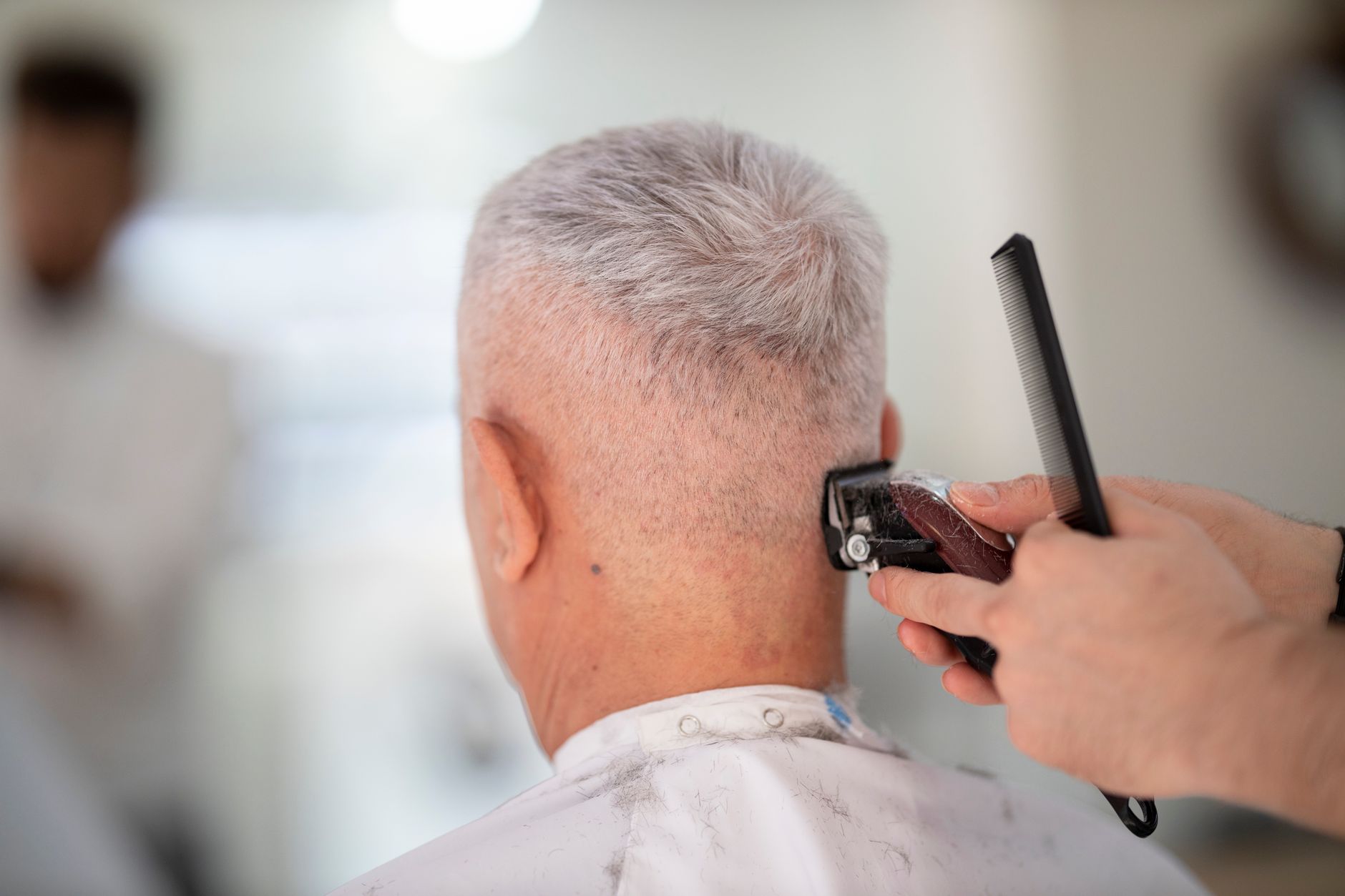
The Haircuts I Gave at the Nursing Home
The barber pole came down off my shop the Monday of my last week, and I did not think a thing about it.
My wife Jean told me at breakfast. She said Bobby Lutes from the sign shop had come by early with a ladder, that the bracket had gone loose, and that he would see to it.
I said fine. I was eating a biscuit and reading the weather on the back of the paper.
That pole had hung beside my door on the Mount Vernon square since 1949. My daddy bought it from a supply house in Cincinnati for forty dollars and drove it home across his lap.
It had been repainted maybe six times. I could have told you the sound it made when the motor was tired, and I never once wondered who was at the other end of that ladder.
I tell you that so you understand what kind of man I was going into that week. I was seventy-two years old, with one good eye, and I was feeling sorry for myself.
I was not looking for a surprise. I had made sure of it.
I had told the woman who runs the nursing home, in plain words, that I did not want a party, a cake, or a card with everybody’s name in it.
I wanted to cut my last head of hair on the first Thursday of October, wash my comb, and go home.
What I got instead I will get to. But the story really starts forty years earlier, in a room with the blinds half closed, and it starts with my daddy’s head.
Harlan Dague cut hair on the Mount Vernon square for fifty-one years. He started in 1934 in a rented room over the feed store with one chair and a borrowed mirror.
By 1949 he had the building we are still in. By the time I was old enough to hold a broom he had a line of men on Saturday mornings that went out the door and past the pole.
I swept that floor from the age of nine. At eighteen I went off to barber school, and I came back with a license in my shirt pocket and no good reason to ever work anywhere else.
Daddy and I stood side by side at two chairs for fourteen years. He talked and I listened.
Farmers, schoolteachers, the Baptist preacher, the Methodist preacher, a county judge, all of them sat down in front of him and told him things.
He never repeated one. That is the first thing a barber learns, and the last thing he ever stops needing to know.
In September of 1985, Daddy had a stroke while standing at his own chair. He had a man half done. He put down the comb, said, “Well, now,” and sat on the floor.
The man in the chair, a feed salesman named Cecil, caught him on the way down. Cecil finished his own neckline that afternoon, I heard later, because there was nobody else in the building who would.