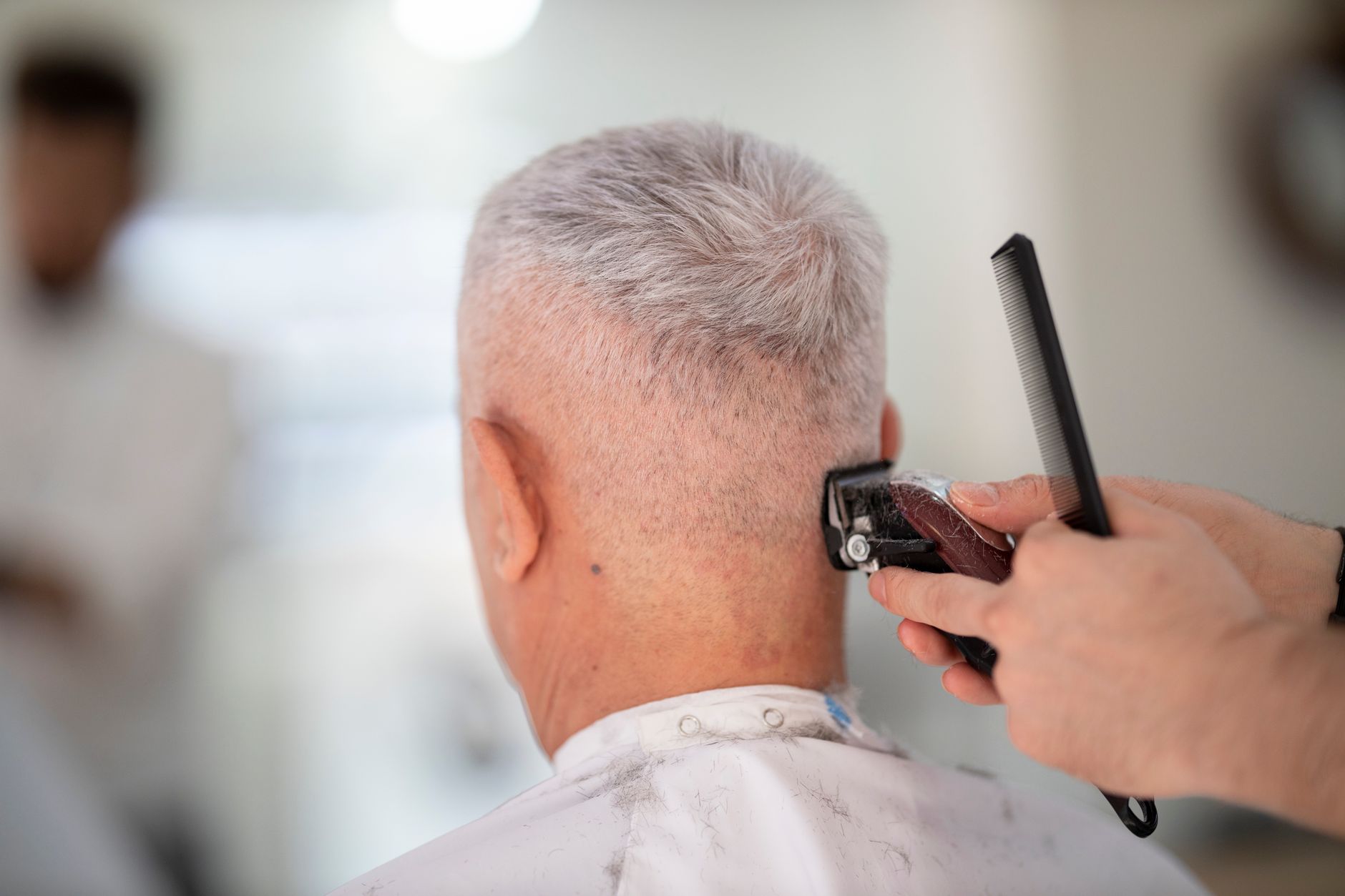
The Haircuts I Gave at the Nursing Home
Jean packed me a sandwich, usually pimento cheese on white bread, and I ate it in the truck in the parking lot with the window down. I never liked to walk into that building with food on my breath.
Then I took my sack in the side door. By the second year I also carried a folding stool, a drop cloth, and a battery clipper for the folks in bed, because those who cannot come to the chair need the chair to come to them.
The first rule I made myself was to ask. Every time.
Even if I had cut a man’s hair four hundred Thursdays running, I stopped in front of him, said his name, and asked how he wanted it today.
Most days he told me the same thing he told me last week. That did not matter. The asking was the point.
A person who has been bathed and dressed and fed and moved by other hands all week does not get asked many questions, and almost none of them are about himself.
The second rule was to tell them what I was doing before I did it. “I’m going to put the cape on you now, Mr.
Tolliver.” “I’m going to turn your head to the left a little.” It takes no extra time. It gives a person back his own head.
The third rule I learned from the nurses, who were gracious enough to teach me. Never come up behind anyone. Never touch an ear until I had said I was going to.
Fold the ear forward with one finger and cut around it, never through it.
I never used a straight razor in that building. The state would not have allowed it, and I would not have wanted to.
I cleaned the necks with a trimmer and a warm cloth, and I used an electric shaver for the men who wanted their faces done.
I washed my combs in the blue jar between every head, and a fresh cape went on every man and woman. I wrote nothing down, because what I knew I carried in my hands.
There was a paper to sign, too, a volunteer form. In 1991 the administrator, a careful man named Mr. Gentry who was afraid of the state surveyor, sat me down in his office and walked me through the rules.
An aide or a nurse had to be present, I could not feed anyone or move anyone, and I was to stay out of any room with a card on the door.
I agreed to every bit of it. I never minded a rule that kept my folks safe.
He gave me a name badge that said Volunteer, and it hung from a lanyard I wore about as often as I wore a tie.
Some of the people ought to be named, because they were not an audience. They were customers, the same as the men who came into the shop.
Miss Ova Sizemore taught fourth grade at Mount Vernon Elementary for forty-one years, and she taught me. She came to Cedar Knob at ninety with her own pearls and her own opinion about everything.