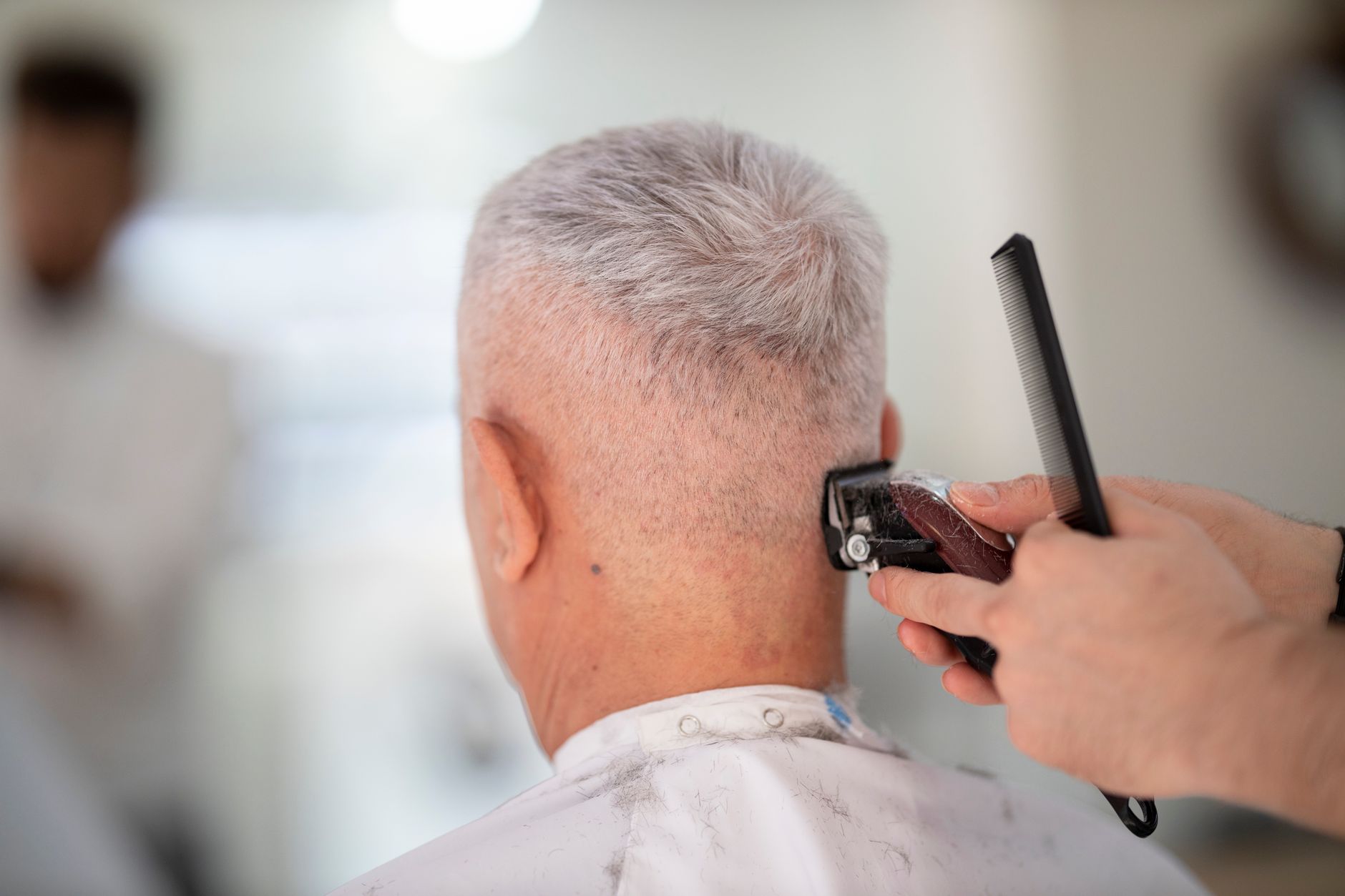
The Haircuts I Gave at the Nursing Home
A person can go a long time without being touched.
I buried a good many of them, in a manner of speaking. I stood in the back at funerals at Pleasant Grove Baptist and at the Methodist church and at Hall’s Funeral Home, in the same dark suit, and families I had never met came up afterward and said, “You’re the barber.”
Not “you’re Orin Dague.” The barber. I took that as about the highest title I would ever be given.
Families slipped bills into my apron pocket over the years. Fives, tens, once a hundred from a man in a good coat. I handed every one of them back. “Put it in the plate Sunday,” I told them.
It was not that I was above it. It was that the first Thursday would have been spoiled by it. I had started out for my father.
The rest came along behind him, and I thought if I ever took money I would be a man with a business out there, not a man keeping a promise.
The kitchen sent me home with a country ham every Christmas. That one I took. Jean said it was the best ham in the county, and nobody argued.
Forty years is a long time to do one thing on the same afternoon. The building got a new wing. Two administrators came and went, and then Pam Hollin came, who has been there eleven years and has never once asked me what I wanted in return.
The aides changed, and the ones who stayed got gray.
Our own children grew up and moved off. Our daughter Lena lives in Lexington and sends a picture of the grandbaby every Sunday. Our boy Daniel put in thirty years at the plant and is nearly retired himself.
Jean and I are going on forty-nine years married. She has never once asked me to skip a Thursday, and I have never once asked her what it cost.
Then this August I nicked Mr. Tolliver’s ear.
It was a pinhead of blood, the kind a man gets shaving on a bad morning. I had it dabbed with a tissue before he knew a thing.
“Don’t fuss, Orin,” he said, and Rhonda Spivey, the activities director, who was standing by the door with her clipboard, looked at the floor.
My hands did not shake. It was my right eye.
In April the doctor in Lexington had put me in front of a chart, then in front of a machine, then back in front of the chart. He told me the center of that eye was going.
Not all at once, he said, and not coming back. The edges would stay. A man can walk around on the edges.
A man cannot square a neckline on them. You cut with the middle of your sight.
For four months I had gotten by on a tilt of the head and the trust my fingers had built up over fifty years, and it worked the way a loose tooth works, right up until it does not.