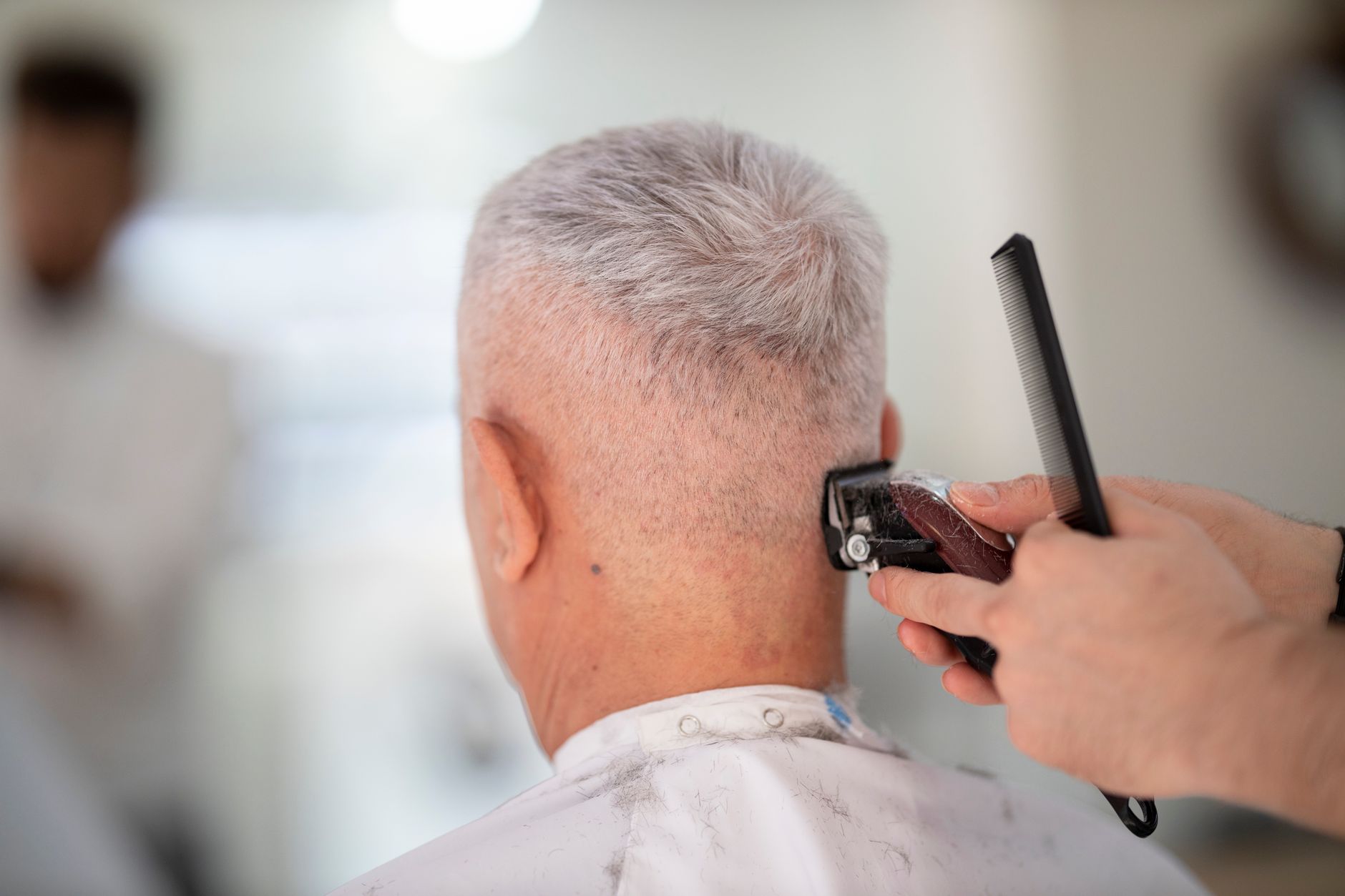
The Haircuts I Gave at the Nursing Home
I should explain about that chair. It was the Koken at station one, white enamel and black leather, and it had stood empty since the September Daddy went down. Forty years I swept around it. Every spring I oiled the pump.
His comb lay in the tray where he left it. Now and then a customer would ask if he could take that one, and I would tell him it was out of order.
Forty years, it was out of order.
“The pump’s been weeping on the tile since Christmas,” Jean said. “Bobby’s brother-in-law in Berea rebuilds them. He said he’d have it back by Saturday.”
I said fine. I did not go down to the shop and look. I think I did not want to see the place where it had stood.
Thursday morning I went in anyway, to open up for the morning trade, and there it was. A clean square of tile where there had been no clean tile since 1985.
Four bolt holes in the floor, and the shine of a floor that never got walked on.
I stood there a minute with my keys in my hand.
Then I did my morning, and I trimmed six heads before noon.
At a quarter to twelve Jean came in from the back and took the card off the door glass. The one that said Closed at noon, back Friday, in my handwriting, gone soft at the corners from forty years of tape.
She slid it into her purse.
I thought she wanted it for a keepsake, and I thought that was sweet of her.
We took the truck. Jean rode out with me, which she never does, in her blue church dress and the good shoes. We did not talk much. At the last stoplight she reached over and straightened my collar.
I pulled into Cedar Knob and saw a few more cars than a Thursday usually brings. Bobby Lutes’s truck, and one or two I knew.
Rhonda Spivey met me at the side door with her hands clasped and the look of somebody who has held her breath since Easter.
“Wipe your feet, Orin,” she said. “They’re waiting on you.”
I stepped into the common room.
It was not a crowd. Pam Hollin stood by the windows at the far end, Jean came in behind me and took my arm, and the Thursday regulars were in their usual places, dressed a little better than a Thursday called for.
Miss Ova Sizemore sat in the front in her pearls, with her bangs trimmed the Thursday before, one finger above the eyebrow. Mr. Clell Bowling had his son beside him in a good shirt. Mr. Tolliver wore a necktie.
Nobody had a banner. Nobody had a cake.
“Orin,” Pam said. “I kept my end of it. No party, no cake, no cards. I want that noted.”
Somebody laughed.
“But you never said anything about a haircut,” she said.
She stepped to one side, and I saw what was standing in the corner by the windows, where the light came in.