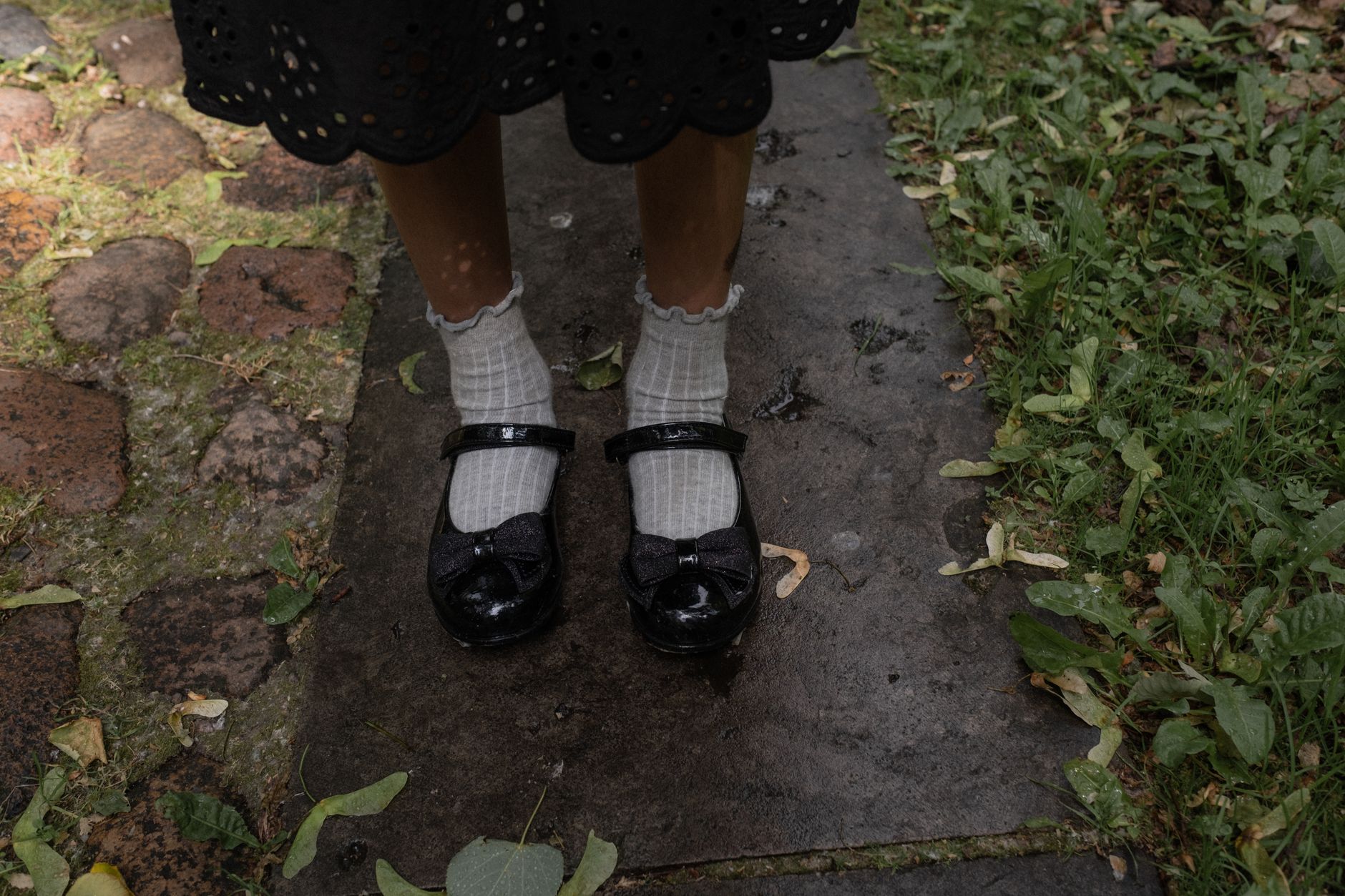
The Shoes the Quiet Woman Paid For
The shoe was on the second shelf of Verna Pohlman’s bedroom closet, behind a dented fruitcake tin, and I knew it before I had finished lifting it down.
It was a boy’s brown leather school shoe, size ten, the laces long gone. The toe was scuffed pale. There was a deep crease across the top where a little foot had bent it ten thousand times, and the front was worn nearly through, because the boy who wore it had a habit of dragging his toe along the ground when he was thinking.
I had watched my baby brother drag that toe up and down the gravel in front of our house for the better part of a year.
I turned back the tongue. On the inside, in blue ballpoint, in the round hand my mother used on every pair of shoes and every coat collar we ever owned, was one word. Mitch.
“Nancy?” Judith Chapin called from the kitchen. “Are you in there? We’re out of tape.”
“I’m here,” I said. It came out smaller than I meant it to.
I sat down on the edge of Verna’s bed, the mattress already stripped to the ticking, and held that shoe in both hands in the plain afternoon light. It was the third week of March, a Saturday. Verna had died on the fourteenth and been buried Wednesday. She was ninety-seven years old, and as far as anybody in Bellmont, Missouri could tell, she had no living soul to leave a single thing to.
That was how five women from the church circle came to be in her little house on Sutton Street with boxes and masking tape and a pot of coffee going. In a town our size somebody has to, and that somebody is always the circle. Pastor Shane Brooks had stopped by that morning and stood in her front room, looking at the one armchair and the one lamp. “Sixty years in the third pew from the back,” he said, “and I do not believe I ever heard her ask for anything.”
Neither had I. That was what I could not get past, sitting there with the shoe.
Beside it on the shelf was a flat cigar box with a Dutch Masters band still on the lid. I took it down and set it on my knee and did not open it yet. I wanted to go back first and see how we had come to this, a shoe with my mother’s handwriting in it, in the closet of a woman who had never once been to our house for supper.
The fall of 1976, my father lost his job.
He had worked eleven years at Prairie Master Implement, on the line that built hay tools and grain augers, the biggest employer in our end of the county. One Friday in late August the company called the whole second shift into the lunchroom, and a man in a necktie from the home office in Kansas City read from a sheet of paper, and by supper a hundred and forty men were out of work.
I was ten. I remember Daddy coming up the back steps at the wrong hour with his lunch pail and nothing to say. He set the pail on the counter and stood there with his big hands flat on either side of it, and my mother, who had been rolling out pie crust, wiped her fingers on her apron and went and put her forehead against his shoulder.