The Shoes the Quiet Woman Paid For
We were a little afraid of her, because she was quiet and exact and knew everything: who was late, who had skipped breakfast, whose mother was sick. She kept a coffee jar of safety pins and a drawer of odd mittens in the front office, and a child with a torn hem or a cold wrist might find her way to that desk without anyone seeing how she got there.
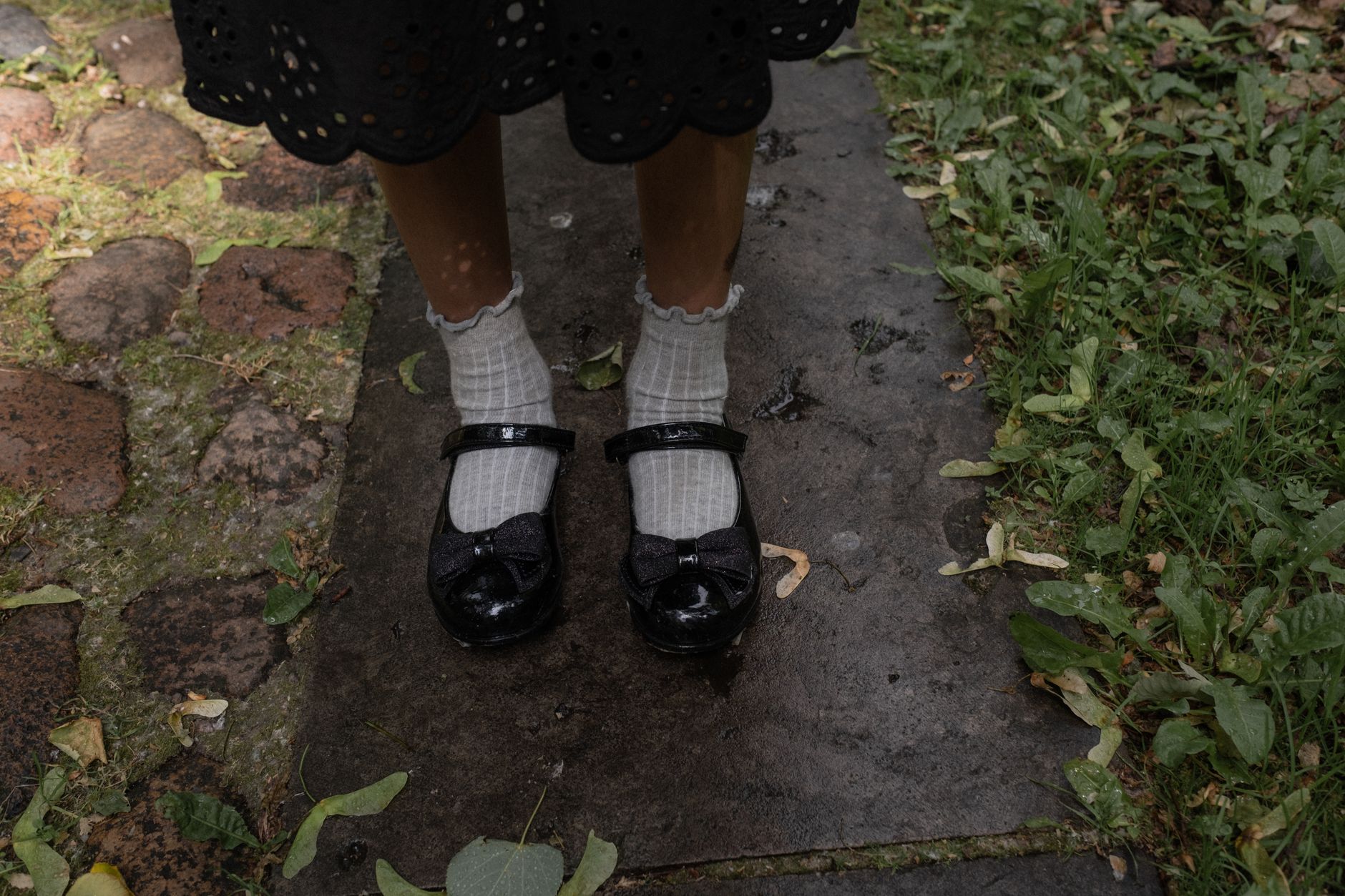
She looked at each of us as we passed. When she got to Mitch, she stopped him with one finger and crouched down in her gray cardigan and looked at his shoes.
“Those are very fine shoes, Mitchell.”
“They’re new,” Mitch said. “I got them from God.”
She stayed down on one knee longer than the hall traffic would allow, and when she stood she put one hand flat on top of his head.
“New shoes, new year,” she said. “Walk tall.”
I thought nothing of it. I thought nothing of it for fifty years.
Verna Pohlman was a quiet woman, and quiet people are easy to overlook, and I did.
Daddy found work in November, driving a truck at the grain elevator in Ainsley. It paid less than the plant, but it paid on Fridays. We did not go hungry again, and in time we forgot how close it had been.
I grew up. I married Seth Calhoun, who farms south of town, and I sang alto and made the same four casseroles for every funeral in the county. Junior went to the railroad. Larry became a lineman. Tracy went into nursing. Mitch grew up to run a hardware store in Haddon, and he still drags his toe when he is thinking.
And through all of it Verna sat in the third pew from the back, on the heater side, alone. She never married. I heard once, in a lowered voice at a funeral luncheon, that there had been a young man who went to Korea, and I filed it with the many sad things that happen to people before you were born. She sent a birthday card to everyone in the congregation, always on the day, with one plain line in her upright hand and never a sentimental word. She retired from the school office after eighteen years, in 1980, and I do not recall that anybody gave her a party.
My father, I should say, shoveled her walk.
He did it every winter for thirty years, from the first snow until the winter he got too sick. Nobody asked him. He would be gone in the truck by six, and Mama would learn later that he had stopped on Sutton Street and cleared that old woman’s steps. Every April he fixed something. A porch rail. A loose step. A squeaky screen.
“Why do you do that, Ev?” my mother asked once. “She’s got a church.”
“She’s alone,” Daddy said. “A person that alone, somebody ought to see to the walk.”
When he passed in 2009, Verna came through the receiving line and took my mother’s hand in both of hers and held it a long moment. Then she said, “He was a good man, Sharon. He was the best thing in this church.”
My mother thought she was being kind. So did I.
I opened the cigar box on Verna’s bed, with the shoe next to me on the ticking.
There were two things in it.