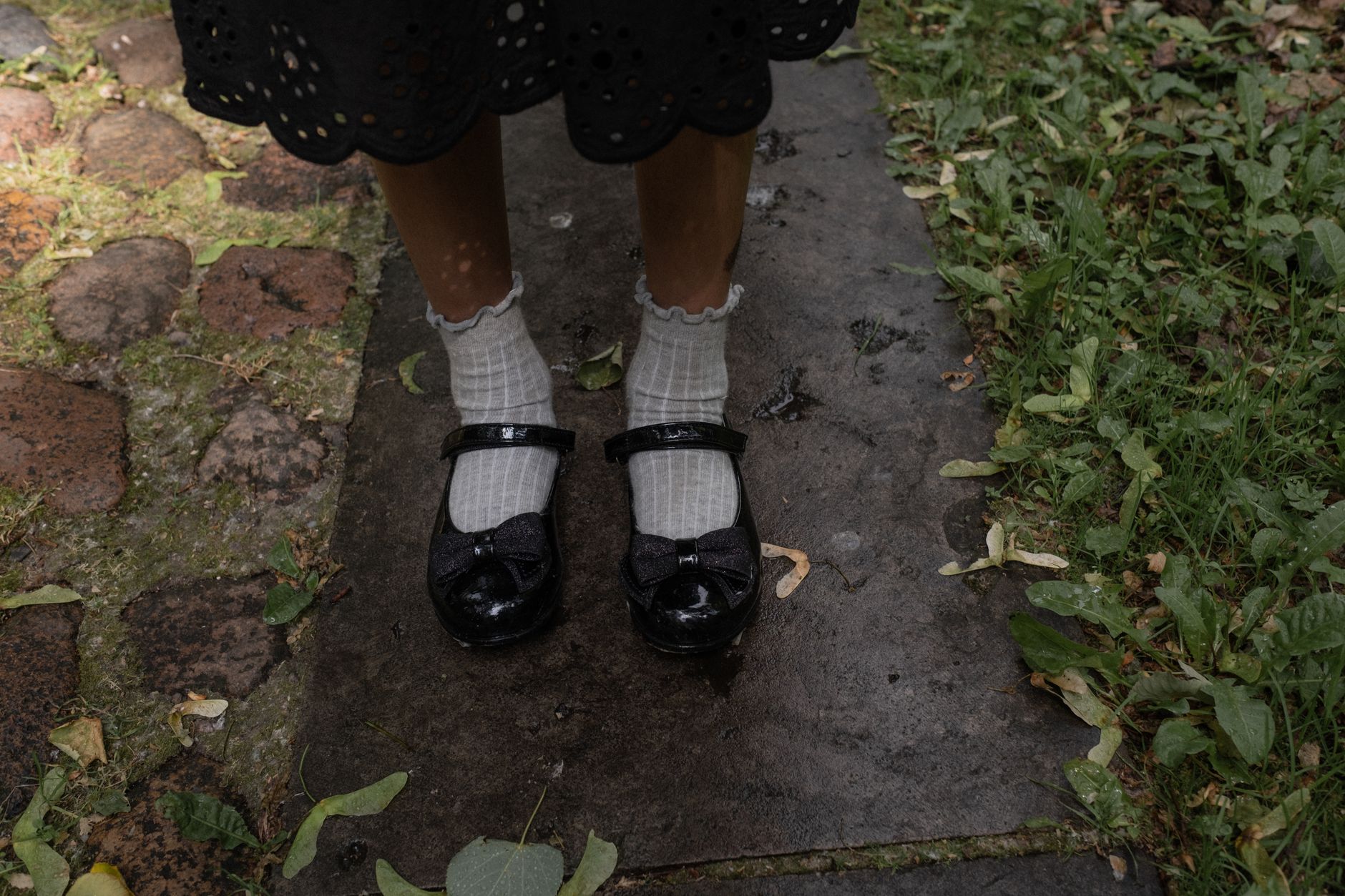
The Shoes the Quiet Woman Paid For
I told them that night. Junior drove down from Chillicothe, Larry brought his wife, and Tracy came straight from a double shift at the hospital in her scrubs. Mitch closed the hardware store early and brought a sack of peppermints from the jar by his register, because he is Mitch.
We sat in my kitchen. Seth put the coffee on and went out to the barn, because he knew this was not his to hear. I laid it all on the table and told it from the beginning.
Junior spoke first. “I thought it was the church. All these years.”
“I thought it was God,” said Tracy. “Well. It was, wasn’t it? In a way.”
Mitch had picked up the little shoe. He found the worn place on the toe and ran his thumb across it. “That’s mine.”
“It is. Mama wrote your name in it.”
“I remember Mr. Rudd tying them. I said something to him.” He frowned. “I said I was going to go to kindergarten.”
“You did.”
He turned the shoe over and looked at the sole.
“She went and got my shoe,” Mitch said. “Mama must have sent them to the clothing closet when I outgrew them, and Miss Pohlman took one back out.”
“One,” said Larry.
“I guess you can’t keep both,” Mitch said.
Nobody said anything to that. Then Tracy blew her nose and said practically, “We have to tell Mama.”
“There wasn’t ever an egg jar,” Junior said slowly. “She lied to Daddy. To save his pride.”
“Then we go tomorrow,” Mitch said. “All of us.”
Maple Court is a low brick building at the edge of Bellmont with a bird feeder outside every window. My mother has lived there three years, in a corner room with a quilt on the bed and Daddy’s picture on the dresser. She is eighty-six, walks with a cane, and misses nothing.
She looked up from her crossword as all five of her children came through the door in a row.
“Well,” she said. “This looks serious.”
We pulled up chairs and sat on the end of the bed. I did not know how to begin, so I held up the shoe.
“Mitchell’s,” she said. “The first pair. He wore the toe through.”
“Mama, I need to tell you who left the envelope in the mailbox.”
She set her pencil down on the crossword. She did not move at all.
So I told her, slowly. The fruitcake tin and your handwriting inside the shoe. The slip. Alan Quast and his father’s safe. And the watch, a gold pocket watch with two letters on the lid, that a boy had given to a girl in 1951 and said keep it going for me, and that the girl had kept going every night for twenty-five years, until the first week of September 1976, when she laid it on a jeweler’s counter, still ticking.
“Verna,” my mother said at last, as if testing the weight of the word. “Verna Pohlman.”
“Yes, Mama.”
“I thought it was the church,” she said. “Or some man from the plant, ashamed about the layoffs. I looked at every face in that sanctuary for a year. I never once looked at her. She was just always there. The way a wall is there.”