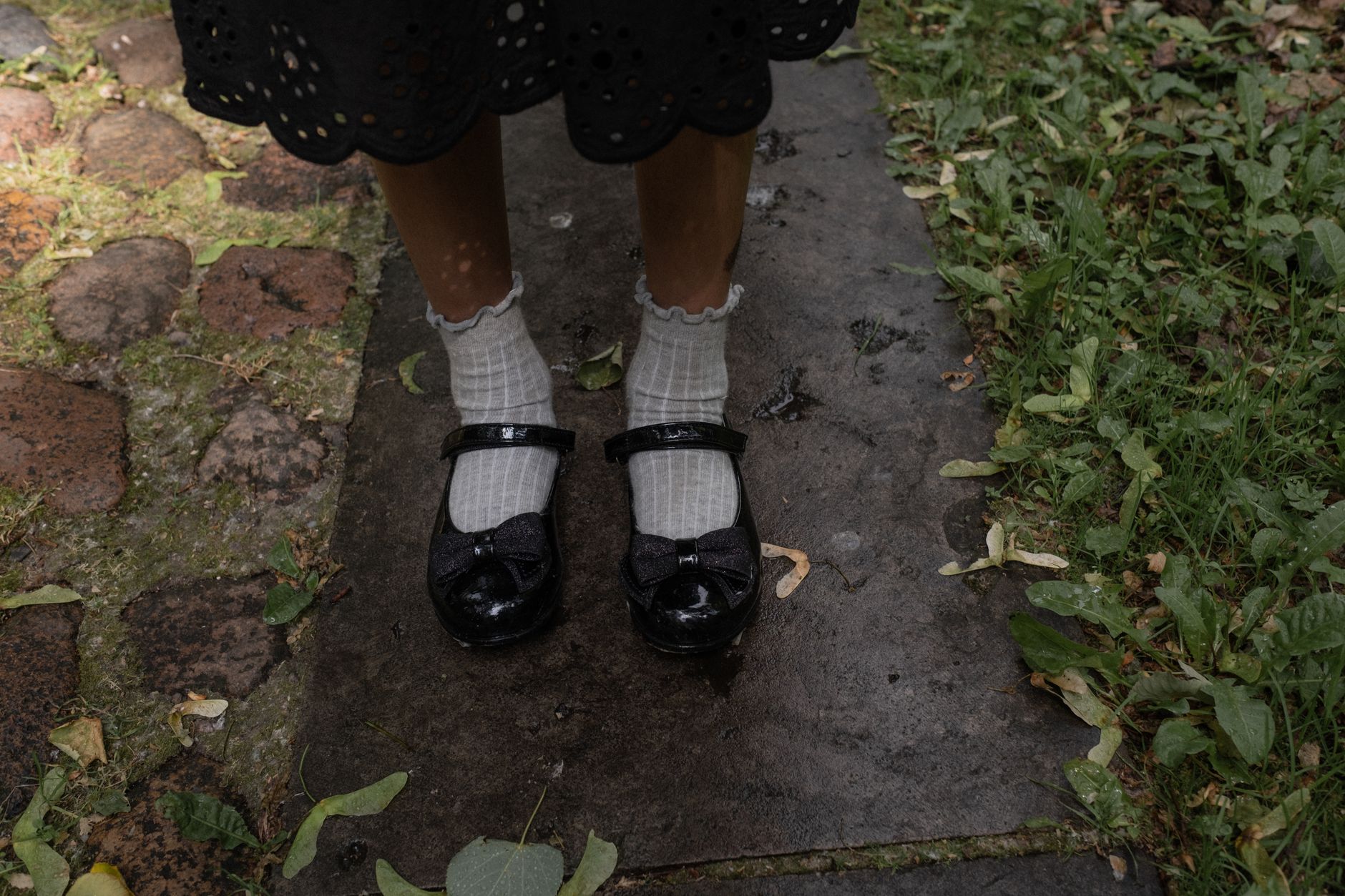
The Shoes the Quiet Woman Paid For
The Friday before school, my mother went out to the mailbox at the end of the walk.
I was at the kitchen window, doing nothing, the way a ten-year-old does nothing in the last hot week of summer. I watched her lift the little flag and open the box, and I watched her stop.
She stood there a long time. Then she took something out and held it against her chest and looked up and down the street. Nobody. A dog two houses over. The Hendersons’ sprinkler going.
She came up the walk almost running, with her apron lifted to her mouth.
“Mama? What is it?”
She went past me into the bedroom and shut the door. I stood in the hall and heard her crying, the kind where somebody is trying very hard to be quiet.
After a while she came out with her face washed and a plain white envelope in her hand, nothing written on the front. She laid it on the kitchen table in front of Daddy, who had just come in off the hay.
“It was in the mailbox,” she said. “No stamp. It was just in there.”
He opened it. Money, folded once, fives and ones mostly. He counted it onto the oilcloth, one bill and then the next. Eighty-five dollars. And a half sheet torn from a pad, with four words printed in pencil in block capitals.
For the children’s shoes.
It did not say from a friend. It offered nothing to be thanked for. It said what the money was for and stopped, as though whoever wrote it knew that the less said, the less it would cost us to take it.
Daddy read it twice. He walked to the screen door and stood with his back to us. When he turned around his face was shut tight.
“We can’t take that, Sharon. We don’t know who it’s from. It could be somebody who can’t spare it.”
My mother stood up. She was five foot two on her best day, and I have rarely seen anything as large as she was then.
“Everett,” she said quietly, “your children’s shoes have holes in them. Tracy’s comes off when she runs. Mitch starts kindergarten Tuesday in canvas sneakers with his toe out. I do not know who left this, and I am going to take these five children to Rudd’s tomorrow morning and put shoes on their feet. If you want to stop me, you’ll have to say so in front of them.”
The refrigerator hummed. Daddy looked at me, and at Tracy, who was holding her shoe in her lap like a hurt bird. He looked at the money.
“Well,” he said finally, roughly. “I guess I’d better not say so, then.”
But here is what I did not understand until I was sixty. My mother knew my father. She knew he could not live with it if the money came from the church, or from someone he would have to look in the eye on Sunday. That night, after the dishes, I heard her say it low at the sink.
“I’ve got a little put by, Ev. Egg money. I didn’t tell you. I wanted it to be a surprise.”
He was quiet a while. “We never had egg money like that.”