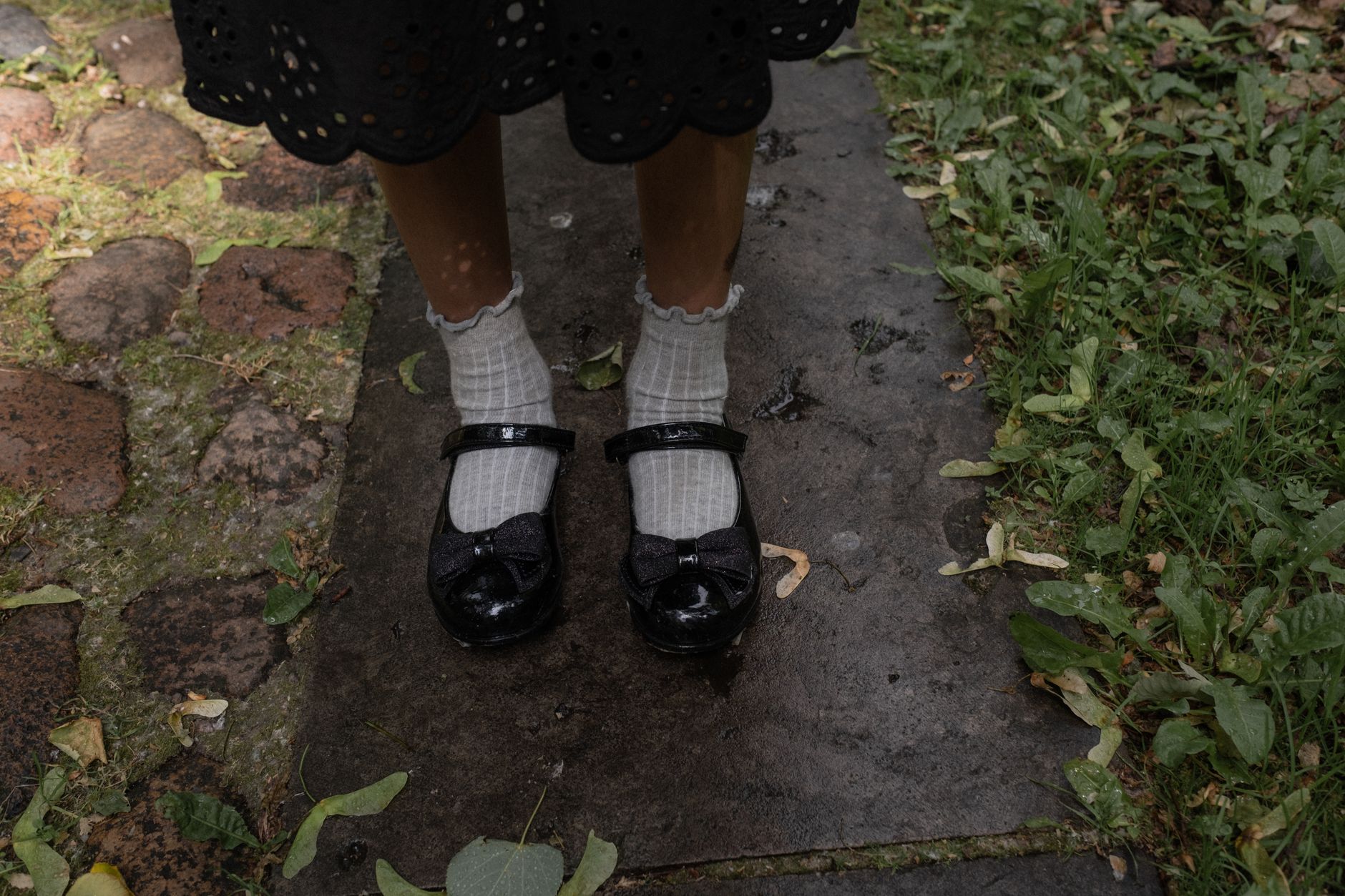
The Shoes the Quiet Woman Paid For
“Well,” my mother said. “I found it.”
She told me the same thing the next morning, when I asked. She told Tracy. She told Larry, who asked the hardest, and Junior, who was fourteen and did not believe it for a minute and let her have it anyway. I found the money. I said we’d see what the Lord provides, and He provided. That’s all you need to know.
Saturday morning we went to Rudd’s Shoes on Main Street.
Mr. Rudd was a heavy, kind man with half-glasses and a tape around his neck. He sat each of us on the tall bench and slid our foot onto the cold metal measuring plate and said “Well, now” to every one.
Junior got brown lace-ups, sixteen ninety-five. Larry, fifteen ninety-five. Mine were fourteen fifty, brown oxfords with a little tooled pattern along the toe that I thought the most beautiful things I had ever owned. Tracy’s were thirteen twenty-five, and she walked the aisle in them with her chin up like she was crossing a stage.
And Mitch. Ten fifty, sturdy brown boy’s shoes with a leather smell I can call back to this day. Mr. Rudd laced them himself and pressed down on the toe to check the fit, and Mitch looked at his feet, and then up at the big man, and said very formally, “Thank you, sir. I am going to go to kindergarten.”
Mr. Rudd laughed so hard he had to take off his glasses.
My mother paid out of the white envelope. Seventy-one dollars and fifteen cents; Mr. Rudd wrote it on the slip and said it aloud, and then he looked at my mother a moment longer than he needed to and did not say anything else. He put five pairs of socks in the sack and did not ring them up. He gave Mitch a peppermint and dropped the old canvas sneakers in the trash can by the door, and my mother let him.
On the way out Mitch said, “Mama, who gave us the shoes?”
“God did, baby.”
“But who was it?”
“I don’t know,” my mother said. “Somebody who loved you, I think.”
Monday was Labor Day and nothing opened. Tuesday the five of us walked into Bellmont Elementary together, and I still remember the sound of it, five pairs of new leather soles on the gym floor, clean and bright and slapping.
And I remember who stood at the corner by the front office, the way she stood there every first day, with a clipboard against her chest.
Miss Pohlman was a tall, spare woman with gray coming into her dark hair and a gray cardigan in all weathers. For as long as I had been in that building she had worn a gold watch on a ribbon pinned over her heart, the way some women wear a brooch. You could hear it if the hall went quiet. That morning the ribbon was there, but it hung loose, with nothing on the end of it. I noticed it the way a child notices things, without asking why.