The Funeral They Said Was For Family
The Hand On The Door
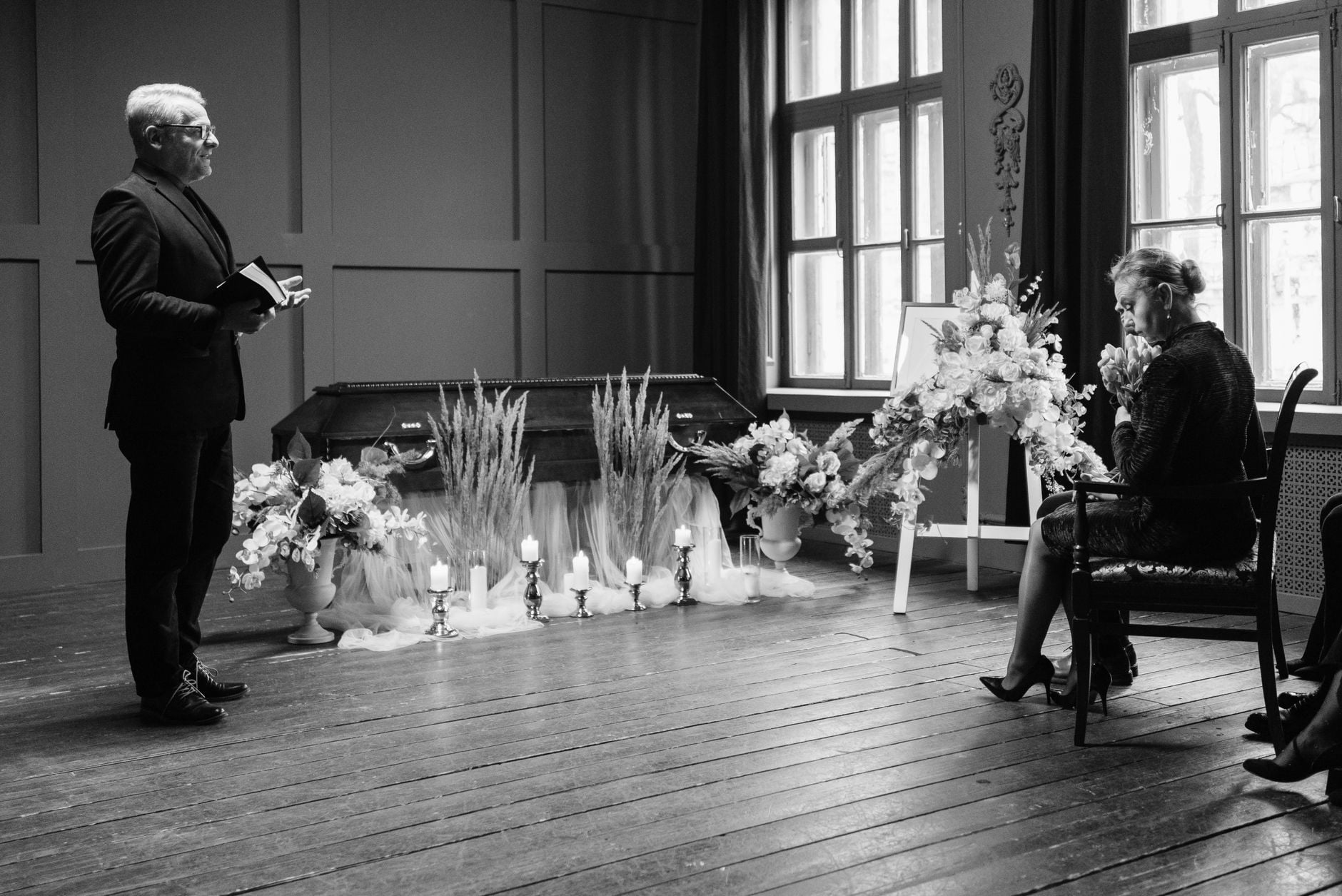
The chapel at Crowley’s Funeral Home has double oak doors with brass handles worn pale where a hundred years of fingers have pulled them open. I had walked through those doors for my mother when I was eleven, and for my grandmother when I was twenty, and for every neighbor in Fairbury who ever mattered to me. On the Saturday we buried my father, my stepmother stood in front of them with one gloved hand flat against the wood and did not let me touch the handle.
“This service is for family, Lynn,” Marcy said. “You understand.”
She said it softly, the way you would tell a child the pool is closed. She wore a black wool suit I had never seen and a pearl pin on the lapel, and her hair had been done that morning, every silver wave set. She looked like a woman who had been planning a particular afternoon for a long time and had no intention of letting a loose thread near it.
“I’m his daughter,” I said.
“You were his daughter.” She tilted her head, and I could smell her hairspray. “I was his wife. Today is about his wife. Please don’t make this ugly in front of Ned’s staff.”
Behind her, through the glass panel in the door, I could see the first pews filling. Women from her church circle in their good cardigans. A cousin of hers in a tie that did not fit. Two men from the Moose lodge who had never spoken a word to my father except about the weather. Not one of them had been at his bedside. Not one of them had sat in the machine shed with him on a Sunday afternoon listening to the radio. Every one of them was going to sit inside and be family.
A young man in a gray suit had come up beside me without my hearing him. Twenty-four, maybe. A funeral home assistant, the kind who is trained to appear out of nowhere and be gentle. “Ma’am,” he said, “I’d be glad to walk you out.”
I looked past him into the lobby. Ned Crowley, the funeral director, stood by the guest book with a clipboard held flat against his chest. Ned buried my mother. He buried my grandmother. He had shaken my father’s hand at the end of every one of those services and told him he was sorry. He looked at the carpet.
I want to be exact about what happened next, because I have turned it over a hundred times. I did not argue. I did not raise my voice. I did not cry. I let the young man in the gray suit put two fingers lightly under my elbow, and I let him walk me down the front steps and across the gravel lot to my car, and when he opened the door for me, I said, “Thank you.”
I said thank you. He had not done anything to deserve it, and I said it anyway, because that is the kind of person twenty-seven years of Marcy had made me, and because my father had told me to.