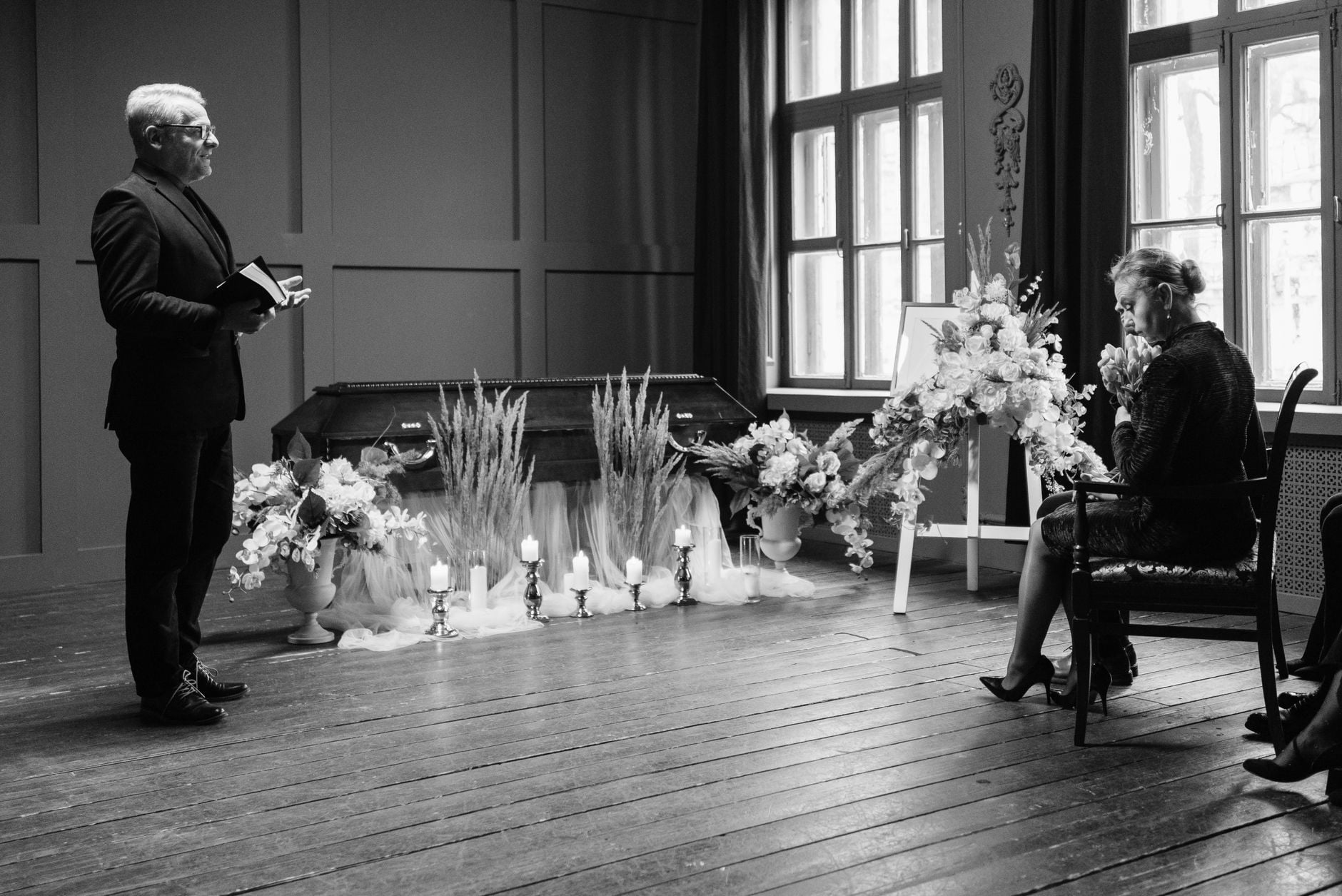
The Funeral They Said Was For Family
Floyd’s Girl From Before
My mother, Faye, died of an aneurysm in the checkout line at the Kroger when I was eleven. One minute she was arguing with the cashier about a coupon for coffee, and the next she was gone, and that was the entire explanation anyone could give me. My father, Floyd Benson, a quiet man who repaired grain bins and drove a county road grader in the winters, did not know what to do with a girl in a house with no mother in it. He did what he knew. He fed me. He drove me to school. He sat at the kitchen table at night with his hands around a cold cup of coffee and did not speak.
Three years after that, he met Marcy at a church potluck. She brought a lime gelatin salad with pineapple in it and she laughed at something he said about the deviled eggs, and my father, who had not laughed out loud in three years, laughed back. I remember the sound through the kitchen wall. I remember being fourteen and standing in the hallway in my socks, hearing that sound, and being glad for him and sick about it in the same breath.
She introduced me everywhere with the same phrase: “This is Floyd’s girl from before.” Not her stepdaughter. Not Lynn. By the time I left for college, I understood the arrangement. Marcy did not want a war. She wanted a house with one woman in it, and the way to get that was to make me feel, in a thousand polite ways, like a visitor. When I came home for Thanksgiving, my room had been turned into a sewing room. When I came home for Christmas, my gift from them had already been opened by the dog. At my college graduation, she sat in the third row and told the woman next to her, loud enough for me to hear in my cap and gown, that she was just so proud of “Floyd’s girl.”
What I got instead was Sundays.
Twenty-Seven Years of Sundays
On the first Sunday after I moved into my dorm, my phone rang at 2:15 in the afternoon. It was Dad, calling from the machine shed behind the house. Marcy went to the ladies’ guild at the church every Sunday from one-thirty to four, and for those two and a half hours my father was alone. He told me later that he stood out there next to the old kerosene heater with the receiver pressed to his ear, listening to me complain about my chemistry class, and he felt like he had gotten away with something.
We kept that up for twenty-seven years. Every Sunday, 2:15. Through my first apartment, through my marriage, through the divorce that ended it, through every school I ever taught in. If I was sick, he called. If I was traveling, I called him from a pay phone at an airport. He never missed. He told me about the bean prices and the neighbor’s new hip and the fox that had been getting into Doyle’s chicken coop. I told him about my students. Neither of us ever said out loud why it was Sunday at 2:15 and not Wednesday at suppertime. We both knew.
And when I could manage it, when the weather was good and the guild met, I drove down on Sunday mornings and came in the back way, through the field road, and parked my car behind the machine shed where it could not be seen from the house. He would be sitting on an upturned bucket by the heater with two mugs ready. We would talk until a quarter to four. Then I would leave the way I came, and he would stand in the door of the shed and watch my taillights go down the field road until they were gone.
I am telling you about those afternoons because Marcy, in the last year of my father’s life, told the entire town that they never happened. She told the church circle that I had not been to see him in a year. She told the women at the beauty parlor that I was “busy with my own life.” She said it sadly, like a woman carrying a burden, and everybody tilted their heads and said they were so sorry. I heard about it from Doyle, who runs the scale house at the grain elevator and has known my father since third grade.