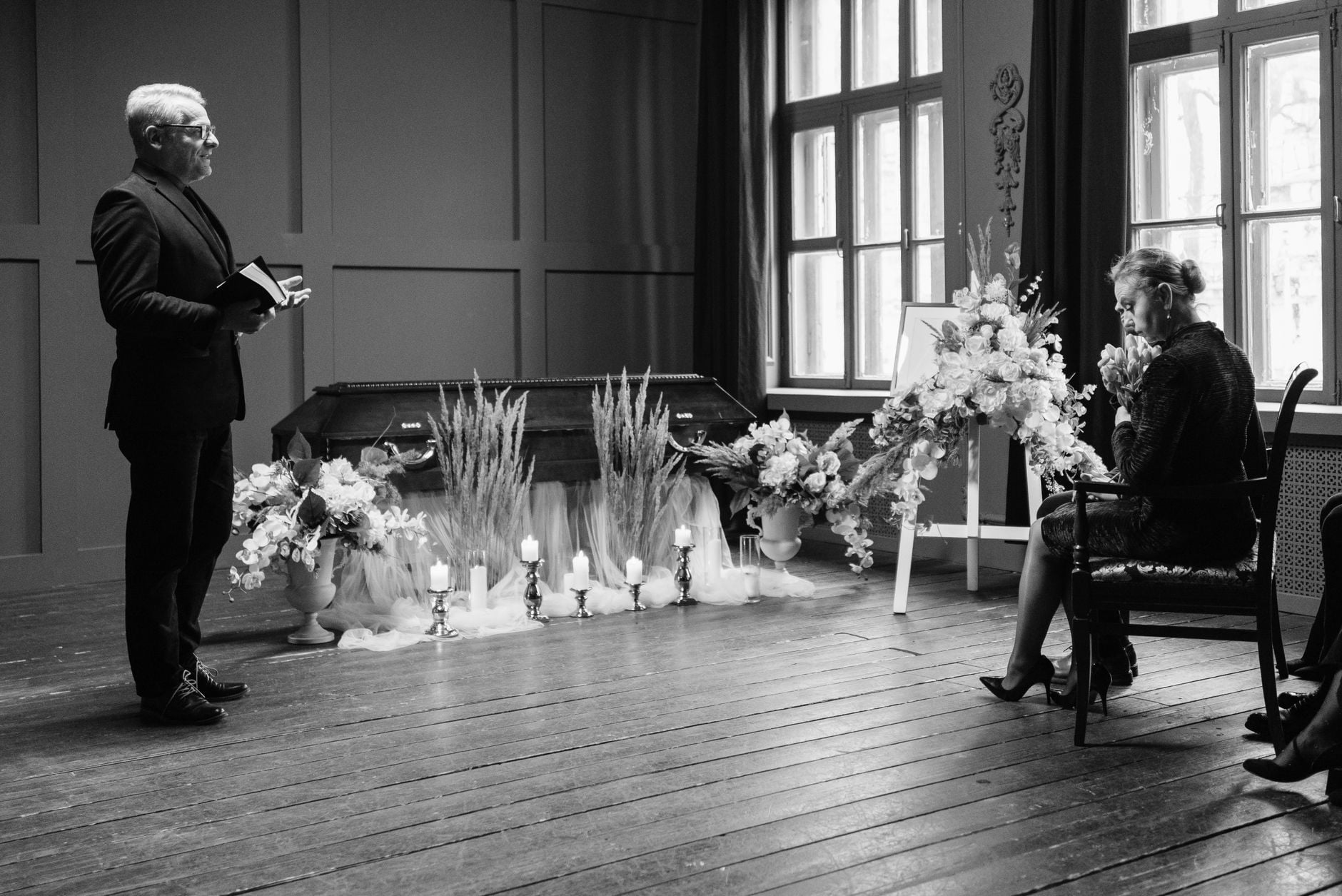
The Funeral They Said Was For Family
The Gravel Lot
So there I was. Saturday morning, sitting in my own car in a gravel lot beside Crowley’s Funeral Home, with the engine off and the heater dying and my hands folded in my lap like a child waiting outside the principal’s office.
Through the windshield I watched the last of the mourners go in. Marcy’s circle, in a pack. The two Moose lodge men. A woman who sold Marcy insurance. The doors opened, and shut, and opened. I counted thirty-eight people.
Then the organ started.
Jean has played the organ at that chapel for thirty years. She is a small, round woman in her seventies with a laugh like a screen door, and she sat next to Marcy at every church supper I was ever dragged to, and she smiled at me every time I was introduced as Floyd’s girl from before. She was not cruel. She was something I have come to think is worse. She was agreeable. She played Marcy’s hymn, “Abide With Me,” slow, and she played it beautifully.
Somebody tapped on the passenger window.
Doyle.
I would have known him from the next county. Broad as a barn door, sixty-eight years old, with a face like a plowed field and a gray crew cut he has worn since the Carter administration. He had on the brown suit he got married in, thirty-some years ago, now a size too small across the shoulders, so that the seams pulled when he lifted his hand to knock. His eyes were red. He looked furious about that.
I rolled down the window.
“Pastor Marv’s been watching this lot through the choir room window for twenty minutes,” Doyle said. “He wants you at the side door. It has to be before the eulogy’s done.”
“Doyle, she’ll have me removed. She’ll make a scene.”
“Honey.” He leaned down until his face filled the window. “Your father asked me to carry exactly one thing for him. He asked me two weeks ago, in that room, with an aide standing guard at the door so Marcy couldn’t walk in. He made me promise on my mother’s name. I have been carrying it for two weeks like a hot coal in my pocket. Now get out of the car.”
“What is the thing?”
“It’s you,” Doyle said. “Getting in the side door.”
I got out of the car.
The Side Door
The choir room entrance at Crowley’s smells like floor wax and old hymnals and a hundred years of damp wool coats. It is a narrow door with a push bar, and behind it a short hallway leads along the side of the chapel to the front. Pastor Marv Crowley was standing just inside in his black robe, with a single folded sheet of yellow legal paper in both hands and his reading glasses pushed up into his white hair.
He is Ned’s cousin, which is why he does so many services at Crowley’s. He is a gentle, heavy man of seventy with a voice that carries without ever seeming to be raised. He has baptized half of Livingston County and buried the other half. He looked at me for a long second like he was matching my face to a description.
“You look like Faye,” he said quietly.
“People tell me that.”
“I buried her. I was forty.” He looked down at the paper. “Floyd gave me this the day after Thanksgiving. He sat in a wheelchair in the care center solarium for an hour while he wrote it, and he would not let me read it over his shoulder. He told me Marcy would have written the whole service before he was cold. She did. She sent me the script on Wednesday, in an envelope, with a note that I was not to deviate.”
“And?”
“I am going to read every word of hers,” Pastor Marv said. “That is my job, and I take it seriously. She is his widow and she is entitled to a service. And then I am going to read this.”
“She is going to try to stop you.”
“She is welcome to try.” He almost smiled. “Your father said she would.”
Through the wall I could hear the chapel settle. The organ stopped. A throat cleared. Then the lectern microphone crackled, and Pastor Marv began to read the eulogy my stepmother had written, in a voice that had clearly decided to be fair to it.