The Funeral They Said Was For Family
The Walk Down The Aisle
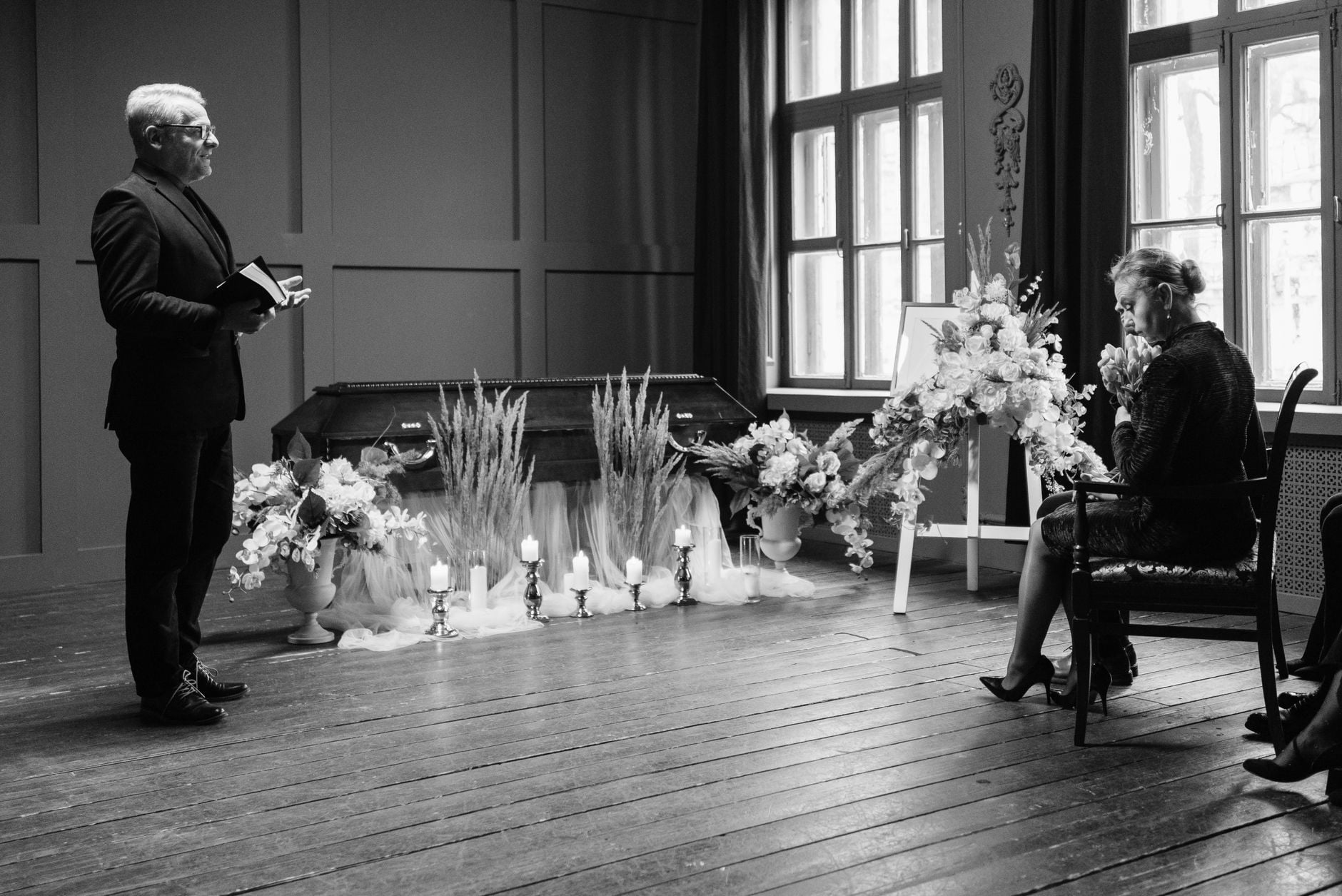
I do not remember pushing the door. Doyle says I did not push it. He says he pushed it for me, with one big hand flat in the middle of my back, because my knees had stopped taking instructions. What I remember is the light. The chapel has tall windows along the north wall, and that morning it was one of those bright, hard, cold Illinois mornings, and the light came through them in long white slabs and fell across the faces of thirty-eight people who had all turned in their seats to look at me.
Doyle took my arm. In his too-small brown suit, with his red eyes and his plowed-field face, he walked me down the center aisle of that chapel at the pace of a funeral, and not one person said a word, and not one person looked away.
I will tell you what I saw as I went by.
I saw Ned Crowley in the back by the guest book, and this time he was not looking at the carpet. He was looking straight at me, and his face was wet.
I saw Jean at the organ. She had both hands in her lap. She was a small round woman in her seventies, and she was crying the way people do when they have realized something they cannot take back.
And I saw Marcy.
She was standing. She had come all the way to her feet in the front pew, and her gloved hands were clasped together under her chin like a woman about to pray, and her face was the color of the paper in the pastor’s hand.
“This is a family service,” she said. Her voice shook. It was the first time in twenty-seven years I had heard it do that. “This is for family. She has no right.”
Nobody answered her.
Then, from the organ bench, Jean spoke.
“Marcy,” she said.
Her voice was small. She did not stand. She was gripping the edge of the bench with both hands.
“Marcy, I carried those boxes to the post office for you.”
Marcy turned her head very slowly. “What are you talking about?”
“The ones Lynn sent. Every Christmas, for years. You gave them to me on a Sunday and said you’d rather she not send them and would I please be a dear and take them to be returned. And I did.” Jean’s face crumpled. “I did it twice. I thought it was a family matter. I told myself it was none of my business. It was not a family matter. It was a girl sending her father a Christmas present.”
I stood in the aisle with Doyle’s hand under my arm. I did not know about the boxes. I had sent four, in all, over the years, and each had come back stamped RETURN TO SENDER with no explanation, and I had decided my father no longer wanted anything from me. I had stopped sending them. That was what I had thought of him, for a time. And that was what Marcy had let me think.
I looked at my stepmother. I will say what I saw, because I promised myself I would not exaggerate. She did not look like a monster. She looked like a woman of sixty-six standing alone in a room that had just stopped belonging to her.
“I think,” Pastor Marv said gently, from the lectern, “that Floyd would want his daughter in the front row.”
I sat down in the front pew, on the opposite side of the aisle from Marcy, with Doyle beside me. Neither of us looked at the other. Doyle took my hand without a word. His knuckles were scarred and enormous and shaking.
Marcy stood for a long time.
Then she picked up her purse, and she walked out the front doors of the chapel, down the aisle, alone, past thirty-eight people who watched her go and did not stop her. The brass handles caught the light as she pulled the oak doors open, and they closed behind her with a heavy, quiet thud that I felt in my chest.