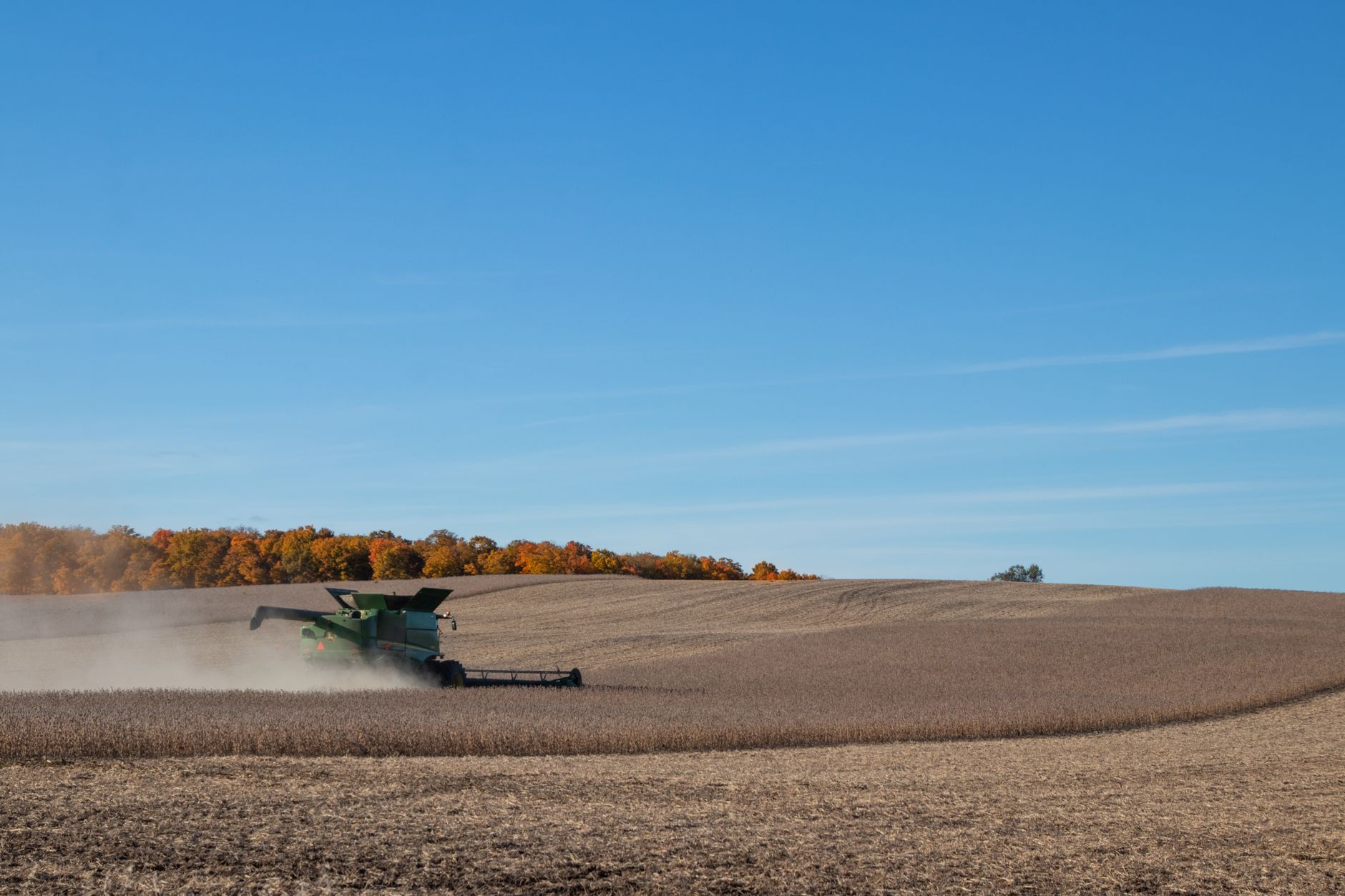
The Combine Keys at Harvest Supper
“She’s not a mean woman, Mark,” Arlen said after a while. “I’ve known Elaine since she married your dad. She’s prickly and she’s proud, and she’s got her own way of doing things. But she’s not mean. Something’s eating at her, and I don’t think it’s you.”
“Then what is it?” I asked. “Because from where I sat, it looked like nineteen years didn’t count for anything.”
Arlen took a long drink and set the can on the tailgate. “That house is awful big for one woman,” he said.
“And those boys of hers don’t call. Marcy talks to her at church. You might ask yourself sometime when the last time was that anybody ate supper with her that wasn’t being paid to.”
I didn’t have an answer for that. I went home to Sanborn and lay awake again.
The next day the weather turned. You could feel it in the morning, that heavy air coming up from the southwest, and by noon the clouds were stacked up the color of a cast iron skillet.
Arlen and I ran corn until the rain hit at a quarter to four and then we shut down and put the machines in.
It rained three days. Not a gully washer, but steady, the kind that soaks in and keeps soaking. Arlen’s gauge on the fence post said 1.8 inches by Saturday morning.
Corn can stand a rain like that. Corn will wait for you, mostly. Beans are a different animal.
If you have never farmed soybeans, here is what happens. When a bean is ready, the pod is dry and tight and the beans rattle in it like a baby’s toy.
Get rain on it, then a dry wind, then rain again, and the pods start to split open. They shatter, and the beans fall on the ground where no combine on earth will pick them up.
Every morning that week I drove past the home place on my way to Arlen’s, and every morning I slowed down on the gravel and looked.
By Sunday the beans on the east side had that gray, beaten down look, and when I stopped and walked in a few rows from the road, I could see beans on the dirt between the rows. Four, five, six to a square foot.
Every one of those beans had my hands in them. I’d picked that variety in January at the kitchen table.
I’d planted them the first week of May, sprayed them twice, walked them in August for white mold.
Watching them go down in the field was like watching an animal you raised get sick in a pen you weren’t allowed into.
Deb came by Arlen’s on Monday. She’d been sitting at home too, since there was nothing to haul.
She stood at the end of his machine shed with her hands in her jacket pockets and told me what she knew, which was most of it, because Deb and Elaine go to the same Tuesday coffee at the Cenex.
Elaine had called the custom operator from Paullina the morning after I left. He was booked solid into the first week of November.
She called two others out of the phone book. Both of them laughed, nicely, and said they’d put her on the list.
Ron had told her straight that he’d never run the combine and was too old to learn on a $400,000 machine in the mud.