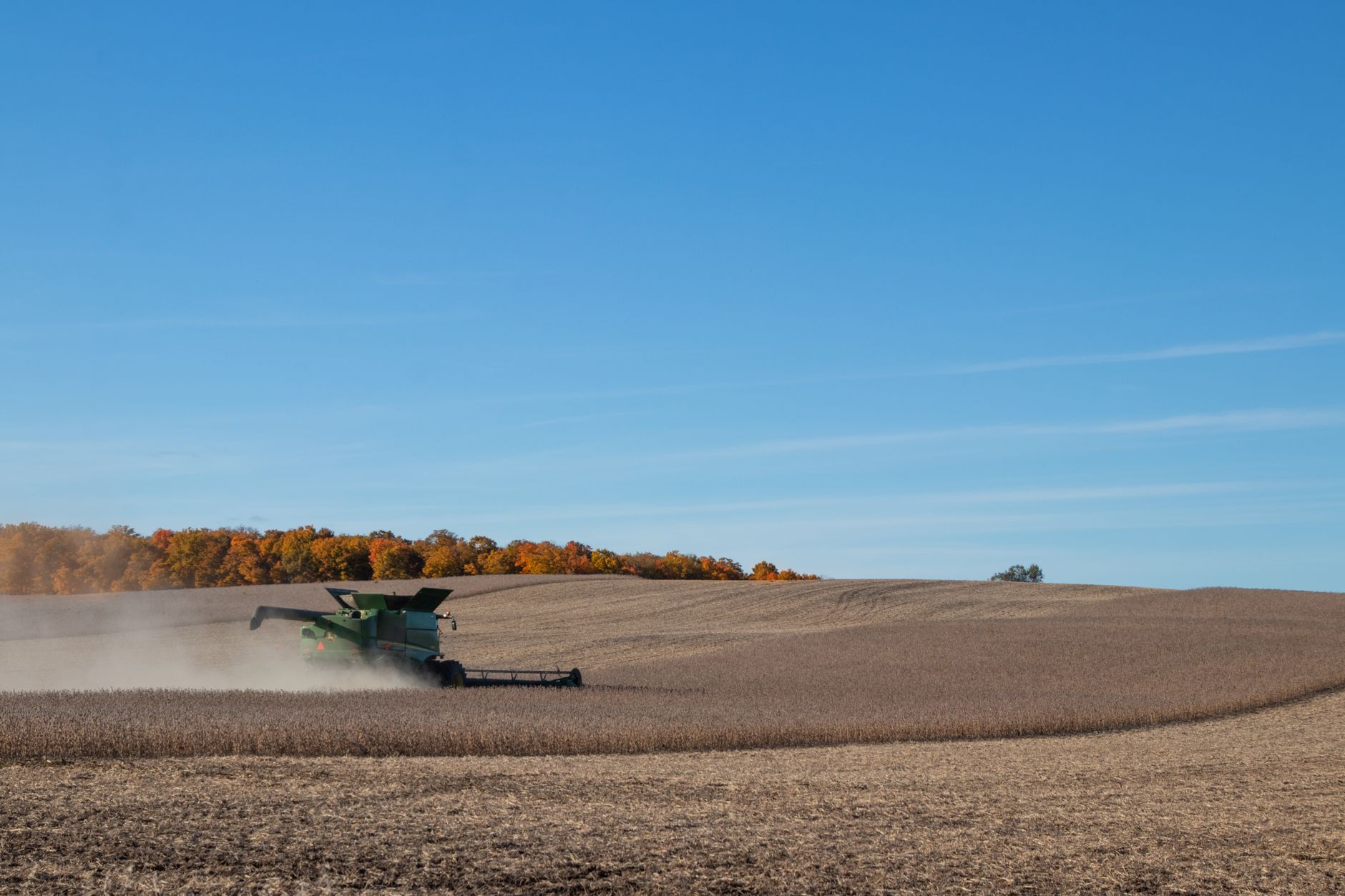
The Combine Keys at Harvest Supper
She looked down at the keys like they might bite her. For a long second she didn’t touch them.
“Mark,” she said, “sit down and finish your supper. Nobody said you can’t keep working here. Nothing has to change.”
“Everything just changed,” I said. “There’s 160 acres of beans left out on the east side and the moisture was 12 this afternoon, perfect. I’ll write the custom man’s number on the pad by the phone before I go. Ron knows where everything is. I’m sorry to do it in the middle of harvest. I am.”
Ron finally put his fork down. He’s seventy-one and he’s hauled our grain for eleven years, first for Dad and then for both of us.
He wiped his mouth with his napkin, slow, and looked at his plate instead of at either of us. “Dale would not have liked this,” he said quietly.
I have thought about that sentence a hundred times since. I never knew which one of us he meant, and I don’t think Ron did either.
Maybe he meant both of us. Maybe he meant Dad himself, for leaving us a one page will and a “she’ll do right by you” and nothing in between.
Deb got up and started clearing plates even though nobody was finished, because Deb has run our grain cart for six harvests and she cannot sit still when things are wrong.
Steve and Jill stayed put. Elaine still hadn’t touched the keys. I wrote the number for the custom operator out of Paullina on the pad by the kitchen phone, and the number for the seed dealer, and the bin fan settings.
Then I went out the back door, past the mud room hooks where Dad’s chore coat still hung, and walked out along the field edge to the combine.
I stood next to it a minute under its work lights. Then I got in my pickup and drove the eight miles to the house I rent on the south edge of Sanborn.
I sat in the driveway with the engine off for a long time. I’m forty-five. I’ve been divorced eleven years and never had kids.
My whole life was those 600 acres and that machine shed and Dad’s voice on the two way radio telling me I was leaving too much stubble.
I’d just set it on a tablecloth and walked off.
I want to be honest about one more thing, since I’m telling it all. Sitting there, I was not only angry. I was ashamed.
Because a little part of me knew that Elaine had cooked harvest supper for fourteen falls, and in all those years I had come into that house to eat maybe three weeks out of every year.
The rest of the time I ate my lunch in the pickup and went home to Sanborn at night.
I told myself that was just how it was. The house was Dad’s and hers.
I was the son who farmed. After Dad was gone, I told myself it was respect, keeping out of a widow’s kitchen.
Sitting in that dark driveway, I wondered if it had looked to her like something else entirely.
I didn’t sleep much. At five thirty the next morning I drove one mile east of the home place, to Arlen Stuckey’s, and pulled into his yard.